Quick answer
If your exhaust is loud but you still want flow, add a resonator or swap to a straight-through muffler with more sound absorption instead of blocking the pipe. A resonator install tames drone and rasp with less backpressure penalty than a chambered muffler. Stop when the tone is acceptable at cruise and wide-open throttle; if you need stock-level quiet, a performance system may be the wrong starting point.
Loud exhaust is not one problem. It is usually a mix of volume at wide-open throttle, drone at cruise, and rasp or crackle on deceleration. Each has a different cause, and each responds to a different fix. Treating them as one issue is how people end up buying parts that make the car quieter but slower, or louder but unbearable on the highway.
This guide separates symptom from cause so you can choose the smallest change that solves your complaint. The goal is not maximum quiet. It is a tone you can live with while keeping the flow that makes the exhaust worth having.
Symptom: Drone at 1,800-2,600 RPM on the highway
Drone is a low-frequency resonance that peaks in a narrow RPM band, usually right where you cruise. It is rarely the muffler alone. It is the whole system length, pipe diameter, and muffler volume resonating together. A straight-through muffler with acoustic fiber fill absorbs some of that energy, but if the pipe is large and the system is short, the drone can survive.
The most effective fix is a resonator installed in the mid-pipe, ahead of the muffler. A resonator is not a restrictor. It is a tuned chamber that cancels specific frequencies. Adding one often removes drone while leaving wide-open-throttle sound almost unchanged. If you already have a resonator and still have drone, the issue may be tip length or a missing factory Helmholtz chamber.
- Measure your cruising RPM before buying anything. If drone is at 2,200 RPM, that is your target frequency.
- A longer resonator body generally cancels lower frequencies than a short bullet-style resonator.
Symptom: Rasp, crackle, or blat on deceleration
Rasp is high-frequency noise, and it usually comes from two places: an unmuffled section of pipe or a thin-wall exhaust that rings. If you removed a factory resonator or replaced a chambered muffler with a straight pipe, you created a path for those frequencies. A perforated core muffler wrapped in stainless mesh and acoustic fiber fill will absorb rasp better than a chambered design because the sound waves pass through the packing.
Crackle on decel is often unburnt fuel igniting in the exhaust. That is a tuning issue, not an exhaust issue. No muffler will eliminate it completely. If crackle bothers you, address the tune or accept it as part of the setup.
- Check for exhaust leaks at flanges and clamps first. A small leak can sound like rasp.
- Thicker-wall piping and a packed muffler reduce ring and rasp more than adding another chamber.
Symptom: Too loud everywhere, even at idle
If the car is loud at idle and wide-open throttle, you likely have too little muffler volume for your pipe size and engine output. A straight-through muffler flows well, but a small body cannot absorb the energy of a large engine. Moving to a larger oval muffler with the same straight-through design adds packing volume without adding a flow-blocking baffle.
This is where a muffler to reduce drone and overall volume makes sense. Look for a straight-through perforated core with stainless mesh and fiber fill. The larger the case, the more sound it absorbs. The tradeoff is weight and fitment space. If you cannot fit a larger muffler, a resonator plus a packed muffler is the next best combination.
- A 5 x 8 x 18 inch oval muffler fits many applications and offers more packing volume than a small bullet.
- Reversible inlet/outlet layouts let you install the muffler in the orientation that fits your routing.
Resonator vs muffler: what actually changes the sound
A resonator and a muffler do different jobs. A resonator cancels a narrow frequency band, which is why it is so effective against drone. A muffler absorbs broadband noise, which is why it lowers overall volume. If you have drone, start with a resonator. If you have overall loudness, start with a muffler. If you have both, you may need both.
Do not replace a straight-through muffler with a chambered muffler just to quiet things down. Chambered designs can reduce flow and cost power. A better path is a larger straight-through muffler or a resonator ahead of your existing muffler. That keeps the exhaust moving while taking the edge off.
- Resonator first for drone. Muffler first for volume. Both for a system that is loud and droney.
- Avoid chambered mufflers on turbo or high-output engines if flow matters to you.
Diagnosis: match the symptom to the fix
- Drone at cruise: Low-frequency resonance in a narrow RPM band. Add a resonator in the mid-pipe ahead of the muffler. A packed straight-through muffler can help, but a resonator targets the frequency directly. If drone persists after a resonator, check for missing factory Helmholtz chambers or an exhaust leak.
- Rasp or crackle: High-frequency noise from thin-wall pipe or an unmuffled section. Use a perforated core muffler with stainless mesh and fiber fill. Fix leaks at flanges and clamps before buying parts. Crackle on decel is usually tuning, not exhaust. Do not expect a muffler to eliminate it.
- Loud everywhere: Too little muffler volume for your pipe size and engine output. Move to a larger oval straight-through muffler or add a resonator plus a packed muffler. Avoid chambered mufflers if flow matters. If you need stock-level quiet, a performance exhaust may be the wrong starting point. Consider a direct-fit replacement system instead.
Parts that solve loud exhaust without blocking flow
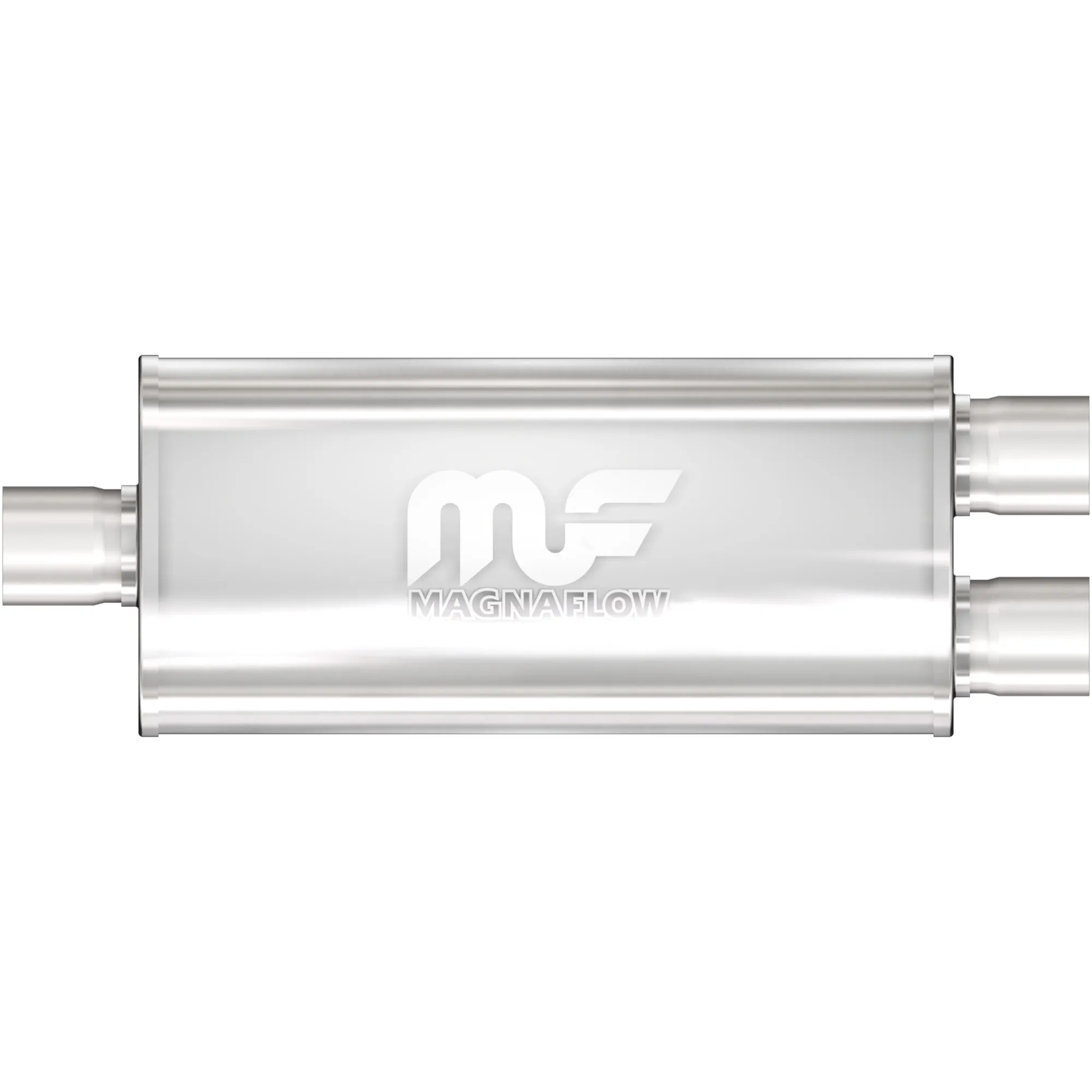
- MagnaFlow 5 in. x 8 in. x 18 in. Oval Straight-Through Performance Exhaust Muffler Center/Dual: Free-flowing straight-through perforated stainless steel core wrapped in stainless steel mesh and acoustic fiber fill, with a reversible universal 2.25/2.25 in. diameter inlet/outlet layout. The packing absorbs rasp and volume while the straight-through core keeps flow. The oval 5 x 8 x 18 case gives you more sound-absorbing volume than a small bullet, and the reversible layout fits multiple routing options.
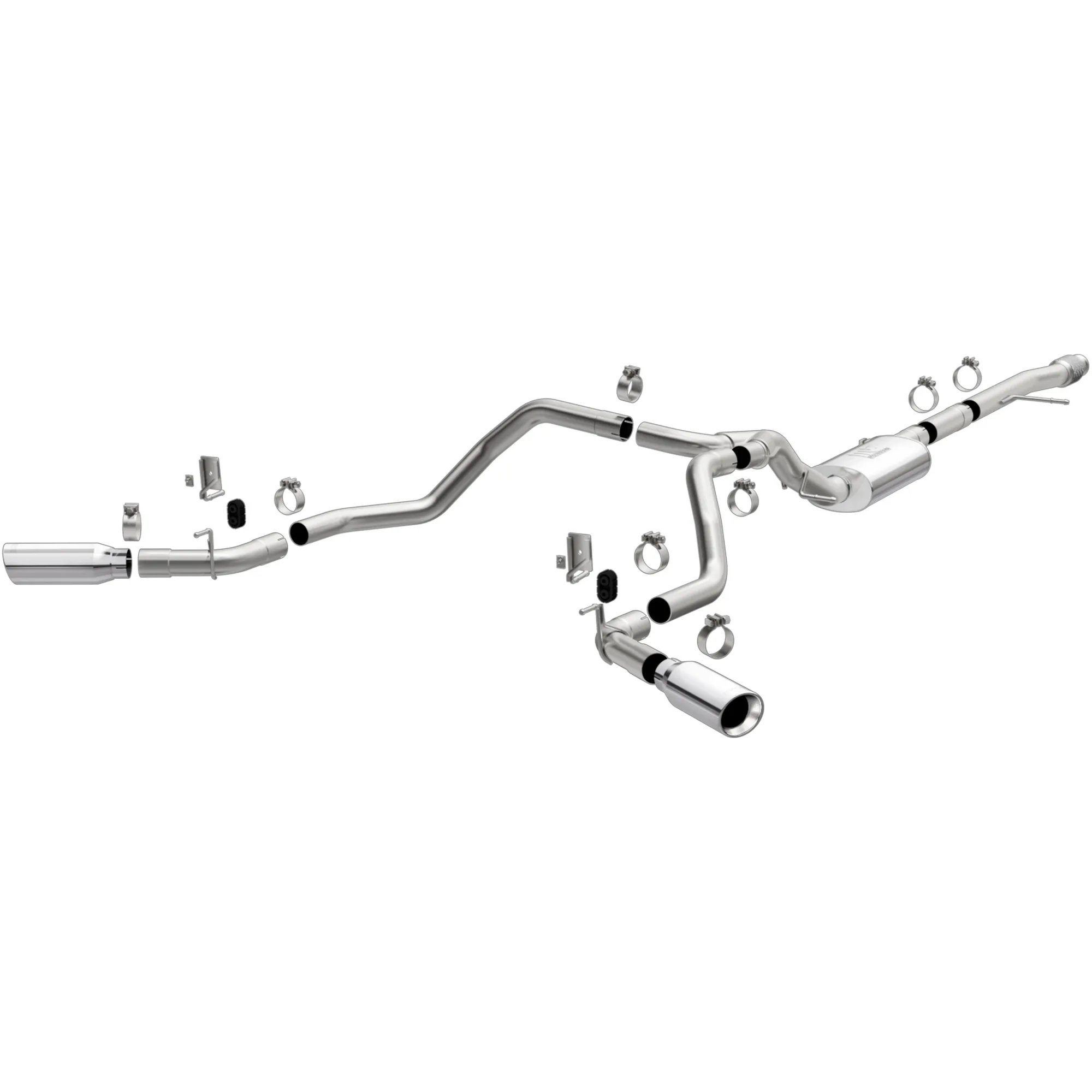
- https://magnafloweb.com/products/19474-magnaflow-street-series-cat-back-performance-exha-a6d8114ddc9271d3ea69e1a3-2679311https://magnafloweb.com/products/magnaflow-street-series-cat-back-performance-exhaust-sy-fa211f990507d48fc06da92c-2677829https://magnafloweb.com/products/magnaflow-street-series-cat-back-performance-exhaust-sy-164871ef66e3c12b9738eeee-2677830MagnaFlow Street Series Cat-Back Performance Exhaust System 19474: Dyno proven power with a comfortable interior sound and performance exterior sound, made of durable stainless steel with CNC precision robotic manufacturing, backed by a limited lifetime construction warranty and 1 year finish warranty. If you want a complete system that is quieter inside than a race setup but still sounds strong outside, this is a direct path. It solves drone and volume together rather than piece by piece.
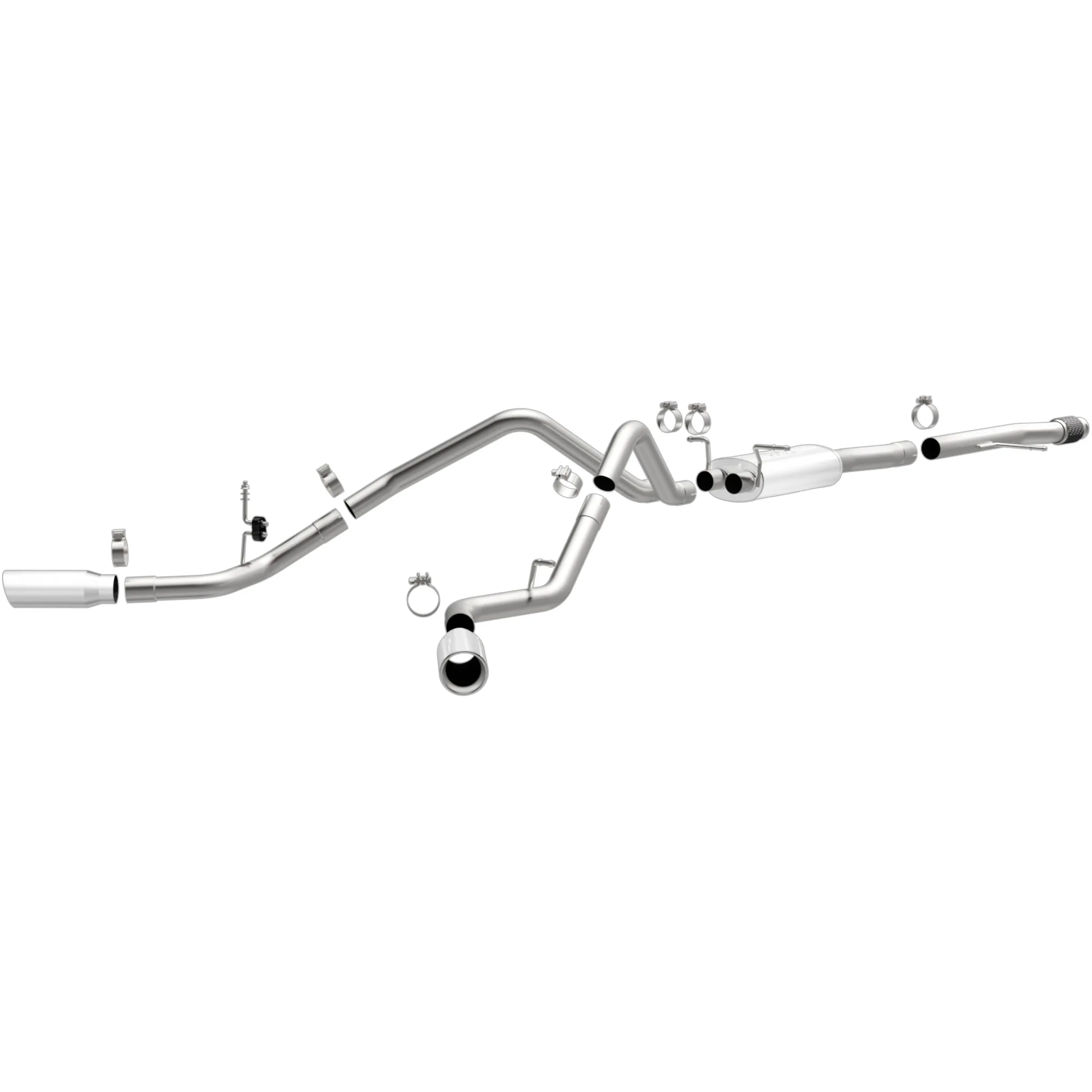
- MagnaFlow 2003-2004 Chevrolet SSR 5.3L / 2005-2006 Chevrolet SSR 6.0L Street Series Cat-Back Performance Exhaust System 15843: Fast-flowing mandrel bent 3 in. main piping and one straight-through muffler ending in a dual split rear exit with 5 in. polished welded-on single wall angle cut rolled edge tips. This shows how a vehicle-specific system uses a straight-through muffler and mandrel bends to manage sound and flow at the same time. If you drive a supported application, a direct-fit system removes the guesswork of mixing universal parts.
Quieting a loud exhaust without losing performance comes down to choosing absorption over blockage. Start with the symptom you actually have, add a resonator for drone, a larger packed muffler for volume, and stop when the tone is livable. If you need factory-level quiet, a performance system is not the right base.