Why the double scale matters before you pour
A double-scale graduated cylinder gives you two sets of graduations on the same tube, so you can read the volume from more than one reference. That sounds like a small convenience, but it changes how you approach the pour: you pick the scale that matches the volume you need, read at eye level, and confirm the meniscus against the markings rather than estimating from a single line.
The Apothecary Products Double-Scale Graduated Cylinder is calibrated to deliver, which means the markings are set for the volume that comes out of the cylinder, not the volume left inside. That distinction matters when you are measuring liquid volume accurately for a batch or a dose. Read the delivered volume, not what remains after you pour.
What the cylinder itself confirms
-
Double-Scale Graduated Cylinder: Calibrated to deliver The graduations reflect the volume delivered, so you read the cylinder for what you are pouring out, not what stays behind.
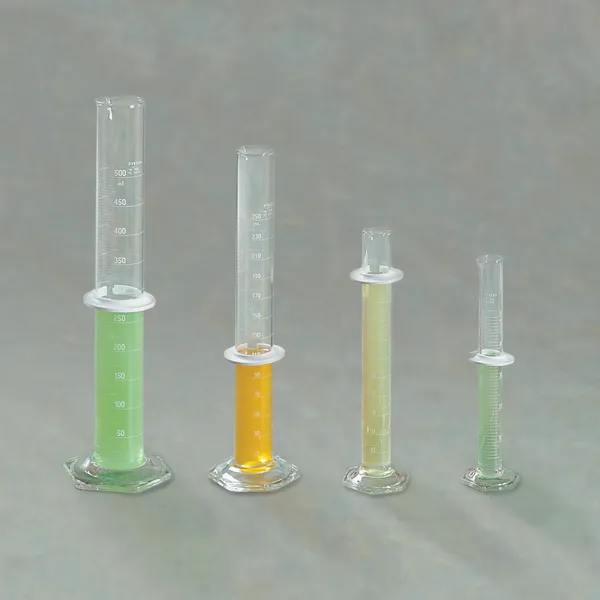
Double-Scale Graduated Cylinder
-
Double-Scale Graduated Cylinder: Double-scale graduations Two scales give you a second reference line, which helps you confirm a reading instead of relying on one set of marks.
-
Double-Scale Graduated Cylinder: Hexagonal base A stable base on the bench keeps the cylinder upright while you read the meniscus at eye level.
A supported reading sequence
The steps below use only what the supplied product record confirms: the double scale, the calibrated-to-deliver marking, and the hexagonal base. They are a reading routine, not a manufacturer protocol.
- Set the cylinder on its hexagonal base: Place it on a level bench so the base sits flat. A stable cylinder is easier to read at eye level and less likely to tip while you pour.
- Choose the scale that matches your target volume: With double-scale graduations, pick the set of marks closest to the volume you need. Read the meniscus against that scale and use the second scale as a cross-check.
- Bring your eye to the meniscus level: Lower your view until the meniscus curve sits on a graduation line. Reading from above or below shifts the apparent line and changes the volume you record.
- Read the bottom of the meniscus: For most aqueous liquids, the bottom of the curve is the reading point. Confirm the line against the double scale before you write the volume down.
- Record the delivered volume: Because the cylinder is calibrated to deliver, the number you read is the volume you are pouring out. Note it before you pour so the record matches the delivered amount.
Match the volume size to the job
The Double-Scale Graduated Cylinder comes in four volumes: 50 ml, 100 ml, 250 ml, and 500 ml. The right choice depends on the volume you measure most often. A 50 ml cylinder gives you finer graduations for small volumes, while a 500 ml cylinder handles larger pours without refilling.
Tolerance is the other half of that decision. The supplied record lists tolerance ranges from +/-0.1 ml for the 10 ml size to +/-4 ml for the 500 ml size. Note that the 10 ml size appears in the tolerance range but is not listed among the four available volumes in the same record; confirm the size you need against the product listing before you rely on a specific tolerance figure.
Volume size and what it means for your reading
Use this as a starting point, not a rule. The tolerance figures come from the supplied record; the practical notes describe how the size affects reading, not a manufacturer instruction.
- 50 ml: Suited to smaller volumes where you want more graduation lines between whole numbers. The tighter end of the tolerance range supports reading small amounts with less rounding.
- 100 ml: A middle size for routine pharmacy measuring. The double scale gives you a second reference when the volume falls between major marks.
- 250 ml: Useful when you regularly measure larger batches. Expect a wider tolerance than the smaller sizes, so read carefully at the meniscus.
- 500 ml: The largest listed size, with tolerance up to +/-4 ml. Best for bulk volumes where a few milliliters of variation is acceptable for the task.
Meniscus reading tips that hold up at the bench
These tips follow from the cylinder's design and the calibrated-to-deliver marking. They do not replace any instruction supplied with the product.
- Read at eye level every time: Parallax is the most common source of error. Lower your head until the meniscus line is straight across your view, not angled up or down.
- Use the second scale as a check: The double-scale design lets you compare the same meniscus against two sets of graduations. If the two readings disagree, recheck your eye level before you record a volume.
- Keep the cylinder on its base while reading: The hexagonal base is there for stability. Reading while holding the cylinder in your hand adds tilt and movement that the base is meant to remove.
- Note the tolerance for the size you are using: A 500 ml cylinder carries a wider tolerance than a 50 ml one. Record the volume with that range in mind rather than treating the last digit as exact.
Where the supplied information stops
The supplied record confirms the double scale, the calibrated-to-deliver marking, the hexagonal base, the four available volumes, and the tolerance range. It does not include temperature correction, cleaning instructions, or a manufacturer reading procedure. If your task depends on those details, check the documentation that comes with the cylinder rather than assuming a routine.
For pharmacy measuring cylinder use, the practical takeaway is simple: pick the size that matches your usual volume, read the bottom of the meniscus at eye level against the scale that fits your target, and record the delivered volume with the tolerance in mind.