Quick Answer
To read nutrition labels on cookies and crackers effectively, start by checking the serving size and servings per container, then review calories, key nutrients like fat and sodium, and the ingredient list. Look for products with whole ingredients, lower sugar, and higher fiber. For example, MadeGood's Cheddar Star Puffed Crackers offer a savory snack with gluten-free, organic ingredients, while their Snickerdoodle Crunchy Cookies provide a sweet treat with vitamin D.
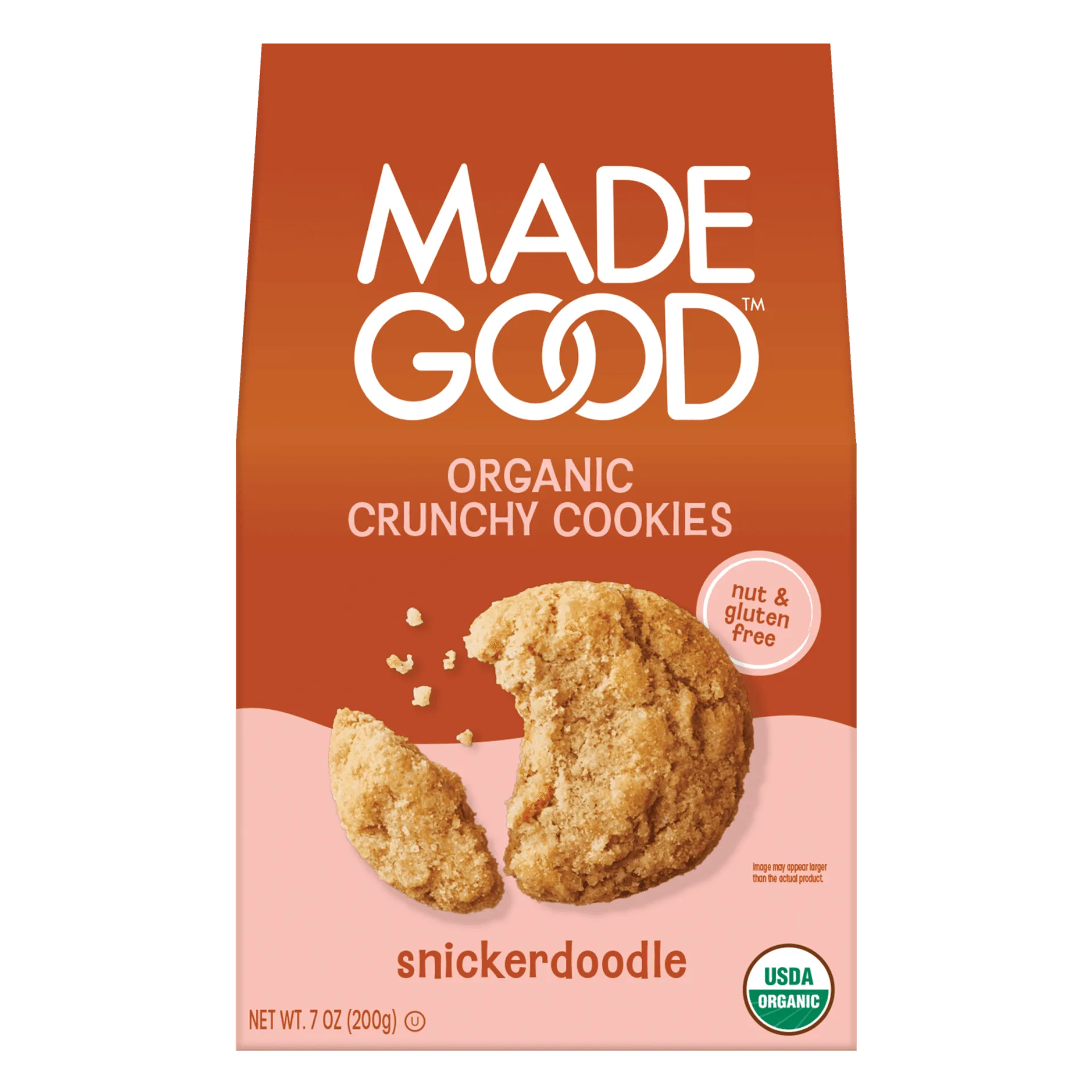
Snickerdoodle Crunchy Cookies
Walking down the snack aisle, you're faced with a wall of colorful packages, each boasting health claims. But how do you know which cookies and crackers are truly better for you? The answer lies in the nutrition label. Learning to read these labels can transform your snack choices, helping you avoid hidden sugars, excess sodium, and artificial ingredients.
In this guide, we'll break down the nutrition label step by step, focusing on what matters most for cookies and crackers. From understanding serving sizes to deciphering ingredient lists, you'll gain the confidence to pick snacks that align with your health goals. Plus, we'll highlight some MadeGood products that make healthy snacking easy.
Start with Serving Size and Servings Per Container
The serving size is the foundation of the nutrition label. All the numbers you see—calories, fat, sodium—are based on this amount. For cookies and crackers, serving sizes can vary dramatically. A serving might be one cookie, two cookies, or even a handful of crackers. Always compare the serving size to how much you actually eat. If you eat double the serving, you're getting double the calories and nutrients.
Also, check the servings per container. A small bag might look like a single snack, but it could contain two or three servings. This is a common trap. For example, a box of MadeGood's Snickerdoodle Crunchy Cookies might list a serving as two cookies, but if you finish the whole box, you're consuming multiple servings. Being aware of this helps you control portions.
- Tip: Use a food scale or measuring cup at home to visualize a serving size accurately.
Check Calories and Key Nutrients
Calories give you a quick sense of energy, but they're not the whole story. For cookies and crackers, focus on nutrients you want to limit: saturated fat, sodium, and added sugars. The % Daily Value (%DV) tells you if a nutrient is high or low. Aim for low %DV (5% or less) for these, and high %DV (20% or more) for beneficial nutrients like fiber and vitamin D.
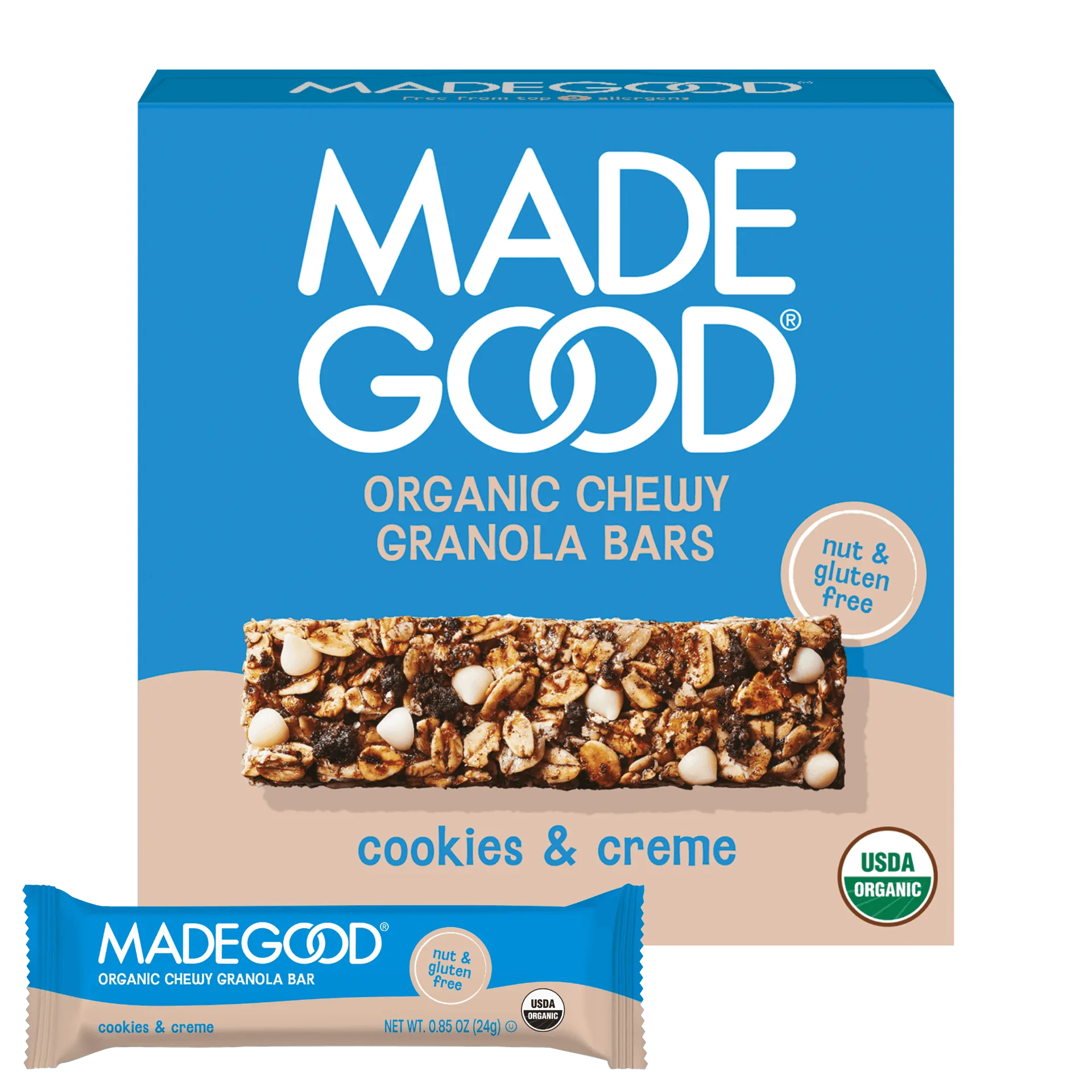
Sodium is particularly important in crackers, as they're often salty. A low-sodium cracker should have less than 140 mg per serving. For cookies, watch added sugars. The American Heart Association recommends no more than 25 grams per day for women and 36 for men. Many cookies pack a lot of sugar into a small serving. MadeGood's Cookies & Crème Granola Bars are a great example of a sweet snack with low sugar, making them a smarter choice.
- Tip: Look for products with at least 3 grams of fiber per serving to boost satiety.
Read the Ingredient List
Ingredients are listed in descending order by weight. The first few ingredients make up the bulk of the product. For cookies and crackers, you want to see whole foods like oats, whole wheat flour, or nuts at the top. Be wary of refined flours, hydrogenated oils, and artificial flavors. If you can't pronounce an ingredient, it's often a red flag.
Also, look for hidden sugars. Sugar can appear as sucrose, high fructose corn syrup, honey, or even fruit juice concentrate. The ingredient list is where you'll spot these. MadeGood products, like their Sea Salt Star Puffed Crackers, use organic, non-GMO ingredients and are free from artificial additives, making them a clean choice. Their crackers are also gluten-free and vegan, catering to various dietary needs.
- Tip: If sugar appears in the first three ingredients, consider a different product.
Understand Nutrient Claims and Certifications
Packages often boast claims like 'gluten-free', 'organic', or 'good source of vitamin D'. While these can be helpful, they don't tell the whole story. For instance, a product can be gluten-free but still high in sugar. Always cross-check claims with the nutrition facts and ingredient list. Certifications like 'non-GMO' or 'vegan' indicate adherence to certain standards, but they don't guarantee healthiness.
MadeGood's Vanilla Crunchy Cookies are a good example: they're gluten-free and made with organic ingredients, but they also provide vitamin D from vegetable extracts. This makes them a more nutritious option compared to traditional cookies. Similarly, their Cheddar Star Puffed Crackers are vegan and free from common allergens, making them suitable for many diets. These certifications add value, but you still need to look at the full label.
- Tip: Don't rely solely on front-of-package claims; always flip the package to verify.
Step-by-Step Guide to Reading Nutrition Labels
- Step 1: Check Serving Size: Look at the serving size and servings per container. Compare to how much you actually eat. Adjust all numbers accordingly. Checkpoint: You should know exactly how many servings you're consuming.
- Step 2: Review Calories: Note calories per serving. If you eat multiple servings, multiply. Consider your daily calorie needs. Checkpoint: Calories should fit within your daily budget.
- Step 3: Limit Unhealthy Nutrients: Check saturated fat, sodium, and added sugars. Aim for low %DV (5% or less). Checkpoint: Keep sodium under 140mg per serving and added sugars low.
- Step 4: Look for Beneficial Nutrients: Seek fiber, protein, vitamins, and minerals. Aim for high %DV (20% or more). Checkpoint: Choose snacks with at least 3g fiber or a good source of vitamins.
- Step 5: Read the Ingredient List: Check first few ingredients for whole foods. Avoid refined flours, artificial additives, and hidden sugars. Checkpoint: If sugar is among the first three, reconsider.
- Step 6: Consider Certifications: Look for gluten-free, organic, non-GMO, vegan, etc. Cross-check with nutrition facts. Checkpoint: Certifications add value but don't override the full picture.
Nutrition Facts from MadeGood Products
- Cheddar Star Puffed Crackers: Vegan, non-GMO, gluten-free, organic ingredients, free from common allergens. These crackers offer a savory snack without dairy or gluten, making them accessible for those with dietary restrictions while still being a tasty choice.
- Snickerdoodle Crunchy Cookies: Improved texture, crunchy bite, enhanced flavor, crafted in a dedicated nut-free facility, good source of vitamin D, gluten-free. These cookies provide a satisfying crunch and are a better-for-you treat, offering vitamin D and being safe for nut-free environments.
- Cookies & Crème Granola Bars: Chewy, low sugar, organic, non-GMO, dairy-free, vegan chocolate, allergy-friendly. These bars satisfy sweet cravings with lower sugar and are free from common allergens, making them a smart snack for health-conscious consumers.
Reading nutrition labels on cookies and crackers doesn't have to be complicated. Start by understanding serving sizes, then evaluate calories, nutrients, and ingredients. With practice, you'll quickly spot healthier options. For a delicious start, try MadeGood's Sea Salt Star Puffed Crackers for a light, salty snack, or their Snickerdoodle Crunchy Cookies for a sweet treat. Both are made with wholesome ingredients, making them a great addition to your snack rotation.