Quick answer
Start by checking the serving size and protein grams per serving on the nutrition facts panel—these determine how much protein you actually get. Then, scan the ingredients list and evaluate marketing claims against the actual numbers.
Why serving size matters more than the front of the package
The front of a protein powder container often highlights total protein per container or a bold flavor name. But the serving size is what tells you how much protein you get per scoop—and that number can vary widely between products. A product with 25 grams of protein per serving might require two scoops, while another delivers the same protein in one scoop.
Always compare products using the same serving size. If one label lists 25g per scoop and another lists 25g per two scoops, they are not equivalent. This is a common trap when comparing prices or macros.
Understanding protein grams per serving and calories
Protein grams per serving is the core number for most buyers. But it doesn't exist in isolation—calories, fat, carbs, and sugar all affect whether a powder fits your goals. A high-protein isolate like Dymatize ISO100 delivers 25g of protein with only 120 calories and 1g of sugar, making it a lean option for post-workout recovery.
If you're cutting calories, you'll want a powder with a high protein-to-calorie ratio. If you're bulking, you might accept more carbs or fat. The label gives you the data to make that call.
Decoding marketing claims vs. label facts
Terms like "isolate," "hydrolyzed," or "gluten-free" are common on protein labels. They can signal quality, but they don't guarantee a product is right for you. For example, "isolate" means the protein is highly filtered, often with more protein per serving and less lactose—but it may cost more.
Check the ingredients list for what's actually inside. If a product claims "low sugar," verify the sugar grams on the nutrition panel. If it says "gluten-free," look for that certification or the absence of gluten-containing ingredients. The label is your source of truth.
How to read a protein powder label in 5 steps
- Find the serving size: Look at the top of the nutrition facts panel. Note the serving size (e.g., 1 scoop) and the number of servings per container. This tells you how much powder you need for the listed nutrients. Check if the serving size matches how you actually measure—some powders require a scale for accuracy.
- Check protein grams per serving: Read the protein amount under 'Total Fat,' 'Cholesterol,' etc. Aim for at least 20g per serving for a meaningful post-workout dose. Compare products using the same serving size. If a product lists protein per 100g instead of per serving, convert it to per serving to compare fairly.
- Review calories and macros: Look at calories, fat, carbs, and sugar. For weight loss, choose a powder with fewer calories and sugar. For muscle gain, you may accept higher carbs or fat. Use your daily goals as a guide. A product with 25g protein and only 120 calories is a lean choice—but verify the serving size matches your scoop.
- Scan the ingredients list: Ingredients are listed by weight. Look for a protein source (e.g., whey protein isolate) as the first ingredient. Avoid excessive fillers, artificial sweeteners, or additives if you prefer a cleaner product. If you have allergies, check for common allergens like milk, soy, or gluten—even if the front label doesn't mention them.
- Evaluate claims against the numbers: Read marketing claims like 'high protein' or 'low sugar' and verify them with the nutrition panel. For example, '25g protein' should match the label. If a claim seems too good, it probably is. Ignore front-of-package hype and trust the nutrition facts—those numbers are regulated and accurate.
A label example that checks out
-
Dymatize x Birthday Cake Pebbles ISO100 Whey Protein Powder Isolate, 25g of Protein, 20 Servings, 5.5g BCAAs, 120 Cal., Gluten Free, 1g Fat, 1g Sugar, 2g Carb: Dymatize x Birthday Cake Pebbles ISO100 Whey Protein Powder Isolate delivers 25g of protein per serving with 120 calories, 1g of sugar, and 2g of carbs. This shows a lean protein-to-calorie ratio, making it easy to fit into a low-sugar diet without sacrificing protein.
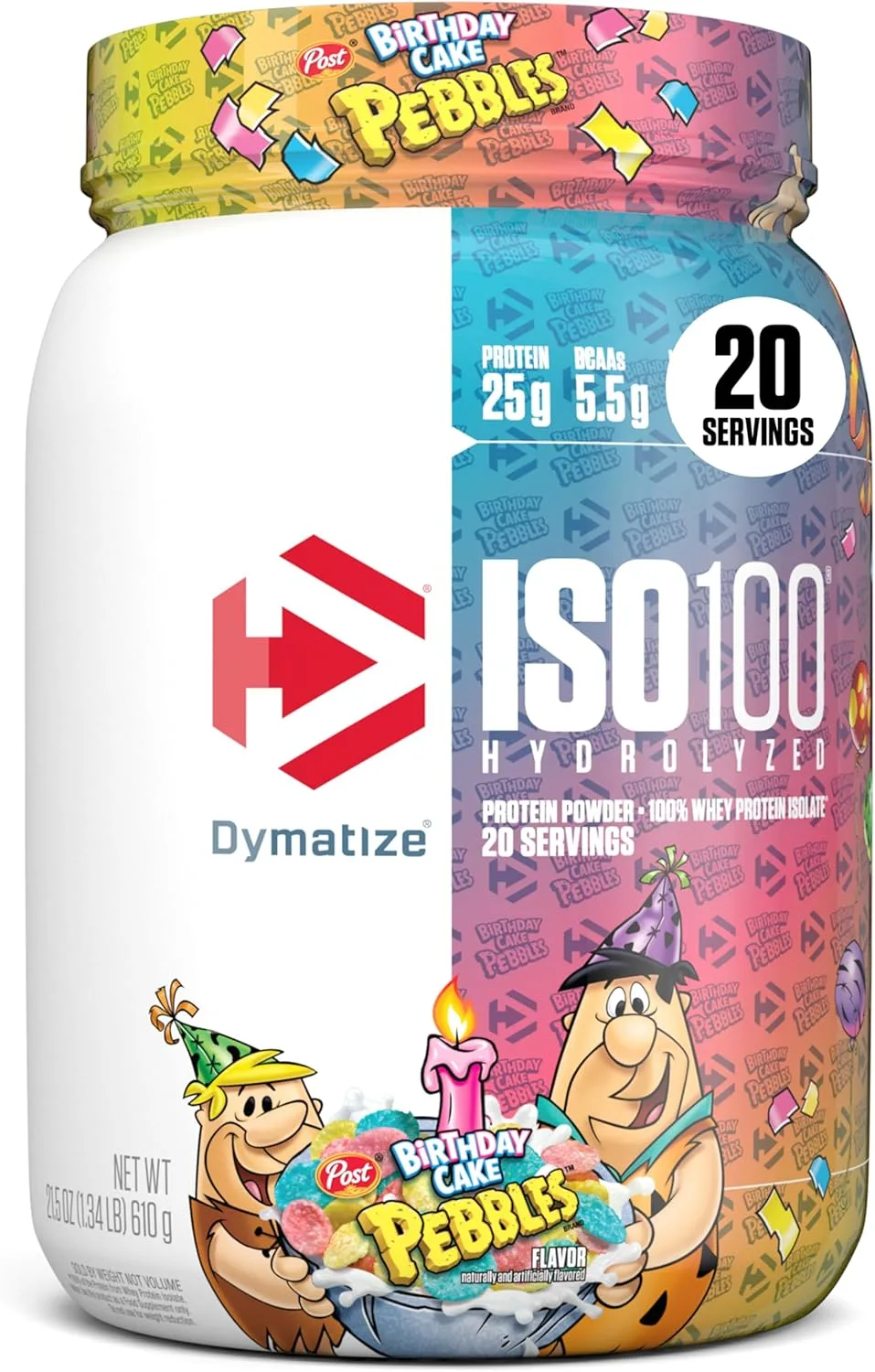
Dymatize x Birthday Cake Pebbles ISO100 Whey Protein Powder Isolate, 25g of Protein, 20 Servings, 5.5g BCAAs, 120 Cal., Gluten Free, 1g Fat, 1g Sugar, 2g Carb