Quick answer
Read a rain gauge by standing at eye level with the water line and noting the measurement at the bottom of the meniscus (the curved surface). Empty and reset the gauge after each reading, and keep a simple log. Place the gauge in an open spot away from trees, buildings, and sprinklers so you capture true rainfall. Use the weekly totals to decide whether to water deeply or skip irrigation.
Why tracking rainfall in the garden beats guessing
Rainfall varies hugely over short distances, so a nearby weather app may not reflect what fell on your beds. Tracking rainfall in the garden tells you how much water your soil actually received, which helps you avoid both underwatering and wasteful overwatering. A simple written or phone log of dates and totals quickly reveals patterns—like whether a 10 mm fall actually soaked down to root level or just dampened the surface. Over a season, this record becomes a practical tool for planning planting and irrigation.
Choosing a rain gauge that suits your garden
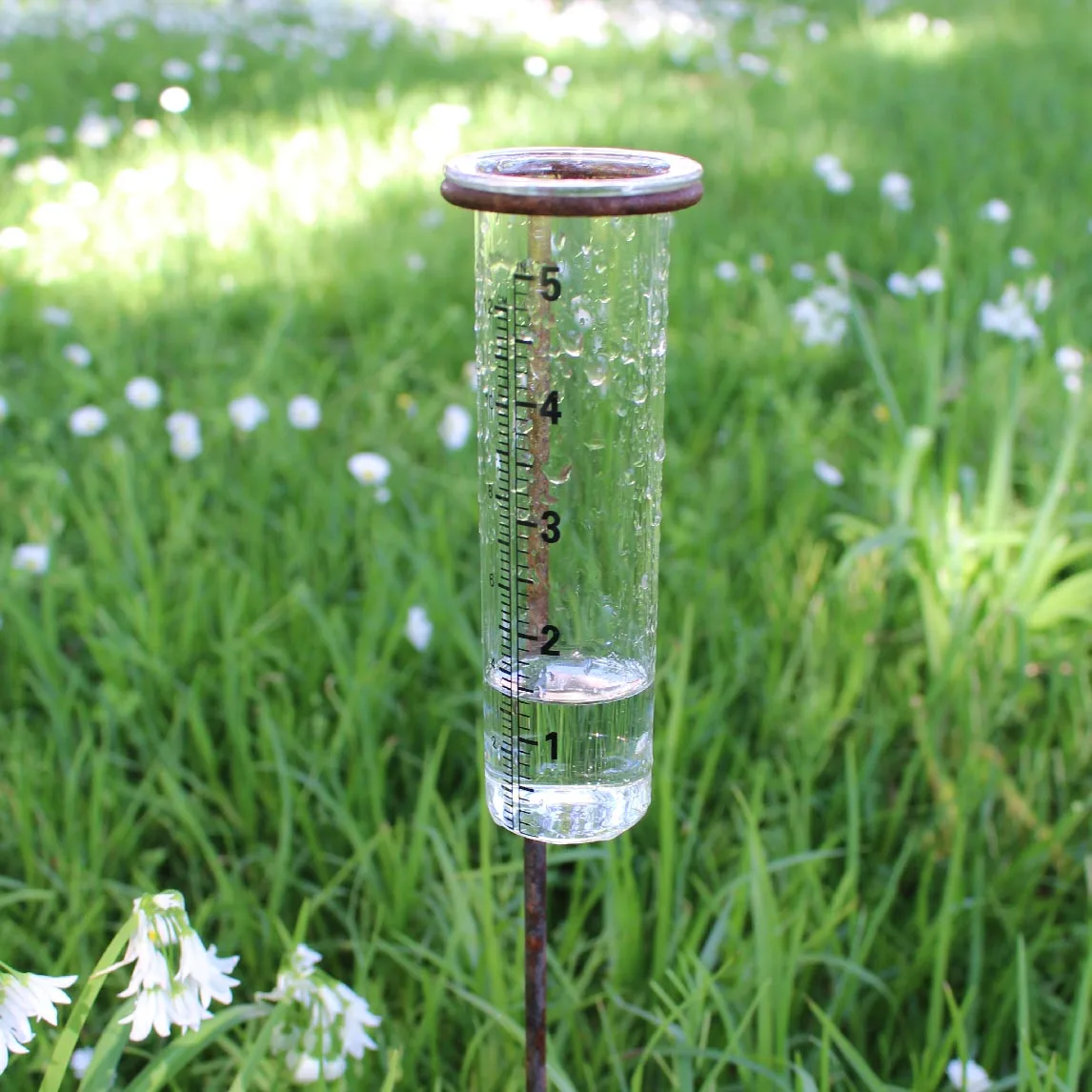
Look for a gauge with clear, dual-unit markings (inches and centimetres) and a sturdy container that won't tip in wind. A glass vial on a metal rod, like the Rain Gauge in our catalog, is easy to read and holds up to 12 cm (5 inches) of rain. Avoid gauges with wide, shallow openings that splash out, and check that the scale is molded or printed clearly—faint markings become impossible to read after a season outdoors.
Step-by-step: reading your rain gauge accurately
- Site the gauge correctly: Place the gauge in an open, level area away from buildings, fences, trees, and sprinklers. The opening should be horizontal and about 70 cm above the ground if your gauge is rod-mounted. Checkpoint: if the gauge sits under a roof drip line or near a wall, move it—shelter and splash will skew readings.
- Read at eye level: Crouch or stand so your eyes are level with the water surface. Read the value at the bottom of the meniscus (the lowest point of the curved water line). Note the unit—inches or centimetres—and record it. Common mistake: reading from above makes the water line look higher than it is.
- Empty and reset after each reading: Tip out the water and give the vial a quick rinse if debris collected. Record the date and amount in your log before resetting. Checkpoint: if you forget to empty, the next reading will include old rain and overstate the total.
- Log and interpret your data: Track daily or weekly totals and compare them with your soil moisture. A 10 mm fall may only wet the top few centimetres, while 25 mm or more can reach deeper roots. Use your log to decide when to water and when to wait. Next step: after a month, review the log to spot dry spells and adjust your watering schedule.
Product facts
- Rain Gauge: Rustic metal rod holds a sturdy glass vial marked in both inches and centimetres, holding up to 12 cm (5 inches) of rainfall. Height 70 cm, width 5.5 cm. Dual units suit any gardener, and the 12 cm capacity means you won't need to empty it after every short shower. The 70 cm height lifts the vial above splashing soil and makes reading at eye level easier.