Quick answer
Read Time for Tamales in two short sittings: first for the story and the teamwork message, then again to hunt for the 12 Spanish words and talk about the tamale-making steps. Keep a small shopping list and a pot of masa nearby so kids can act out the scoop, squeeze, and tie.
Why this book works for a cooking story time
The story follows Tía Lola, Max, Mia, and Pablo as they shop and prepare tamales for a food festival. When their dog Toby eats a key ingredient, a fellow competitor steps in to help. That plot gives you a natural pause to talk about teamwork and competition without turning the read-aloud into a lecture.
The rhyming text and the 12 Spanish words make it easy to read in short bursts. You do not need to speak Spanish to lead this; you can learn the words alongside your child and let the story’s context carry the meaning.
What to prepare before you open the book
Set out a few props that match the story: a small shopping bag, a bowl, and a clean kitchen towel. These let kids mime the shopping and the scooping, squeezing, and tying without needing real ingredients. If you plan to make tamales afterward, choose a simple filling and have corn husks soaking before you start reading.
Keep the Spanish words visible on a sticky note or index card. You can point to the card each time a word appears instead of stopping to translate every line.
How to handle the competition and the dog
Toby eating a key ingredient is funny, but some children may worry about the festival being ruined. Pause there and ask, “What would you do if you were Max or Mia?” Then read on to show how a fellow competitor helps. That turns a moment of tension into a lesson about asking for help.
If your child is sensitive to competition, focus on the teamwork line—“When we work together, we’ve already won!”—rather than on who wins the festival.
Steps for a family read-aloud
- Preview the Spanish words: Flip through the book and write down the 12 Spanish words on a card. Practice saying them once so you can read smoothly. Checkpoint: if a word is unfamiliar, look it up before the read-aloud rather than guessing.
- Set the scene with a shopping list: Give each child a short list of three items from the story, such as corn husks, masa, and a filling. Let them “shop” around the room or a table. Checkpoint: keep the list to three items so the activity does not overshadow the story.
- Read the first half for the story: Read from the start through the moment Toby eats the key ingredient. Stop there and ask what the characters should do next. Checkpoint: do not explain the Spanish words yet; let the rhyme and pictures carry the meaning.
- Act out the scoop, squeeze, and tie: Use a bowl and a clean towel to practice the three actions. Say the words as you mime them. Checkpoint: if your child loses interest, skip the actions and return to the book.
- Finish the story and name the teamwork: Read to the end and ask, “Who helped whom?” Point out that a fellow competitor offered help. Checkpoint: connect it to a real moment when your child helped or was helped this week.
- Hunt for the Spanish words on the second read: Read again, this time pausing at each Spanish word. Let your child point to the card and say the word with you. Checkpoint: aim for participation, not perfect pronunciation.
- Connect to a simple kitchen activity: If you have corn husks and masa, make a small batch of tamales together, or simply spread masa on a husk and fold it. Checkpoint: keep the cooking optional and short; the read-aloud is the main event.
Product facts
-
Time for Tamales Picture Book: The story includes 12 Spanish words and explains the origins of tamales. You can build a bilingual-friendly read-aloud around those words without needing outside research.
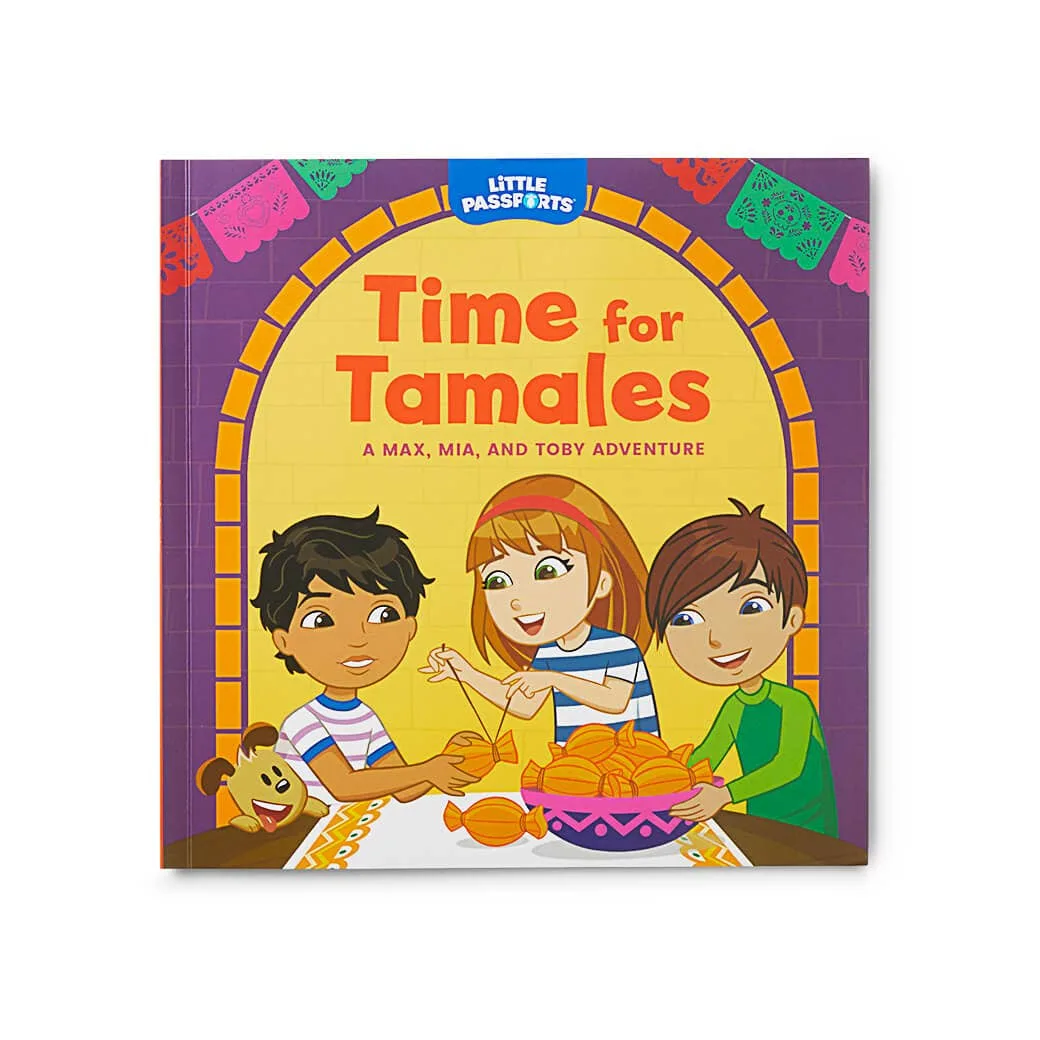
Time for Tamales Picture Book