Quick answer
The biggest reduction in underwear waste comes from buying fewer, more durable pieces and washing them in a way that preserves elastic and shape. Choose bras and briefs built to survive frequent washing, rotate them so each piece rests between wears, and repair small faults before they become landfill. When a piece truly wears out, recycle it through a textile program rather than binning it.
Underwear is one of the hardest-working items in your wardrobe and one of the quickest to be thrown away. Elastic goes wavy, straps slip, seams fray, and before long the drawer is full of pieces that no longer do their job. The good news is that most of that waste is preventable with a few changes to how you buy, wash and retire your underwear.
This guide walks through seven practical steps to reduce underwear waste. You do not need to overhaul your whole drawer at once. Start with the step that fits your routine now, then build from there.
Why underwear waste adds up so quickly
Underwear is replaced more often than almost any other clothing category. It is worn close to the body, washed frequently, and exposed to sweat, body oils and detergent. Elastic is usually the first part to fail, and once a bra band or brief waistband loses its snap, the piece often gets tossed even though the fabric itself may still be intact.
That short lifespan is made worse by fast-fashion pricing. When a bra costs less than a lunch, there is little incentive to repair it or wash it carefully. But cheaper construction often means thinner elastic and looser stitching, so the piece fails sooner and gets replaced more often. Choosing pieces with durable elastic and a supportive knit is one of the most effective ways to reduce underwear waste over time.
- The average bra is washed far more often than it needs to be, which speeds up elastic fatigue.
- Buying multi-packs of low-cost briefs can feel efficient but often leads to faster turnover.
Step 1: Audit what you already own
Before buying anything new, empty your underwear drawer and sort every piece into three piles: wear now, repair or repurpose, and recycle. Be honest about fit. A bra that rides up or a brief that rolls down will not get worn, no matter how good it looks. Those pieces are clutter, not a capsule.
Common mistake: keeping 'someday' pieces that no longer fit or feel comfortable. If you have not worn it in six months and it does not fit, it is not part of a lower-waste routine. Move it to the repair or recycle pile and free up space for pieces you actually wear.
- Checkpoint: your 'wear now' pile should be pieces you reach for without hesitation.
- Set aside anything with a broken clasp, a slipped strap or a small seam split for repair.
Step 2: Buy for durability, not just price
The single biggest lever for reducing underwear waste is buying pieces that last. Look for supportive rib knits, high-quality elastic and construction details that hold their shape. A bra that still supports you after 100 washes replaces several cheaper bras that go wavy and loose within months.
This does not mean spending a fortune. It means paying attention to how a piece is made. For example, the Recycled Wireless Bra A-D - Black uses elastic that costs 13 times standard bra elastic, which is why it is designed to keep supporting you properly after repeated washing. That kind of construction is what makes a lower-waste drawer possible.

Recycled Wireless Bra A-D - Black
- Prioritise bras and briefs with supportive rib knit and elastic that resists stretching out.
- A slightly higher upfront cost is often lower cost per wear than replacing cheap pieces twice a year.
Step 3: Build a smaller, rotating capsule
A smaller drawer that rotates fully is easier to maintain and creates less waste. Aim for a set number of everyday bras and briefs that you genuinely wear, then rotate them so each piece gets rest between wears. Elastic recovers better when it is not worn two days in a row.
Common mistake: buying a large multi-pack of identical briefs and wearing the same few on repeat. The unworn ones sit unused while the favourites wear out first. Instead, choose a small number of styles you like and rotate them evenly.
- A practical starting point is five to seven everyday briefs and three to four bras in active rotation.
- Checkpoint: if one bra is worn three times a week while others sit idle, rebalance your rotation.
Step 4: Wash less often and more gently
Over-washing is one of the fastest ways to destroy underwear elastic. Bras especially do not need to be washed after every wear. Air them out between wears and wash when they actually need it. When you do wash, use cool water and a gentle cycle or hand wash, and skip the dryer.
Heat is the enemy of elastane. Hot water and tumble drying break down elastic fibres, which is why bands go wavy and straps lose their snap. A mesh laundry bag protects delicate pieces and prevents straps from tangling and stretching. For more detail, our guide on how to wash bras so they keep their shape covers the full method.
- Wash bras every two to three wears, not every wear, unless they are visibly soiled or sweaty.
- Never tumble dry bras or briefs with elastane; air dry flat or hanging.
Step 5: Repair small faults before they spread
A slipped strap, a loose hook or a small seam split does not mean the end of a bra. Many faults are fixable with a needle and thread or a quick visit to a tailor. Replacing a hook-and-eye closure or tightening a strap can add months or years to a piece that still fits well.
Common mistake: ignoring a small tear until it becomes a large one. Once a seam opens fully, the piece is much harder to repair and more likely to be discarded. Keep a small repair kit in your drawer and fix issues as soon as you notice them.
- Checkpoint: if a repair takes less than 15 minutes, do it now rather than adding the piece to the discard pile.
- For stretched-out bands that cannot be repaired, move the piece to the recycle pile instead of the bin.
Step 6: Recycle old underwear responsibly
When a piece is truly worn out, recycling is better than landfill. Many textile recycling programs accept underwear and bras, often separating fibres for insulation, padding or industrial rags. Some brands and charities also collect bras in good condition for reuse. Check what your local council or a nearby textile bank accepts before you throw anything away.
Do not put worn-out underwear in your kerbside recycling bin. It contaminates the stream and is not accepted in most municipal programs. Instead, collect a bag of worn pieces and drop them at a textile recycling point when convenient.
- Cut bras and briefs into smaller pieces only if your recycling program requires it; otherwise keep them whole.
- Checkpoint: keep a dedicated 'textile recycling' bag so worn pieces do not end up in general waste.
Step 7: Extend the life of what you keep
A few habits make the pieces you own last longer. Store bras flat or stacked rather than hanging by the straps, which stretches them out. Give briefs and bras a rest day between wears. Use a lingerie bag for washing and avoid fabric softener, which coats elastic and reduces its recovery.
These small changes add up. If each bra lasts an extra year, you buy fewer replacements and send less to recycling. That is the core of a sustainable lingerie routine: not perfection, but fewer, better pieces cared for well.
- Store bras with cups nested, not hanging by the straps.
- Skip fabric softener on anything with elastane; it speeds up elastic breakdown.
Your seven-step lower-waste underwear routine
- Audit your drawer: Sort every piece into wear now, repair or repurpose, and recycle. Be honest about fit and comfort. Checkpoint: if you have not worn it in six months and it does not fit, it does not belong in your everyday rotation.
- Buy for durability: Choose bras and briefs with supportive rib knit and high-quality elastic that resists going wavy. Look for construction built to survive frequent washing. A durable bra that lasts 100 washes replaces several cheaper ones, lowering both cost per wear and waste.
- Rotate a smaller capsule: Keep a set number of everyday bras and briefs and rotate them evenly so elastic gets rest between wears. Checkpoint: rebalance if one piece is worn three times a week while others sit idle.
- Wash less and cooler: Air bras between wears, wash every two to three wears, use cool water and a gentle cycle, and never tumble dry. Heat and over-washing are the main causes of elastic failure; skipping the dryer is the single easiest fix.
- Repair small faults: Fix slipped straps, loose hooks and small seam splits as soon as you notice them, before they spread. Checkpoint: if a repair takes under 15 minutes, do it now rather than discarding the piece.
- Recycle worn-out pieces: Collect truly worn underwear and bras in a dedicated bag and drop them at a textile recycling point. Do not put them in kerbside recycling. Checkpoint: keep the recycling bag separate so worn pieces do not slip into general waste.
- Store and care well: Store bras flat with cups nested, avoid hanging by straps, use a lingerie bag in the wash and skip fabric softener. These habits extend the life of every piece you keep, which is the simplest way to reduce underwear waste.
Product facts that support a lower-waste routine
- Recycled Wireless Bra A-D - Black: The elastic costs 13 times standard bra elastic, and the bra is designed to still support you properly after 100 washes when others have gone wavy and loose. Durable elastic is the difference between a bra that lasts years and one that needs replacing within months, which directly reduces how often you buy and discard.
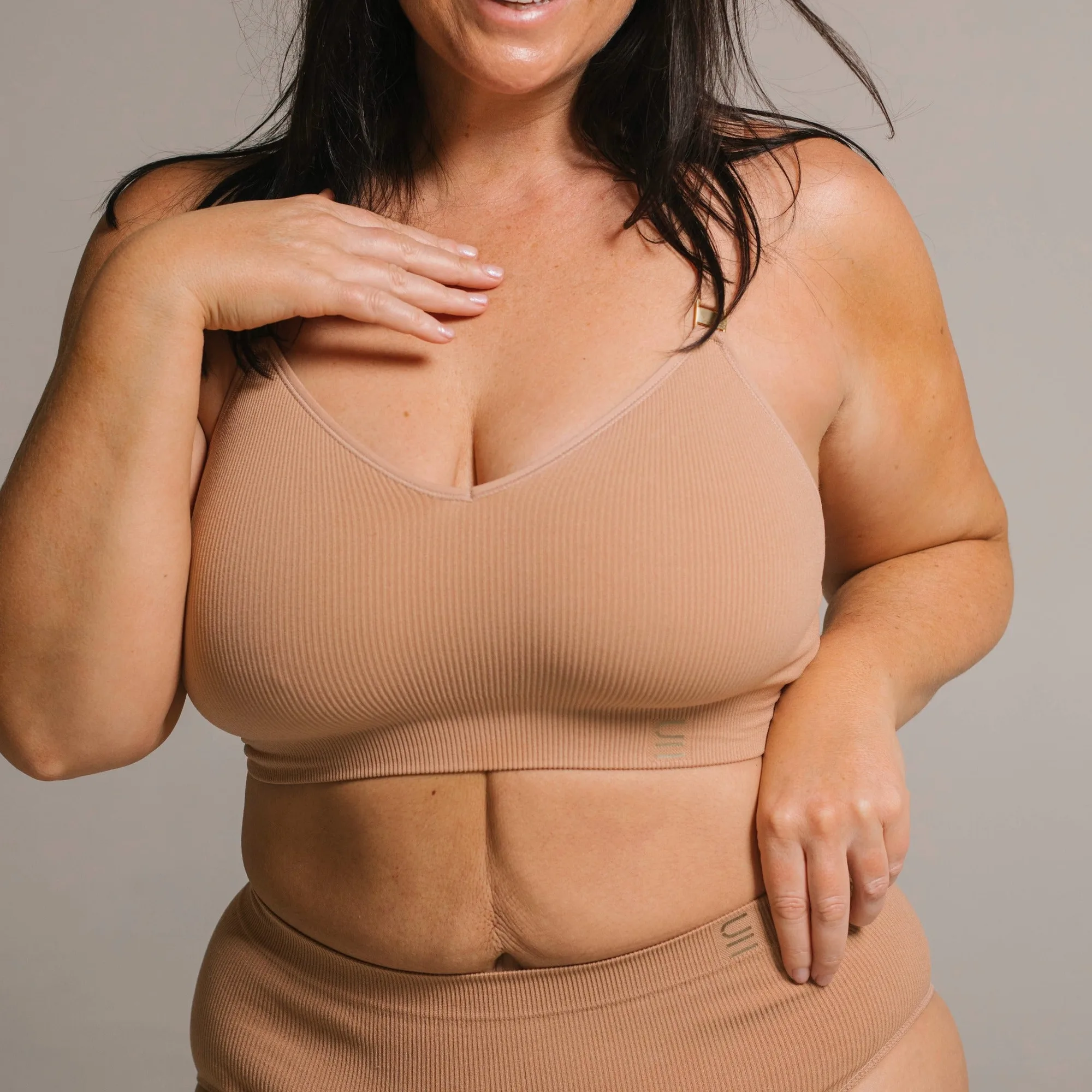
- Recycled Wireless Bra DD+ - Nude 3: For DD+ sizes, the elastane in the body is increased for additional support without adding restriction, and the elastic is designed to support breast weight without digging, waving or losing shape after washing. DD+ wearers often replace bras sooner because standard elastic gives out under more weight. A bra built for that load lasts longer and creates less waste.
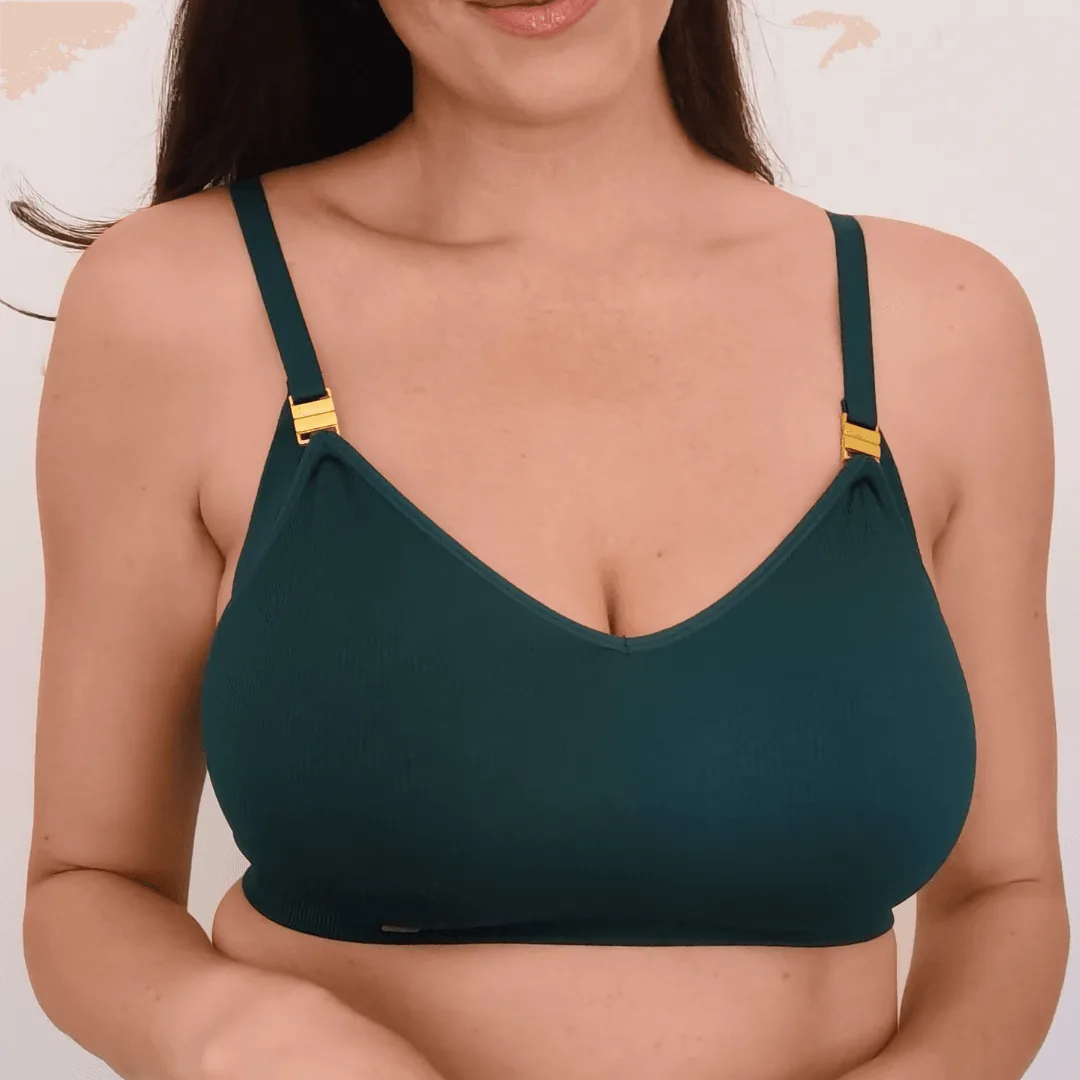
- Recycled Maternity Bra - Atlantis: It is a 4-in-1 bra: a non-wire bra comfortable enough to wear all day and sleep in, a drop cup for one-handed feeding, a convertible regular bra, and a sports bra via racer-back clips. A single bra that covers pregnancy, feeding, everyday wear and sport replaces several short-term pieces, which cuts both cost and waste.
Reducing underwear waste is not about buying nothing. It is about buying pieces durable enough to stay in rotation, washing them in a way that preserves elastic, repairing small faults early, and recycling responsibly when a piece is truly finished. Start with one step from this guide and build from there.