Quick Answer
Empty the drawer completely, sort every piece into keep, repair, or let-go piles, wash what stays, and check each bra's band and cup fit before putting anything back. Replace only what you actually wear, then organize by category so the pieces you reach for most sit front and center. A focused two-hour session beats a vague someday overhaul.
A new season is a natural checkpoint for your lingerie drawer, but the task gets overwhelming if you treat it as a full wardrobe audit. The goal is simpler: keep what fits and feels good, repair what is worth saving, and replace only the gaps you notice in daily wear.
This guide walks through a practical sequence you can finish in one sitting. It covers decluttering, cleaning, fit checks, and a layout that keeps the drawer usable long after the refresh.
Start by emptying the drawer completely
Pull everything out onto a clean surface, including the pieces pushed to the back and the ones still in packaging. You cannot judge what you own while it is stacked and hidden. Seeing the full volume at once usually reveals duplicates, stretched bands, and stray single socks or mismatched briefs.
Sort into three piles as you go: keep, repair or repurpose, and let go. Handle each item once and make the call quickly. If you hesitate, ask whether you wore it in the last few months or would buy it again today.
- Keep a small bag for donations and a separate one for items needing a hook or strap repair.
- Do not wash anything yet; sort first so you only clean what stays.
Declutter with a wear test, not a maybe pile
The hardest part of a lingerie declutter is letting go of pieces that were expensive or barely worn. Use a simple rule: if it digs, slips, gaps, or requires constant adjusting, it is not earning its space. Sentimental pieces can go into a keepsake box, but they should leave the daily drawer.
Be honest about fit changes too. Bodies shift over time, and a bra that fit two seasons ago may no longer sit correctly. That is normal, not a reason to keep forcing it.
- Common mistake: keeping bras 'for backup' that you avoid wearing. Backup bras you dislike still take up prime drawer space.
- Checkpoint: if you would not pack it for a trip, it probably does not belong in the everyday drawer.
Wash and inspect what you are keeping
Once the keep pile is final, wash everything before it goes back. Hand washing is gentler on elastic and lace, but a mesh laundry bag on a delicate cycle works for most everyday pieces. Skip the dryer; heat breaks down elastane and shortens a bra's useful life.
While items dry, inspect them in good light. Look for stretched bands, popped underwires, frayed straps, and lace that has lost its shape. Small repairs like a loose hook or a stray thread are worth fixing; a bent underwire usually is not.
- Common mistake: washing everything together without checking care needs. Lace and mesh prefer cooler water and gentler detergent.
- Checkpoint: if a band has lost its snap after washing, it will not recover with more wear.
Run a quick fit check on every bra
Before anything goes back, fasten each bra on the loosest hook and check the band. It should sit level and snug without riding up in the back. Then scoop your bust into the cups and look for gaping, spillage, or a center gore that floats away from your chest.
If several bras fail the same way, note the pattern. A band that always rides up may mean you need a smaller band size; cups that gap at the top may point to a different cup shape rather than a different size.
- Common mistake: judging fit over a thick shirt. Fit checks work best against bare skin or a thin tee.
- Checkpoint: a bra that needs adjusting within the first hour is not the right fit for all-day wear.
Fill only the gaps you actually have
After the fit check, list what is missing rather than what is on sale. Most drawers need one reliable everyday bra, one option for lower necklines, and enough underwear to cover laundry cycles without running out. That is usually a smaller list than it feels like.
If your everyday bras are worn out but the shape works, replace like for like. If you keep reaching for a smoother finish under knits, look for a mesh or seamless style instead of another lace piece.
- Replace old lingerie in small batches so you can test fit before committing to several pieces.
- Update your underwear drawer alongside bras so sets stay usable together.
Organize the drawer so it stays refreshed
Put the pieces you wear most in the front and center, and store bras cups-up or nested so the wires keep their shape. Dividers or small bins keep thongs and briefs from tangling, and a dedicated spot for special-occasion pieces prevents them from crowding daily wear.
Aim for a layout you can maintain in seconds. If putting laundry away takes effort, the drawer will drift back to clutter within weeks.
- Common mistake: stacking bras flat under heavier items. The weight can bend underwires and crush cups.
- Checkpoint: you should be able to find a everyday bra and matching underwear without digging.
Your Seasonal Drawer Refresh, Step by Step
- Empty and sort: Take everything out and make three piles: keep, repair, and let go. Handle each item once. Checkpoint: if the let-go pile is empty, you probably rushed the sort.
- Declutter honestly: Remove anything that digs, slips, gaps, or needs constant adjusting, even if it was expensive. Common mistake: keeping uncomfortable bras as backups.
- Wash the keep pile: Hand wash or use a mesh bag on delicate, then air dry. Inspect for stretched bands and popped wires. Checkpoint: repair loose hooks, but retire bent underwires.
- Fit-check each bra: Fasten on the loosest hook, scoop into the cups, and check the band and gore against bare skin. Common mistake: judging fit over a thick shirt.
- Replace only real gaps: List what is missing for daily wear, then buy one or two pieces at a time to test fit. Checkpoint: if you have three everyday bras that work, you likely do not need more.
- Reorganize for daily use: Store bras cups-up, use dividers for underwear, and keep most-worn pieces in front. Goal: a drawer you can maintain without effort.
Pieces That Fit a Refreshed Drawer
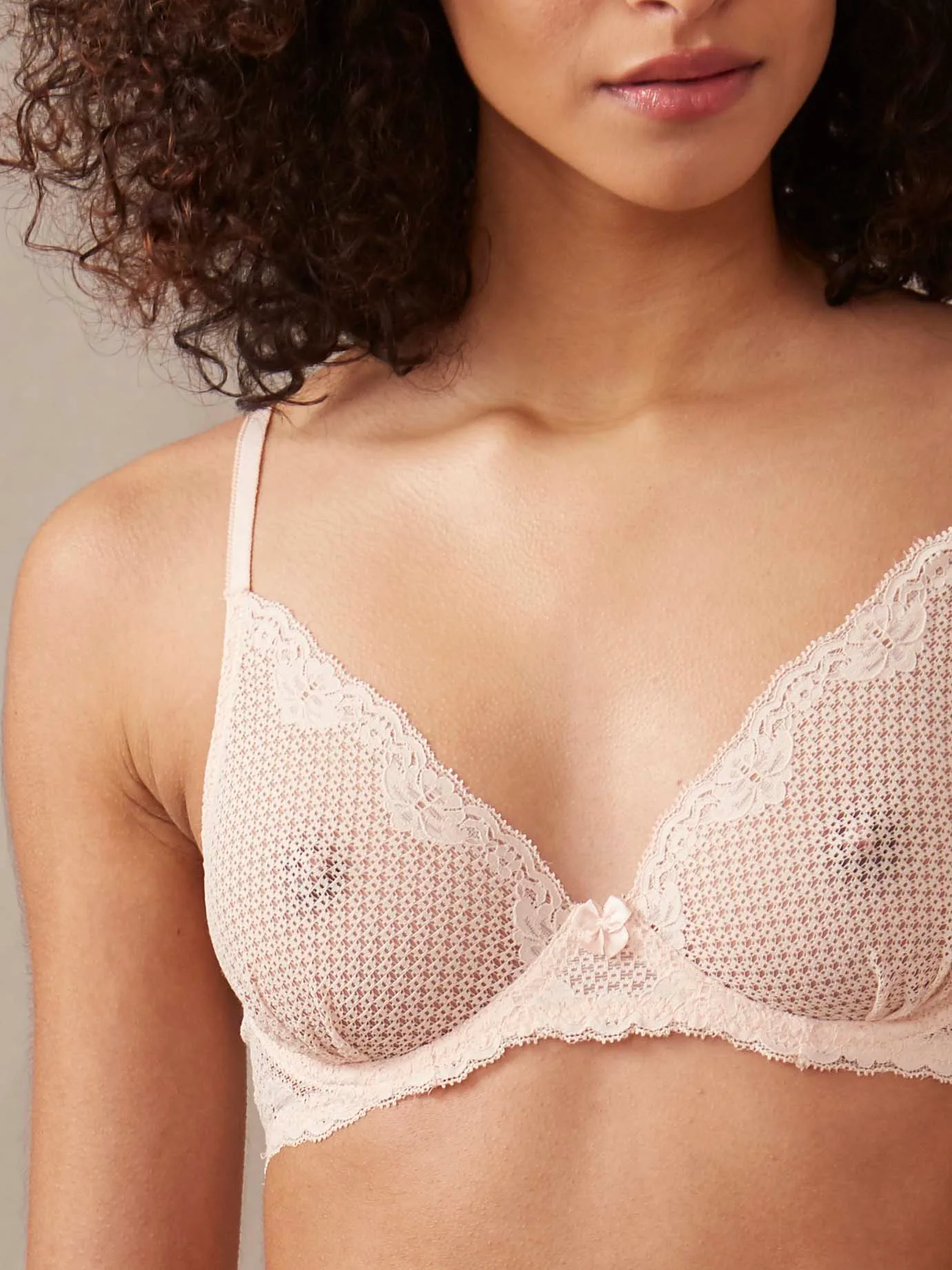
- Alice Plunge Bra: Deep V silhouette in seamless crochet lace, engineered to center the bust and disappear under low-cut tops. A useful replacement if your drawer lacks a bra for wrap dresses and lower necklines.
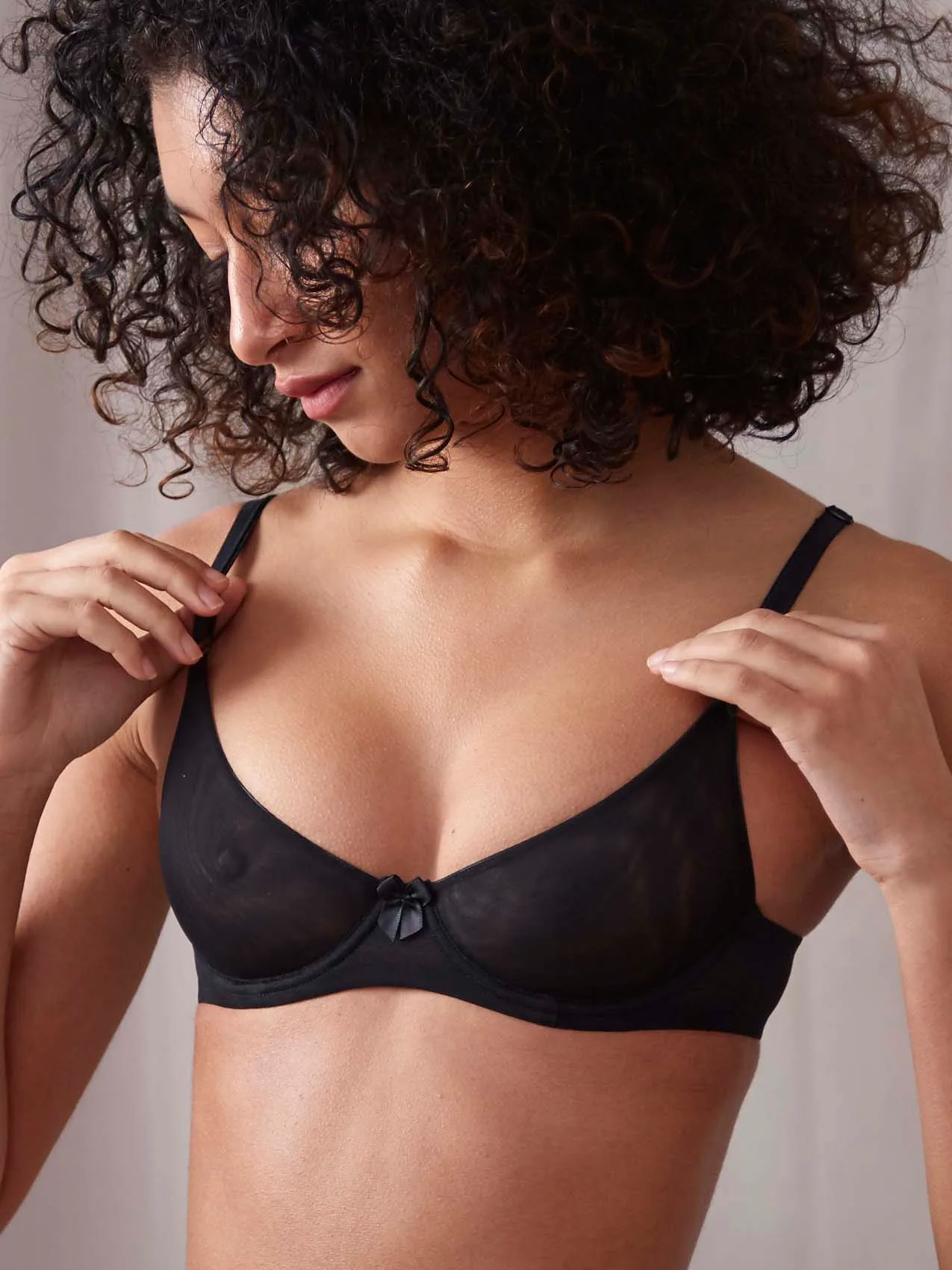
- Natacha Demi bra: Double-layered lightweight mesh with a moiré effect, designed for a smooth everyday look without foam padding. A strong everyday option if you want the lift of a lace bra with a smoother finish under knits.
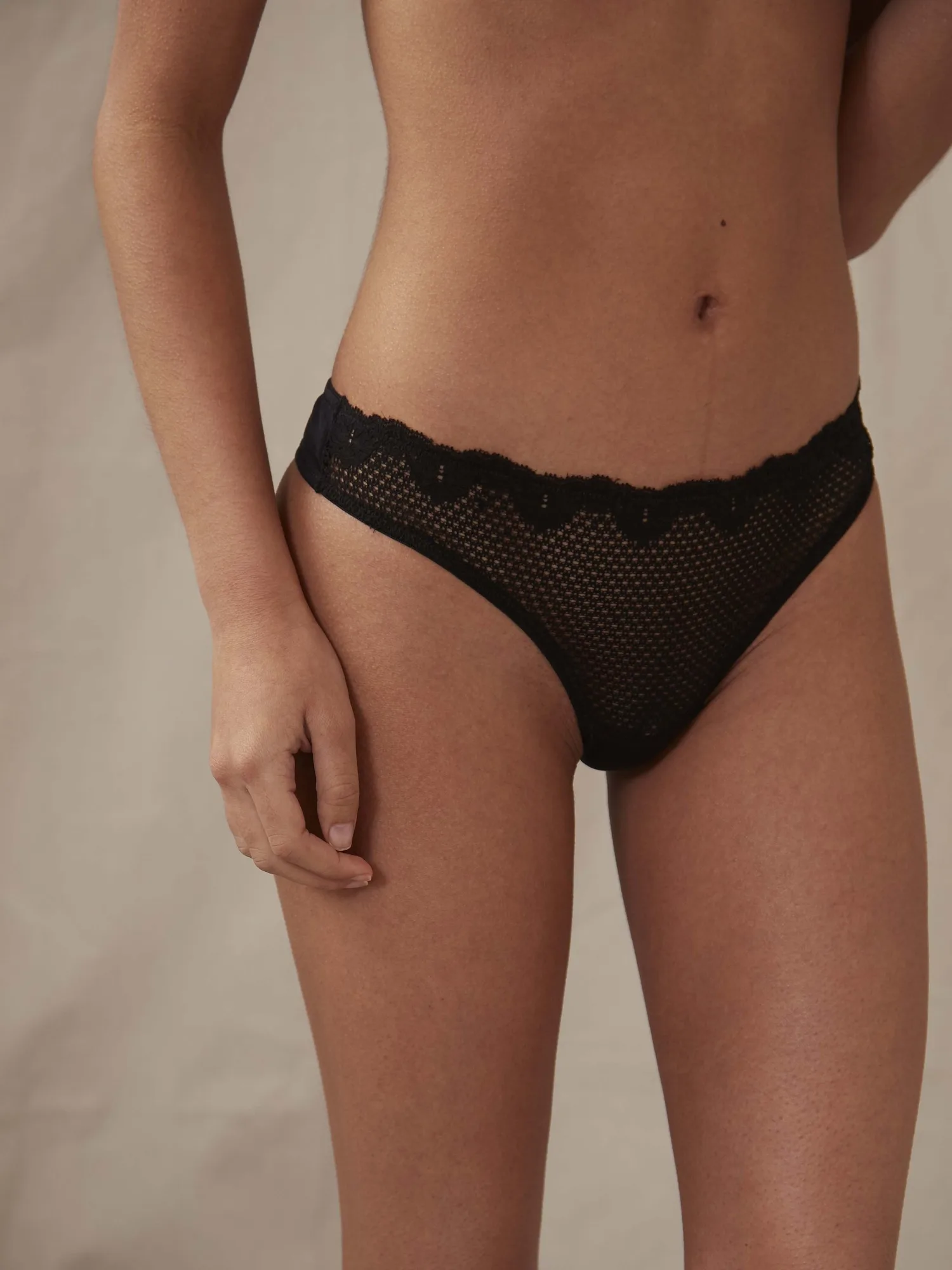
- Alice Thong: Low-rise thong with crochet lace front, scalloped waistband, and silky stretch microfiber back with keyhole detail; runs small, size up. Pairs with Alice bras and replaces stretched or mismatched thongs in the update pile.
A seasonal refresh works best as a short, decisive routine rather than a full wardrobe project. Sort, wash, fit-check, and replace only what is missing, and your drawer will stay easy to use all season.