Quick Answer
To remove iron fallout from car paint, spray a dedicated iron remover like Decon Pro onto a cool, dry surface, let it react and turn purple, then rinse thoroughly. This chemical decontamination step is essential before polishing or waxing.
Why Washing Alone Won't Remove Iron Fallout
Iron fallout—also called rail dust or industrial fallout—consists of tiny metal particles that embed themselves in your paint from brake dust, train tracks, or industrial pollution. These particles are often too small to feel, but they create rough, rusty specks that can lead to staining and clear coat damage over time.
A regular car wash removes surface dirt but cannot dissolve the embedded metal. That's why a dedicated iron remover is necessary: it chemically reacts with the iron particles, turning purple as it breaks them down, so they can be rinsed away safely.
When to Use an Iron Remover
Use an iron remover when you notice small brown or rust-colored specks on your paint, especially on light-colored cars. It's also a smart prep step before polishing, waxing, or applying a sealant, because a clean, decontaminated surface ensures better bonding and a smoother finish.
For heavily contaminated cars, you may need to repeat the process or follow up with a clay bar to remove any remaining bonded contaminants. Be patient and work in sections to avoid letting the product dry on the surface.
Step-by-Step Iron Fallout Removal
- Prepare the Surface: Park your car in the shade and ensure the paint is cool to the touch. Rinse the car with water to remove loose dirt and debris. Do not apply iron remover to a hot surface, as it can dry too quickly and become less effective. Check that the surface is cool and clean before starting.
- Spray the Iron Remover: Shake the Decon Pro bottle well, then spray a generous, even layer onto one section of the paint (e.g., a fender or door). Avoid spraying on dry surfaces in direct sunlight. Work in small sections to prevent the product from drying before it reacts. Don't spray the whole car at once—work panel by panel.
- Let It React: Allow the product to sit for 3-5 minutes. You'll see it turn purple or red as it reacts with iron particles. This color change indicates the product is working. Do not let it dry completely; if it starts to dry, mist with water to keep it wet. If no color change occurs, the surface may have little iron contamination—that's okay.
- Rinse Thoroughly: Use a strong stream of water to rinse off the product and dissolved contaminants. Rinse from top to bottom to avoid pushing residue onto already-cleaned areas. Ensure no purple residue remains, as it can stain if left to dry. Check that all product is completely rinsed away before moving to the next section.
- Repeat or Follow Up: If you still see rust-colored specks, repeat the process on those areas. After the final rinse, you can proceed with polishing or waxing. For a truly smooth surface, consider a clay bar treatment afterward to remove any remaining bonded contaminants. Only move on to polishing or waxing when the paint feels smooth to the touch.
Product Spotlight
-
Decon Pro Iron & Fallout Remover: Decon Pro is an advanced contamination cleaner that removes embedded iron deposits and industrial fallout from paintwork, chrome, glass, and wheels. It turns purple as it dissolves contaminants and rinses clean. This product is specifically formulated to tackle the stubborn iron particles that washing alone can't remove, making it an ideal prep step before polishing or protecting your car.
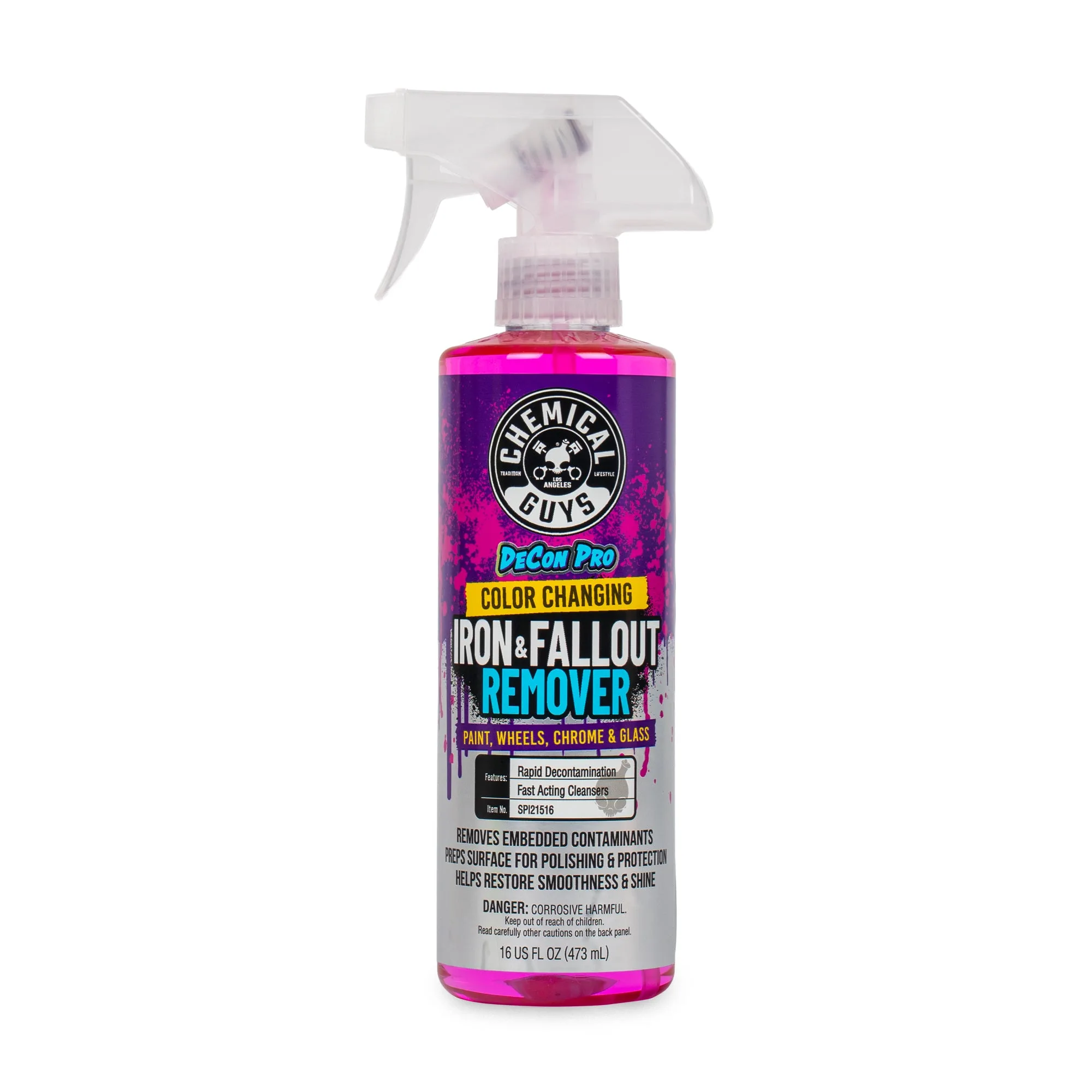
Decon Pro Iron & Fallout Remover