Quick answer
To remove stains from a silk foulard, act quickly: blot the stain, then gently hand-wash with a mild detergent in cool water. For creases, iron the scarf while slightly damp on the lowest silk setting, using a pressing cloth. Always test any method on a hidden corner first.
Why Silk Needs Special Handling
Silk is a protein fiber, similar to wool and hair. Harsh chemicals, high heat, and agitation can break down the fibers, causing dullness, shrinkage, or tears. Many Eau d'Italie foulards are made from cotton, but if you own a silk scarf, the same gentle principles apply. Always check the care label before proceeding.
Cotton foulards, like those from Eau d'Italie, are more forgiving but still benefit from careful stain removal to preserve the printed design.
Stain Removal: Step by Step
For fresh stains, speed matters. Blot—never rub—with a clean white cloth to lift excess liquid. For oil-based stains, sprinkle a little cornstarch or talc, let it sit for 15 minutes, then brush off. For water-based stains like coffee or wine, flush the back of the fabric with cool water. If the stain persists, apply a drop of mild silk-friendly detergent and gently work it in with your fingers. Rinse thoroughly.
For dried stains, soak the scarf in cool water with a few drops of gentle detergent for 15–30 minutes. Avoid bleach, vinegar, and enzyme cleaners—they can damage silk. If the stain remains after washing, do not iron; heat will set it. Instead, repeat the soak or consult a professional dry cleaner.
Washing and Drying Your Foulard
Hand-wash silk in cool water with a pH-neutral detergent. Gently squeeze the suds through the fabric—do not wring or twist. Rinse until the water runs clear. To dry, roll the scarf in a clean towel to absorb excess water, then lay it flat on a drying rack away from direct sunlight. Never tumble dry.
For cotton foulards, you can machine-wash on a delicate cycle, but hand-washing is still safest to protect the print and edges.
Ironing and Crease Removal
Iron silk while it is still slightly damp. Set your iron to the lowest heat setting (silk or synthetic). Place the scarf between two layers of a clean white cotton cloth or use a pressing cloth. Press gently, moving the iron in one direction—do not glide back and forth. Avoid steam bursts, which can leave water spots. For stubborn creases, lightly mist with water and press again. Hang the scarf to finish drying completely before storing.
If you prefer not to iron, hang the scarf in a steamy bathroom; the humidity can relax mild wrinkles.
Step-by-Step Foulard Care
- Act fast on stains: Blot the stain immediately with a clean white cloth. Do not rub, as this pushes the stain deeper into the fibers. Checkpoint: The cloth should lift some color; if not, proceed to washing.
- Pre-treat with care: For oil stains, apply cornstarch; for water-based stains, flush with cool water. Then apply a drop of mild detergent and work gently. Mistake to avoid: Using hot water, which can set protein stains.
- Hand-wash gently: Fill a basin with cool water and a few drops of pH-neutral detergent. Submerge the scarf and gently squeeze suds through it for 1–2 minutes. Rinse thoroughly. Checkpoint: Water should run clear after rinsing.
- Remove excess water: Lay the scarf flat on a clean towel, roll it up, and press gently to absorb water. Never wring or twist. Mistake to avoid: Wringing can damage fibers and cause wrinkles.
- Dry flat away from heat: Lay the scarf flat on a drying rack or clean towel. Keep it out of direct sunlight and away from radiators. Checkpoint: The scarf should be slightly damp before ironing.
- Iron on low with a pressing cloth: Set iron to lowest heat. Place scarf between two clean white cotton cloths. Press gently in one direction. Do not use steam bursts. Mistake to avoid: Ironing directly on the printed side without a cloth can cause shine or color transfer.
- Store properly: Once completely dry, fold loosely and store flat in a drawer. Avoid hanging to prevent stretching. Checkpoint: Scarf is smooth and ready to wear.
Product Care Notes
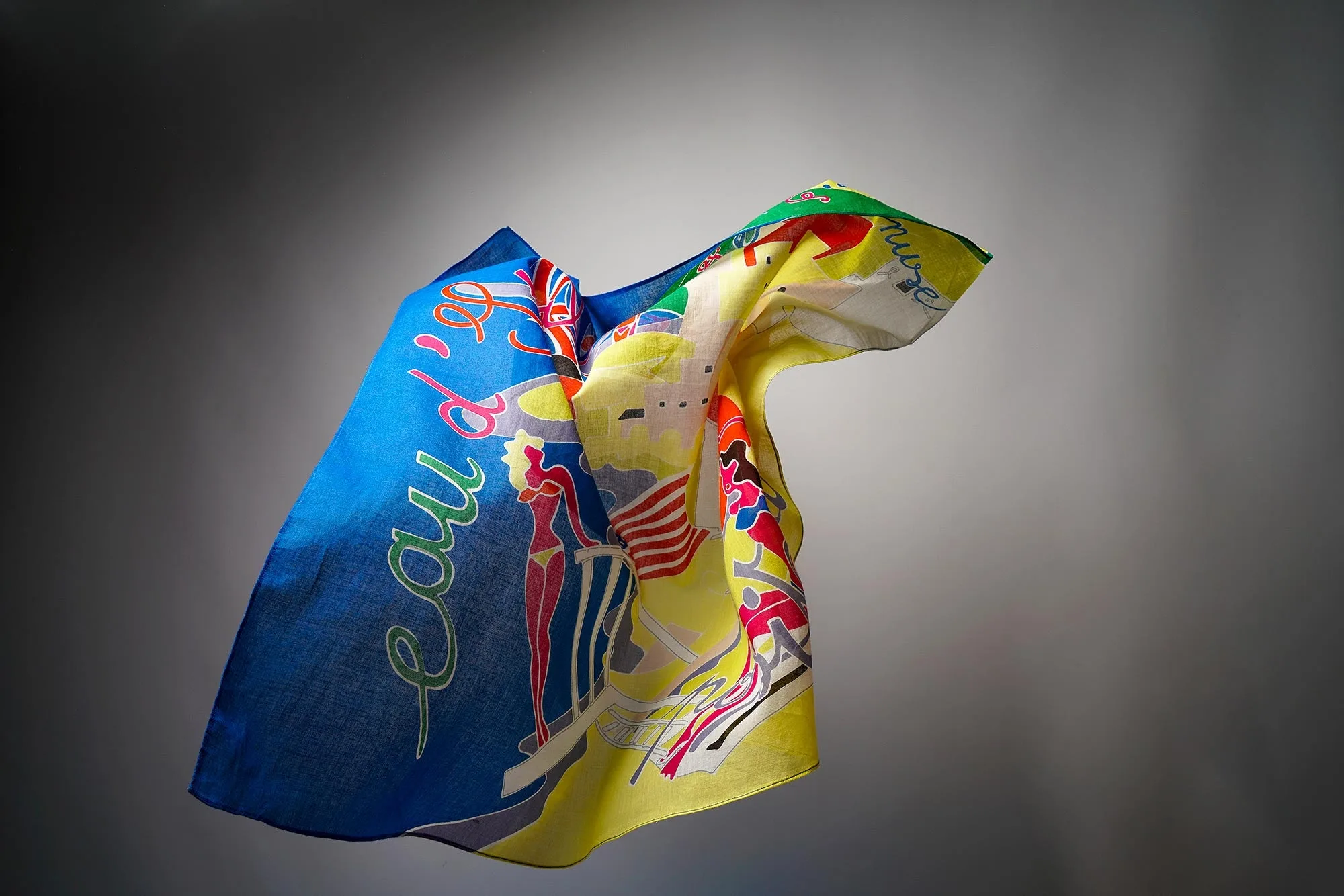
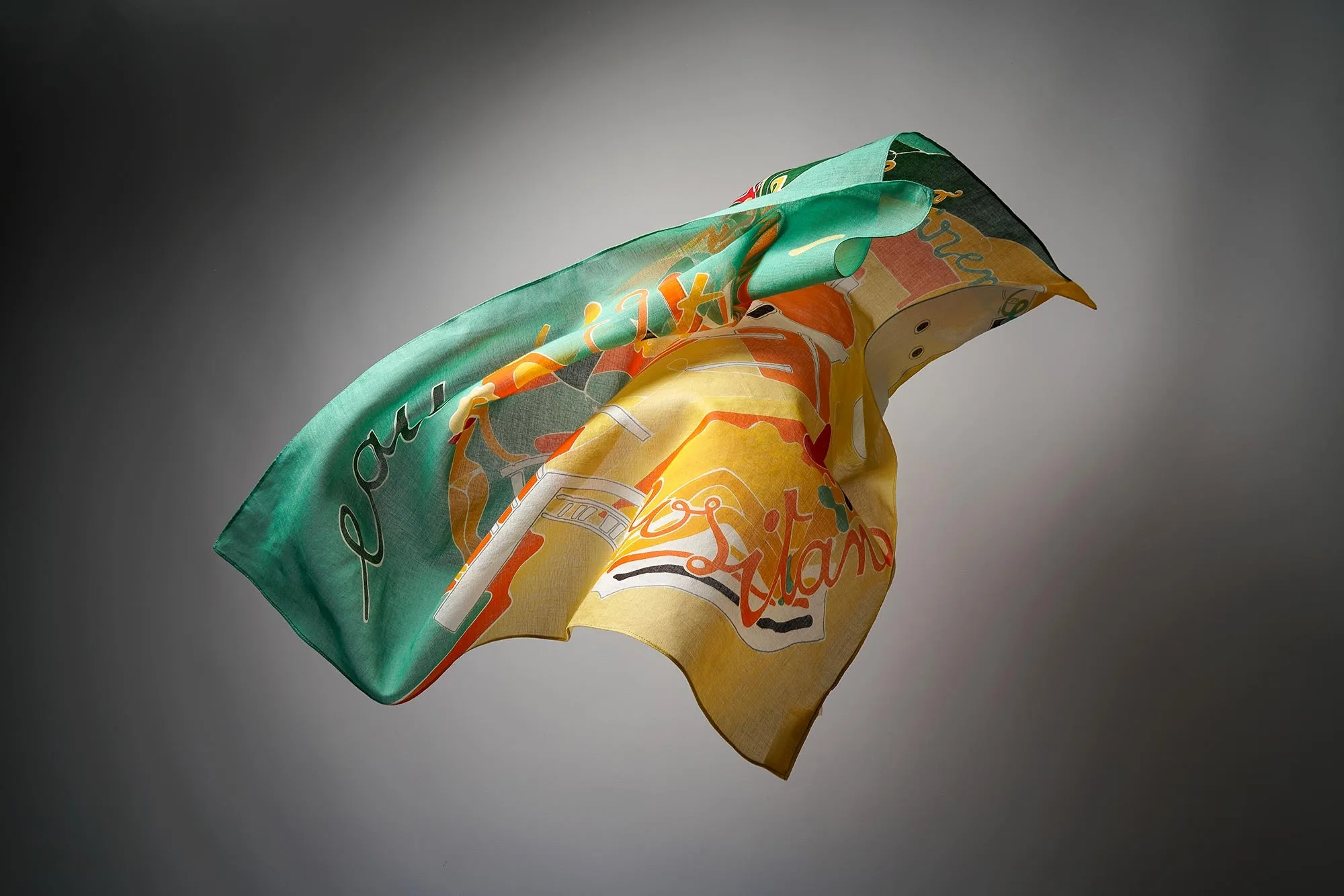
- Foulard Eau d'Italie # 3: Foulard Eau d'Italie # 3 is made of cotton, screen-printed in India with Eau d'Italie perfume colors. Cotton is more durable than silk but still requires gentle stain removal to protect the print.
- Foulard Eau d'Italie # 1: Foulard Eau d'Italie # 1 is also cotton, handcrafted with artisanal techniques and modern machinery. The handcrafted nature means you should avoid harsh scrubbing to preserve the fabric's finish.