Quick answer
To remove stains from Pyrex glass baking dishes, start by scraping off loose residue, then soak the dish in hot soapy water. For stubborn baked-on stains, make a paste of baking soda and water, apply it, and let it sit before scrubbing gently with a non-abrasive pad. Avoid sudden temperature changes and harsh abrasives to keep the glass clear and safe.
Why stains stick to glass bakeware
Glass bakeware is non-porous, so stains usually sit on the surface rather than soaking in. Baked-on grease and sugars carbonize during high-heat roasting, forming a brown or white film that ordinary washing won't lift. The longer residue stays, the harder it bonds, so cleaning soon after use makes the job easier. Hard water minerals can also leave a cloudy film that looks like a stain but is actually a deposit.
Tools and supplies that work without scratching
You don't need a cabinet full of specialty products. A few basics will handle most stains without damaging the glass. Always avoid metal scouring pads, steel wool, and abrasive cleansers, which can scratch the surface and make future stains harder to remove.
- Non-abrasive sponge or nylon scrubber
- Liquid dish soap
- Baking soda
- White vinegar
- Plastic scraper or silicone spatula
- Dish towel or microfiber cloth
Step-by-step stain removal
Follow these steps in order. Each one targets a different type of residue, from loose crumbs to baked-on grease.
- Step 1: Scrape off loose residue. Use a plastic scraper or silicone spatula to remove food particles. Mistake to avoid: using a metal utensil, which can gouge the glass. Checkpoint: the dish should be free of loose debris before soaking.
- Step 2: Soak in hot soapy water. Fill the dish with the hottest tap water and a few drops of dish soap. Let it sit for 15–30 minutes. Mistake to avoid: using boiling water on a cold dish, which can cause thermal shock. Checkpoint: grease should look softened or lifted.
- Step 3: Wash with a non-abrasive sponge. Wipe the entire surface, including corners and edges. Mistake to avoid: scrubbing hard with a scouring pad. Checkpoint: most stains should come off with light pressure.
- Step 4: Tackle stubborn stains with a baking soda paste. Mix 3 parts baking soda with 1 part water. Apply to stained areas and let sit for 15–20 minutes. Mistake to avoid: letting the paste dry completely, which makes it harder to remove. Checkpoint: the paste should still be slightly moist when you scrub.
- Step 5: Scrub gently and rinse. Use a nylon scrubber in circular motions, then rinse with warm water. Mistake to avoid: using too much pressure, which can dull the glass over time. Checkpoint: the glass should look clear and feel smooth.
- Step 6: Remove cloudy film with vinegar. If a white haze remains, soak a cloth in white vinegar and wipe the surface. Mistake to avoid: mixing vinegar with baking soda in the same step, as they cancel each other out. Checkpoint: the film should disappear after a few wipes.
- Step 7: Dry and inspect. Towel-dry the dish and hold it up to the light. Mistake to avoid: storing the dish while still damp, which can leave water spots. Checkpoint: no residue or spots remain.
What not to do
Some cleaning habits do more harm than good. Never use oven cleaner on glass bakeware unless the manufacturer explicitly says it's safe; the chemicals can etch the surface. Avoid sudden temperature changes, such as pouring cold water into a hot dish, which can cause breakage. And skip the dishwasher's heated dry cycle if you want to prevent spots and cloudiness—air-drying is gentler.
Preventing future stains
A few habits keep glass clearer between deep cleans. Lightly grease dishes before baking starchy or sugary foods, and line with parchment when possible. Soak dishes as soon as they're cool enough to handle—don't let them sit overnight. For greasy glass dish cleaning, wipe excess oil with a paper towel before washing to keep your sponge from spreading grease around.
Stain removal steps at a glance
- Scrape, don't scratch: Use a plastic scraper or silicone spatula to remove loose food. Metal tools can gouge glass. Checkpoint: no loose debris remains.
- Soak in hot soapy water: Fill with hottest tap water and dish soap; soak 15–30 minutes. Avoid boiling water on a cold dish. Checkpoint: grease looks softened.
- Wash with a non-abrasive sponge: Wipe all surfaces with light pressure. Skip scouring pads that can scratch. Checkpoint: most stains lift easily.
- Apply baking soda paste for stubborn stains: Mix 3 parts baking soda to 1 part water; apply and let sit 15–20 minutes. Don't let it dry out. Checkpoint: paste stays moist.
- Scrub gently and rinse: Use circular motions with a nylon scrubber, then rinse with warm water. Don't press hard. Checkpoint: glass feels smooth.
- Remove cloudy film with vinegar: Wipe with a vinegar-soaked cloth. Don't mix vinegar and baking soda in the same step. Checkpoint: film disappears.
- Dry and inspect: Towel-dry and hold to light. Don't store damp. Checkpoint: no spots or residue.
Pyrex dishes that make cleanup easier
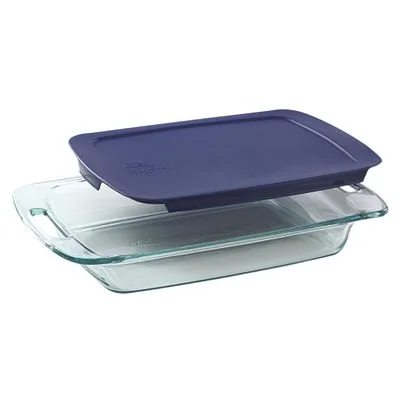
- Pyrex® Easy Grab® 3-quart Glass Baking Dish with Blue Lid: This 9" x 13" Pyrex® baking dish is your “go-to” size for everything from cakes to casseroles. It is compatible with the Pyrex® Red Lid and Pyrex® Blue Lid for Easy Grab® 3-quart Rectangular Glass Baking Dish. The included lid lets you store leftovers directly in the dish, so you can soak it later without transferring to another container. The 9" x 13" size fits most standard recipes, making it a practical choice for everyday baking and easy cleanup.
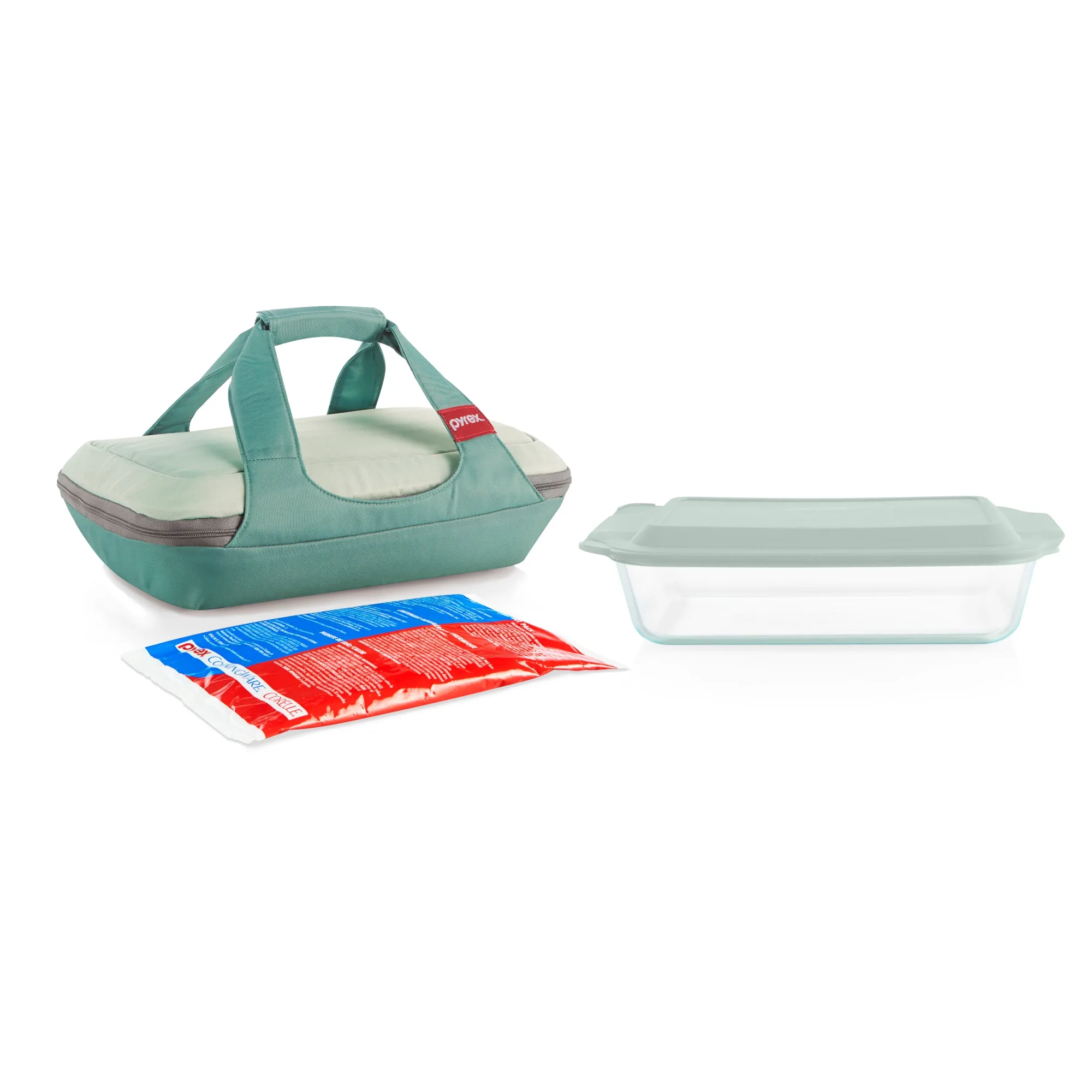
- Pyrex® Deep Portable 4-piece Glass Baking Dish Set Portable Set, Green Sage Lid: The deeper hold-everything baking dish is here to make and take all your yummy creations to family gatherings, picnics and more. At up to 50% deeper than other 9" x 13" bakers, this baking dish gives you a 5-quart capacity to make your favorite dish. The extra depth means less splatter in the oven, which translates to less baked-on mess on the dish and oven walls. If you often bake saucy casseroles or large batches, this dish can reduce cleanup time.