Quick answer
Start with the gentlest method: warm the sticker with a hair dryer on low, then peel slowly at a low angle. If glue remains, dab a little cooking oil or rubbing alcohol onto a cloth and work it in circles. Stop immediately if the surface dulls, the print lifts, or the sticker starts to tear, because at that point you risk more damage than the residue is worth.
Sticker residue is rarely a sign that you did something wrong. Most of the time it is old adhesive that has dried out, warmed up, or bonded more tightly than the sticker itself. The fix is less about scrubbing harder and more about matching the method to the surface.
That matters because the products people stick and re-stick are often not disposable. A holographic vinyl sticker on a laptop, a waterproof sticker on a water bottle, or a postcard tucked into a journal all sit on surfaces you want to keep. This guide walks through the safe order of operations, what each method actually does, and the point where you should stop.
Why sticker residue happens in the first place
Adhesive is designed to stay put, so when a sticker peels away cleanly it is usually because the bond between the glue and the sticker is stronger than the bond between the glue and the surface. When that flips, the sticker lifts and the glue stays behind. Heat, sunlight, and time all push that process along.
This is why residue is more common on items that live in warm places: car windows, laptops that run hot, and water bottles left in the sun. It also explains why a sticker that came off easily last year can leave a gummy patch today. The adhesive has had more time to cure onto the surface.
- Residue is old adhesive, not a stain, so treat it as something to lift rather than scrub out.
- Warm surfaces release stickers more cleanly than cold ones.
- If the sticker is still on and you want to keep it, stop here and reposition it instead of removing it.
The safe removal order: heat, lift, then dissolve
Work from least invasive to most invasive. First, warm the sticker or residue with a hair dryer on low for 20 to 30 seconds. Then peel or lift at a low angle, close to the surface, rather than pulling straight up. Low-angle lifting keeps the adhesive from snapping and leaving a patch behind.
If glue remains, move to a solvent. Cooking oil, rubbing alcohol, and commercial adhesive removers all work, but they behave differently. Oil is slow and safe for most hard surfaces but can stain paper and some plastics. Alcohol evaporates quickly and cuts sticky film well, but it can dull certain finishes. Test on a hidden spot first.
- Use a plastic scraper or an old credit card, never a metal blade, on painted or coated surfaces.
- Work in small circles with a cloth rather than pressing hard in one spot.
- Let the solvent sit for a minute before adding more; most residue needs time, not force.
Matching the method to the surface
Glass, glazed ceramic, and most metal handles oil and alcohol well. Painted wood, matte plastics, and screen-printed coatings are more sensitive, so start with oil and a soft cloth. Paper is its own category: once adhesive soaks into cardstock or a postcard, you usually cannot remove it without leaving a mark.
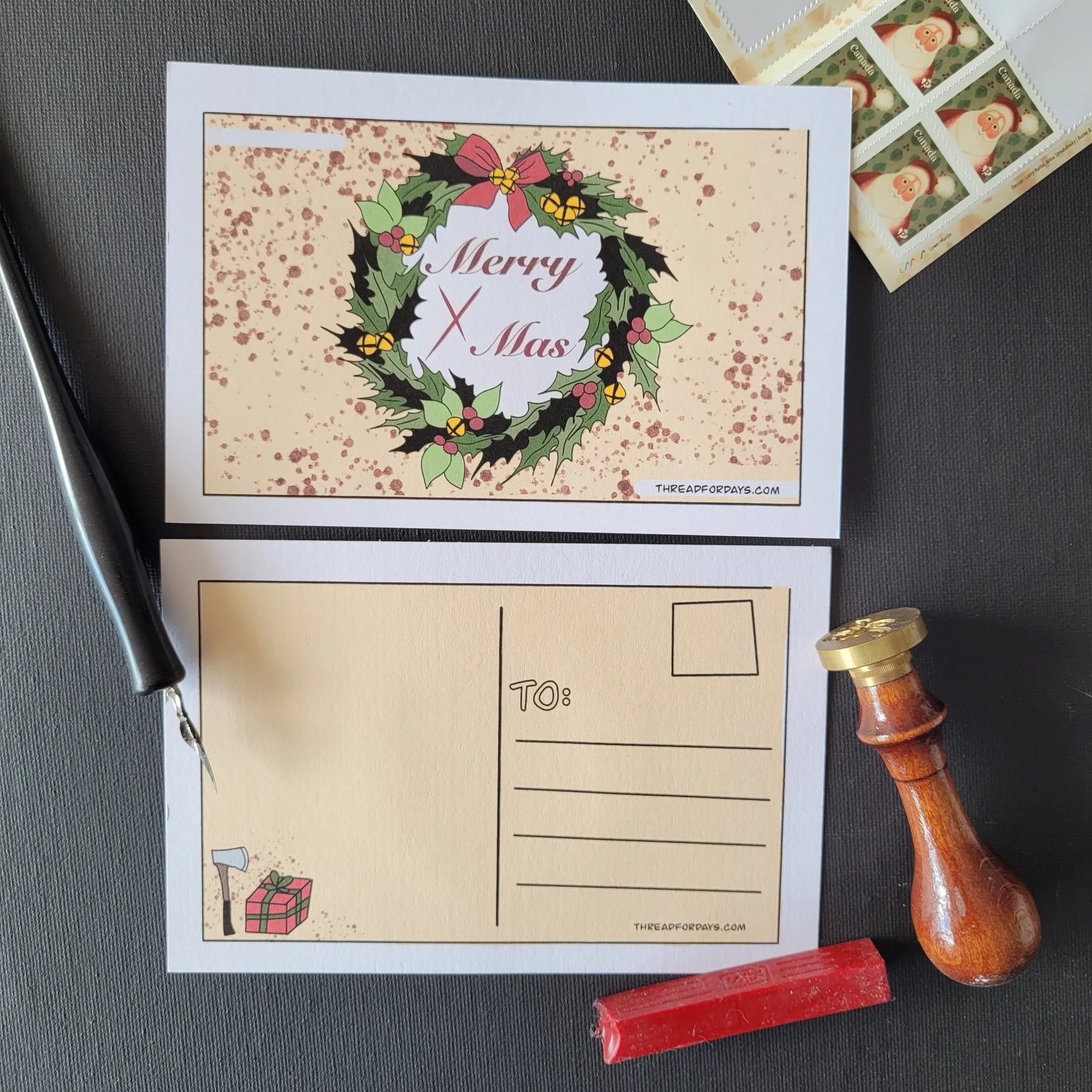
For a postcard or any paper item, prevention beats removal. If you are mailing something like the Black Christmas Wreath 4x6 Postcard, keep the adhesive away from the printed side and store it flat. If residue already landed on paper, accept the mark or cover it with a new sticker rather than risking a tear.
- Glass and metal: oil or alcohol, then wipe clean.
- Painted or matte plastic: oil first, minimal rubbing.
- Paper and cardstock: do not wet it; cover or leave the mark.
When to stop and choose another option
Stop as soon as the surface starts to change. Dulling, cloudiness, color lift, or a sticky-to-tacky feel that will not clear are all signs the solvent is affecting the item, not just the glue. More rubbing will not fix that; it will spread the damage.
If the residue sits on a surface you cannot risk, your options are to leave it, cover it with a fresh sticker, or move the item out of daily view. Covering is often the practical answer. A new sticker hides the patch and gives you a clean edge, which is usually better than a half-removed smear.
- Stop if the finish dulls, the print lifts, or the surface feels tacky after cleaning.
- Cover stubborn residue with a new sticker rather than chasing it.
- If the item is valuable or sentimental, test a professional conservator before DIY solvents.
Diagnosis: match the symptom to the fix
- Sticker peels but leaves a gummy film: Warm the area with a hair dryer on low, then lift at a low angle with a plastic scraper. If film remains, dab cooking oil on a cloth and work in circles. Most common case; oil and patience usually finish the job.
- Residue will not budge and feels hard: The adhesive has cured. Try rubbing alcohol on a cloth, let it sit for a minute, then wipe. Avoid metal blades and heavy pressure. If two attempts fail, stop and consider covering it.
- Surface dulls or print lifts during cleaning: The solvent is attacking the item, not the glue. Wipe off the product immediately with a damp cloth and let it dry. Stop here. Do not add more solvent or scrub harder.
- Residue is on paper or a postcard: Do not wet it. Cardstock is porous and adhesive soaks in permanently. Cover the mark or leave it as is. Prevention is the only reliable fix for paper.
Sticker facts that affect removal
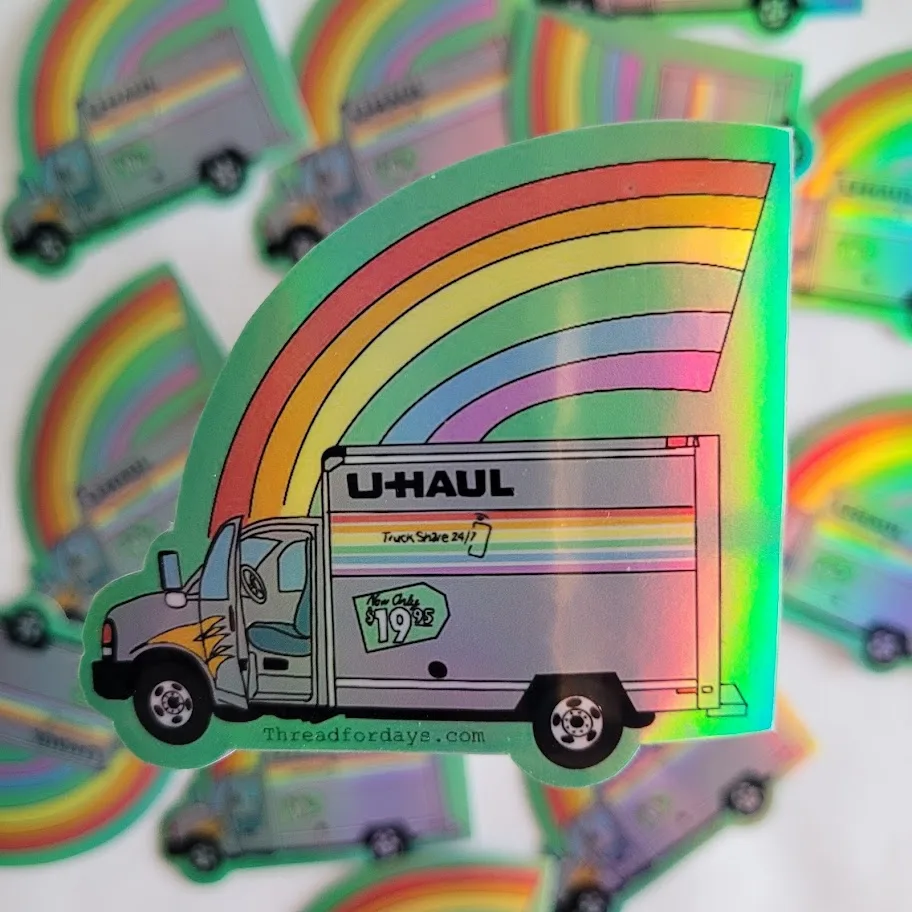
- Rainbow U-Haul | Vinyl Sticker: Printed on glossy waterproof holographic adhesive vinyl sticker paper and laminated for extra protection, and it is not UV proof, so it will fade with prolonged exposure to UV rays. The lamination helps the sticker survive handling, but the holographic vinyl is the part most likely to fade in sun. If you remove it later, expect the adhesive to be the stubborn layer, not the sticker face.
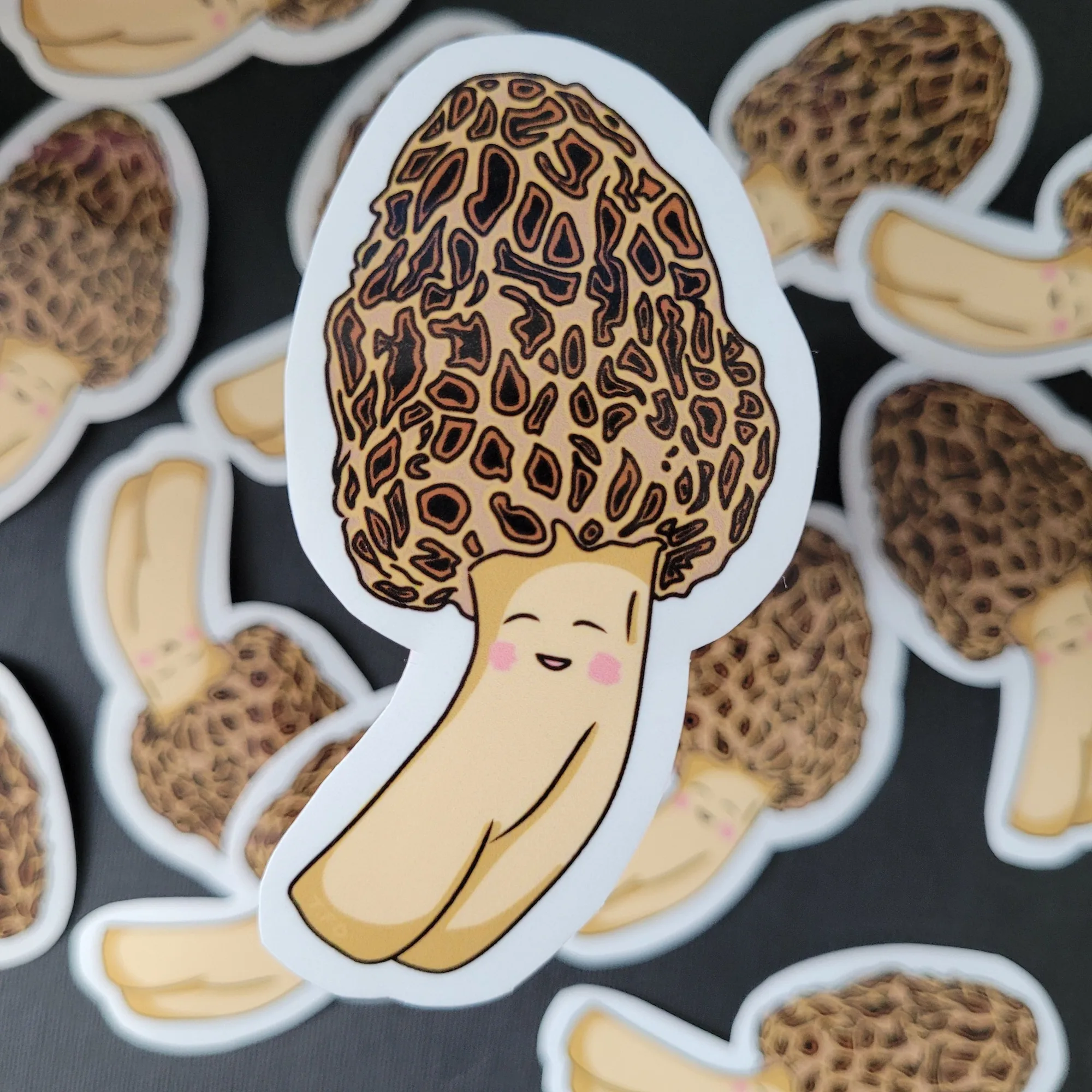
- Morel mushroom | Waterproof Vinyl Sticker: Printed on glossy waterproof adhesive vinyl sticker paper and laminated for extra protection, and it is not UV proof, so it will fade a little with prolonged exposure to UV rays. Waterproof refers to the sticker, not the surface underneath. On a water bottle, residue can sit under the sticker for a long time, so warm and lift slowly before reaching for a solvent.
- Black Christmas Wreath | 4x6 Postcard: 4 x 6 double sided postcard printed on durable 4 x 6 matte 110lb heavyweight cardstock paper. Matte cardstock is porous, so adhesive soaks in and cannot be cleaned out. Keep stickers off the printed face and store postcards flat to avoid residue in the first place.
Sticker residue is a solvable problem as long as you work gently and in order: warm, lift, then dissolve. The moment a surface starts to change, stop and choose another option. A fresh sticker over an old patch is often the smarter, safer fix than forcing a stubborn adhesive off a surface you care about.