Why Season a Stainless Steel Frypan?
Seasoning a stainless steel frypan creates a natural nonstick layer that improves cooking performance and makes cleanup easier. While stainless steel doesn't require seasoning like cast iron, a thin oil coating helps prevent food from sticking, especially when searing or frying.
The Meyer White Steel Stainless Steel Induction 24/28cm Frypan Twin Pack is designed for high-heat cooking with a thick 3-ply induction base that distributes heat quickly and evenly. Seasoning these pans can enhance their natural nonstick properties and protect the surface.
What the Meyer White Steel Twin Pack Offers
-
Meyer White Steel Stainless Steel Induction 24/28cm Frypan Twin Pack: Laboratory tested Zero Nickel release Stainless Steel, it is designed to perform well under pressure while helping you to cook healthy and without worry. The safe, rigorously-tested surface means seasoning is purely for cooking performance, not for safety. You can season with confidence knowing the pan material is already non-reactive.
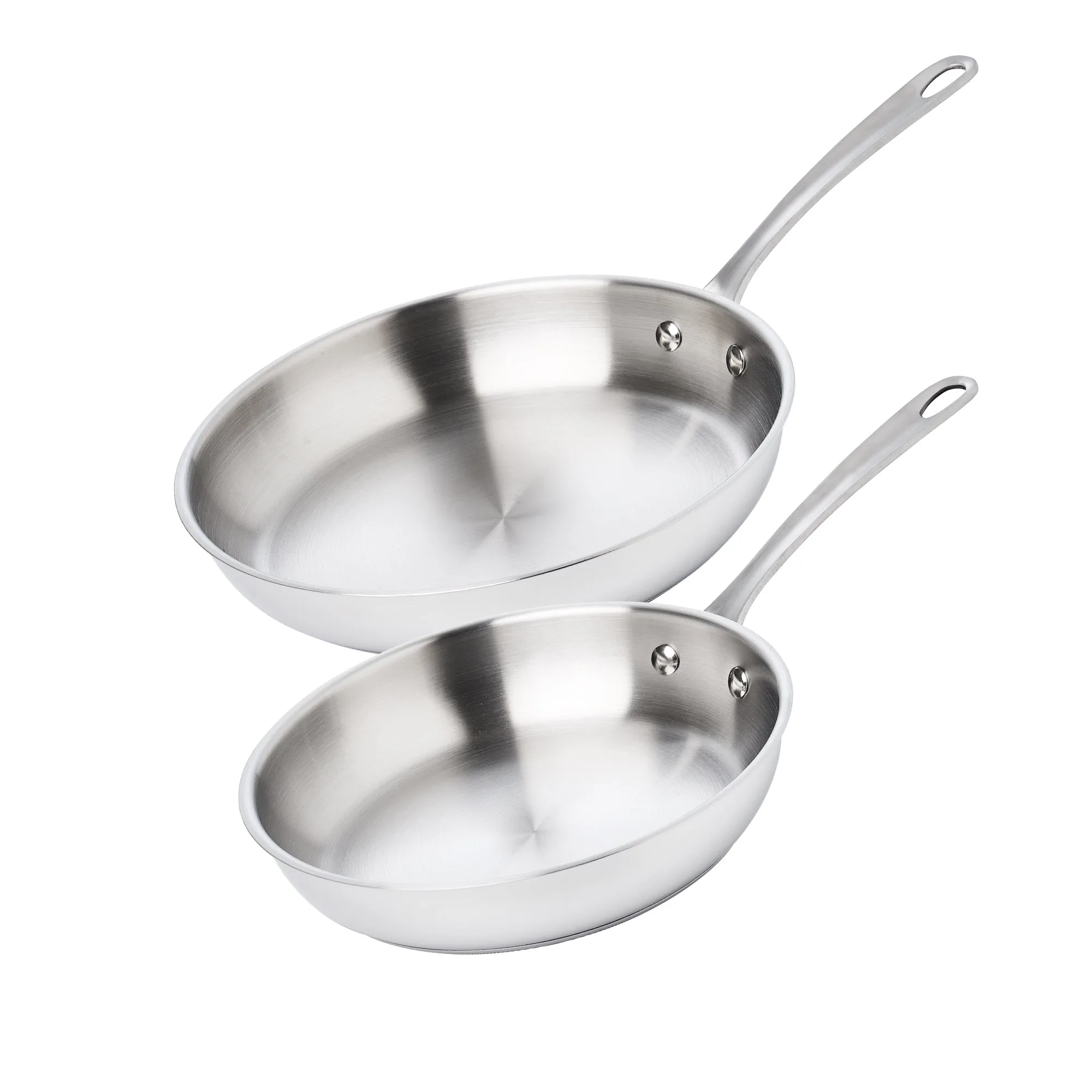
Meyer White Steel Stainless Steel Induction 24/28cm Frypan Twin Pack
-
Meyer White Steel Stainless Steel Induction 24/28cm Frypan Twin Pack: With an impressive heat resistance of up to 315°C, it’s ready for stovetop or oven use. This high heat tolerance allows you to season the pan effectively by heating oil to its smoke point without damaging the pan.
-
Meyer White Steel Stainless Steel Induction 24/28cm Frypan Twin Pack: Suitable for induction, gas, electric, ceramic and halogen cooktops. The seasoning process works the same on any cooktop, including induction. The thick 3-ply base ensures even heating during seasoning.
How to Season Your Stainless Steel Frypan
Follow these steps to season your Meyer 24cm and 28cm frypans. The process is the same for both sizes.
- Clean the pan thoroughly: Wash the pan with warm soapy water to remove any manufacturing residues. Rinse and dry completely.
- Heat the pan: Place the pan on your cooktop over medium heat. For induction cooktops, start at a medium setting. Heat until the pan is hot but not smoking.
- Apply a thin layer of oil: Add a small amount of high-smoke-point oil (like canola, grapeseed, or avocado oil) to the pan. Use a paper towel to spread a very thin, even layer across the entire cooking surface, including the sides.
- Heat until the oil smokes: Continue heating until the oil just begins to smoke. The pan's heat resistance of up to 315°C means it can handle this temperature without damage. Let it smoke briefly, then remove from heat.
- Cool and wipe: Allow the pan to cool completely. Wipe away any excess oil with a paper towel. The surface should feel smooth and slightly slick.
- Repeat if desired: For a stronger seasoning layer, repeat the process 2-3 times. Each layer builds on the previous one.
Caring for Your Seasoned Stainless Steel Pan
After seasoning, avoid harsh detergents or scrubbing that can strip the oil layer. Instead, clean with warm water and a soft sponge. For stubborn food residue, soak the pan and use a non-abrasive scrubber.
The heavy-duty steel handles secured with rivets provide a firm grip during cleaning. If the nonstick performance diminishes over time, simply re-season the pan following the same steps.
What the Catalog Does Not Settle
The catalog does not specify an exact oil type or temperature for seasoning. Using a high-smoke-point oil and heating until it just begins to smoke is a reliable method. The pan's 315°C heat resistance gives you a safe margin above typical smoke points (e.g., canola oil smokes around its smoke point).
The catalog also does not describe how long a seasoning layer lasts or how many uses before re-seasoning is needed. Monitor the pan's nonstick performance and re-season when food starts sticking more than usual.