Quick answer
Use a dedicated cake server to lift slices and a cake fork to eat them, rather than a dinner knife and fork. Match the utensil to the dessert: a wide server for soft layer cakes, a slim one for tarts, and small forks for neat bites. Plate each portion on a plate that leaves a clean rim, and serve within a few minutes so the crumb and cream hold their shape.
Match the server to the cake's structure
A cake server's job is to support a slice from below, not to cut it. For a soft layer cake or cheesecake, choose a wide, flat blade with a slight lip so the slice stays level as you lift. For a fruit tart or a firm ganache cake, a narrower server gives you more control and less chance of dragging through the filling. If the cake is very tall, slide the server under the base layer only and let the top overhang slightly; trying to balance the whole height on the blade is where most slices collapse.
The same logic applies to the fork you set beside the plate. A cake fork has shorter tines than a dessert fork, which makes it easier to break through glaze and sponge without pushing the slice around the plate. If you are serving a dense, nut-heavy cake, a slightly longer dessert fork gives you more leverage.
Portion size and plate choice
Cut slices narrower than you think you need. A 2 cm slice of a rich layer cake reads as generous on a small plate, and guests can always take a second piece. Wide-rimmed plates make portions look smaller and leave fingerprints on the rim; a simple side plate with a modest rim keeps the focus on the dessert. If you are plating several desserts at once, work left to right and keep the tallest element at the back of the plate so it does not hide the rest.
Serving etiquette that guests actually notice
Place the cake fork to the left of the plate if there is no knife, or to the right if a knife is needed for a firm tart. Serve from the guest's left and place the plate from the right, quietly, without reaching across anyone. If you are serving buffet-style, put the server on a small rest or a clean saucer rather than laying it on the tablecloth, and provide one fork per portion rather than a shared pile. These small habits signal that the dessert was plated on purpose, not just dished out.
Step-by-step dessert service
- Chill and firm the cake: Refrigerate soft cakes for 30–60 minutes before slicing so the crumb and filling hold together. Common mistake: cutting a warm cake straight from the oven, which smears the layers and leaves ragged edges. Checkpoint: the cake should feel firm, not hard, to a light press.
- Choose the right server: Use a wide, lipped server for soft layer cakes and cheesecakes, and a narrower one for tarts and firm ganache. Common mistake: using a dinner knife to lift, which drops the slice and marks the plate. Checkpoint: the blade should slide under the base layer without crushing the top.
- Cut clean portions: Wipe the blade between cuts with a warm, damp cloth, and cut slices about 2 cm wide for rich cakes. Common mistake: sawing back and forth, which drags crumbs into the frosting. Checkpoint: each slice should release with one clean downward cut.
- Plate with a clean rim: Place the slice slightly off-centre, with the tallest point toward the back of the plate, and keep the rim free of smudges. Common mistake: centring a tall slice so it hides the garnish and looks smaller. Checkpoint: you should see a clear band of plate around the dessert.
- Set the fork correctly: Place a cake fork to the left of the plate when no knife is needed, or to the right when a knife is required for a firm tart. Common mistake: putting a full-size dinner fork beside a delicate slice. Checkpoint: one fork per portion, with tines facing up.
- Serve promptly and from the left: Hand plates from the guest's left and clear from the right, and serve within a few minutes of plating. Common mistake: letting plated desserts sit in a warm room, which softens cream and dulls the finish. Checkpoint: serve as soon as the last plate is set.
Flatware that fits dessert service
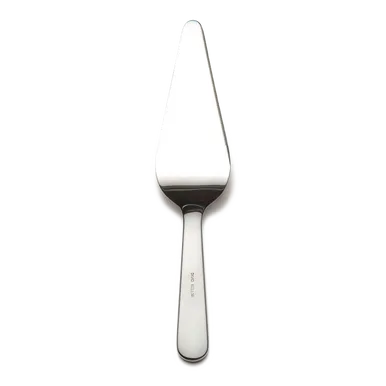
- David Mellor Chelsea Cake Server, Boxed: The David Mellor Chelsea Cake Server is a boxed stainless steel piece from a family-owned UK factory, with a design that references classic English 18th-century cutlery. A dedicated server keeps slices level and gives you a clean lift, which is the step most home servers skip when they use a dinner knife.
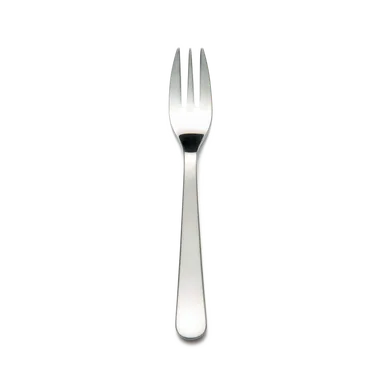
- David Mellor Chelsea Cake Fork: The David Mellor Chelsea Cake Fork has shorter tines than a standard dessert fork, in the same finely detailed Chelsea range with subtle variations of thickness. Shorter tines let you break through glaze and sponge without shoving the slice across the plate, so each bite stays neat.