Quick Answer
To set up a portable solar panel for camping, first find a sunny, unobstructed spot, then unfurl and angle the panel toward the sun, connect it to your power station or battery, and monitor the charge controller to avoid overcharging.
Why Panel Placement Matters More Than Wattage
A 100W panel like the UNV Trek Pro can fully charge a typical 12V deep-cycle battery in 6-8 hours of direct sun, but only if it's positioned correctly. Shade from a single branch can cut output by 50% or more. Even a panel with high conversion efficiency (up to 22.5% on the UNV Trek Pro) needs full sun to deliver its rated power.
Angle vs. Time of Day
The sun's position changes throughout the day, so you'll need to adjust the panel's tilt roughly every 2-3 hours for maximum output. A common mistake is leaving the panel flat on the ground, which reduces efficiency by 20-30% compared to angling it toward the sun. The UNV Trek Pro's folding design makes it easy to prop up at the right angle using its built-in kickstand or a nearby rock.
Steps to Set Up Your Portable Solar Panel
- Find a Sunny, Unobstructed Spot: Place the panel where it will receive direct sunlight for most of the day. Avoid areas under trees, near tents, or beside vehicles that cast shadows. A clear, open area facing north (in the southern hemisphere) or south (in the northern hemisphere) is ideal. Check for shade at different times of day before setting up camp.
- Unfurl and Angle the Panel Toward the Sun: Open the UNV Trek Pro fully and tilt it so the surface faces the sun directly. Use the built-in kickstand or prop it with a rock or stick. Adjust the angle every 2-3 hours to follow the sun's path. A common mistake is leaving the panel flat; angling it can increase output by 20-30%.
- Connect the Panel to Your Power Station or Battery: Use the included MC4 or Anderson connectors to attach the panel to your portable power station or charge controller. Ensure the connection is secure and weatherproof. The UNV Trek Pro outputs 18V, which is compatible with most 12V systems. Always connect the panel to the charge controller first, then the controller to the battery, to avoid reverse polarity.
- Monitor the Charge Controller: Check the charge controller display to confirm the panel is producing power. A good controller will show voltage, current, and battery level. If the panel is not charging, check for loose connections or shading. Overcharging can damage batteries; use a quality charge controller to prevent it.
- Secure the Panel Against Wind and Weather: If winds pick up, stake the panel down or weigh it with a bag or gear. The UNV Trek Pro is IP66 rated, meaning it's dust-tight and can handle heavy rain, but it's still best to disconnect and store it during severe storms. A loose panel can become a projectile; always secure it when not actively monitored.
Product Facts
-
UNV Trek Pro Portable Power Folding Solar Panel 100 Watt: The UNV Trek Pro Portable Power Folding Solar Panel 100 Watt uses monocrystalline silicon with conversion efficiency up to 22.5% and ETFE laminated surface for durability. Higher efficiency means you get more power in less space, and the ETFE lamination makes the panel more resistant to scratches and weather during camping trips.
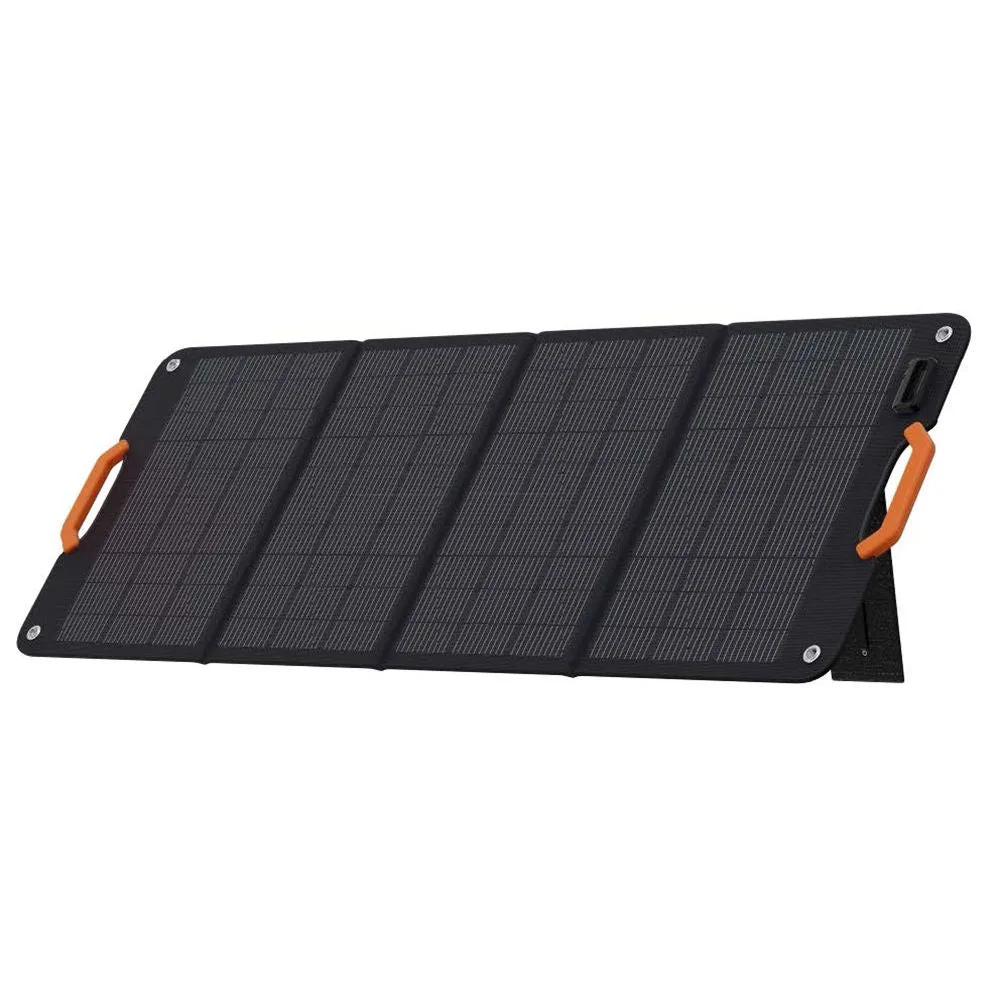
UNV Trek Pro Portable Power Folding Solar Panel 100 Watt