Quick Answer
Set up your Helinox chair on the flattest, firmest patch available, orient the legs so the widest span sits parallel to your tightest boundary, and add a Ground Sheet under the legs if the surface is sand, dirt, or grass. If the chair still tips, sinks, or blocks movement, the space is too small for that model and you should step down to a lower, more compact chair rather than force the fit.
Ground Sheet
A Helinox chair that feels unstable on a balcony or inside a small tent is usually not a defective chair. It is a chair fighting a surface or a footprint it was not placed to handle. The fix is almost always in how you position it, not in how hard you push the legs into place.
This guide separates the symptom you are seeing from the likely cause, gives you a corrective action you can try in under a minute, and tells you when to stop adjusting and choose a different setup. It covers small tents, balconies, van floors, and crowded campsites where every inch counts.
Start With the Surface, Not the Chair
Most tight-space problems start under the legs. A Helinox chair needs a firm, level base to stay stable. On a balcony with tile or concrete, that base already exists. On sand, loose dirt, or soft grass, the legs can sink unevenly and the chair will lean no matter how carefully you assembled it. Before you adjust anything on the chair itself, clear the patch you plan to use and check whether it is level in both directions.
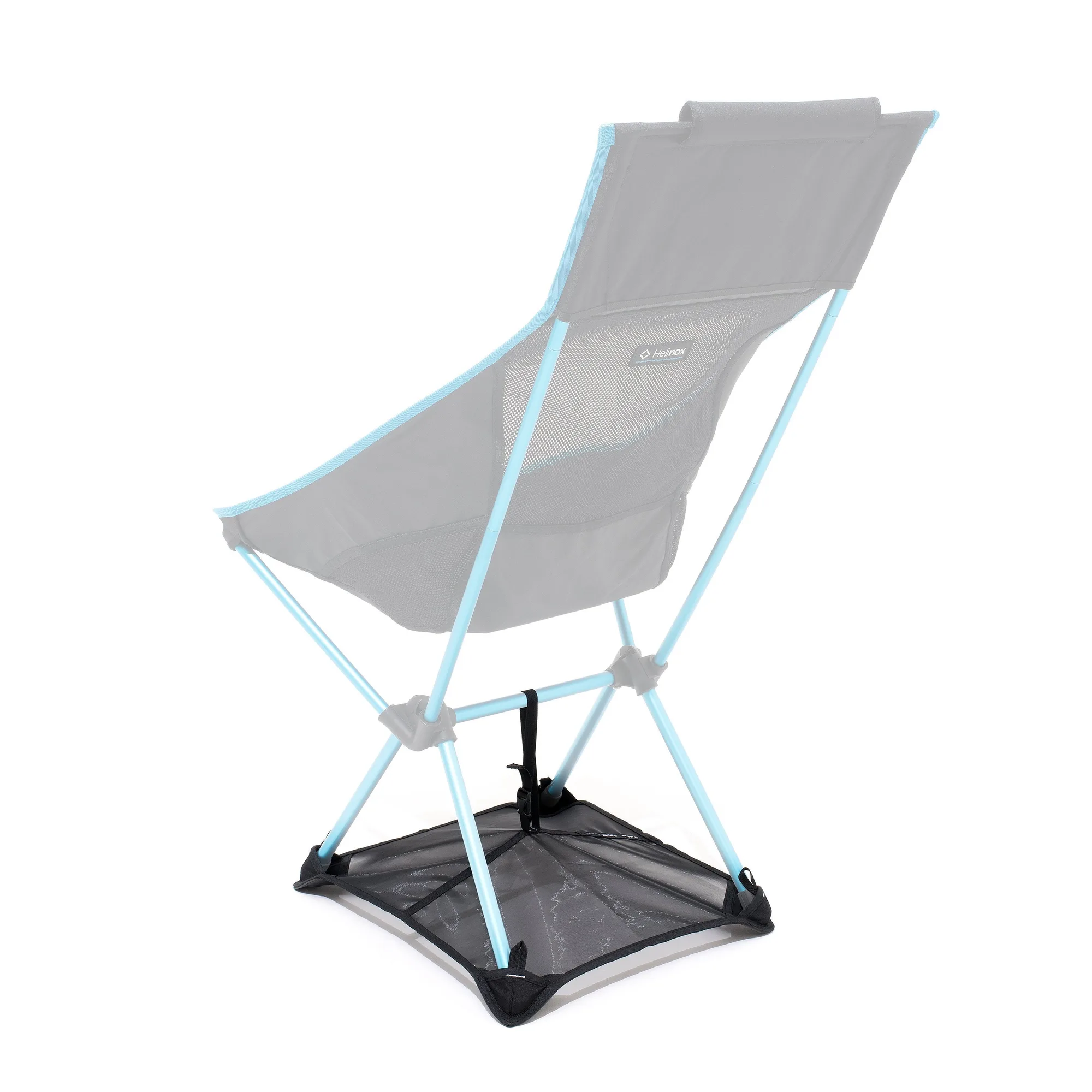
If the surface is soft, the Ground Sheet provides a wide, stable base that helps prevent sinking or tipping on sand, dirt, or grass. It levels the load so you do not have to. That single accessory solves most sinking complaints in tight campsites where you cannot move to better ground.
- Test the spot by pressing your heel into it. If it leaves a deep print, expect the chair legs to sink too.
- On sloped ground, rotate the chair so the widest leg span runs across the slope, not down it.
Position the Chair So the Legs Clear Your Boundaries
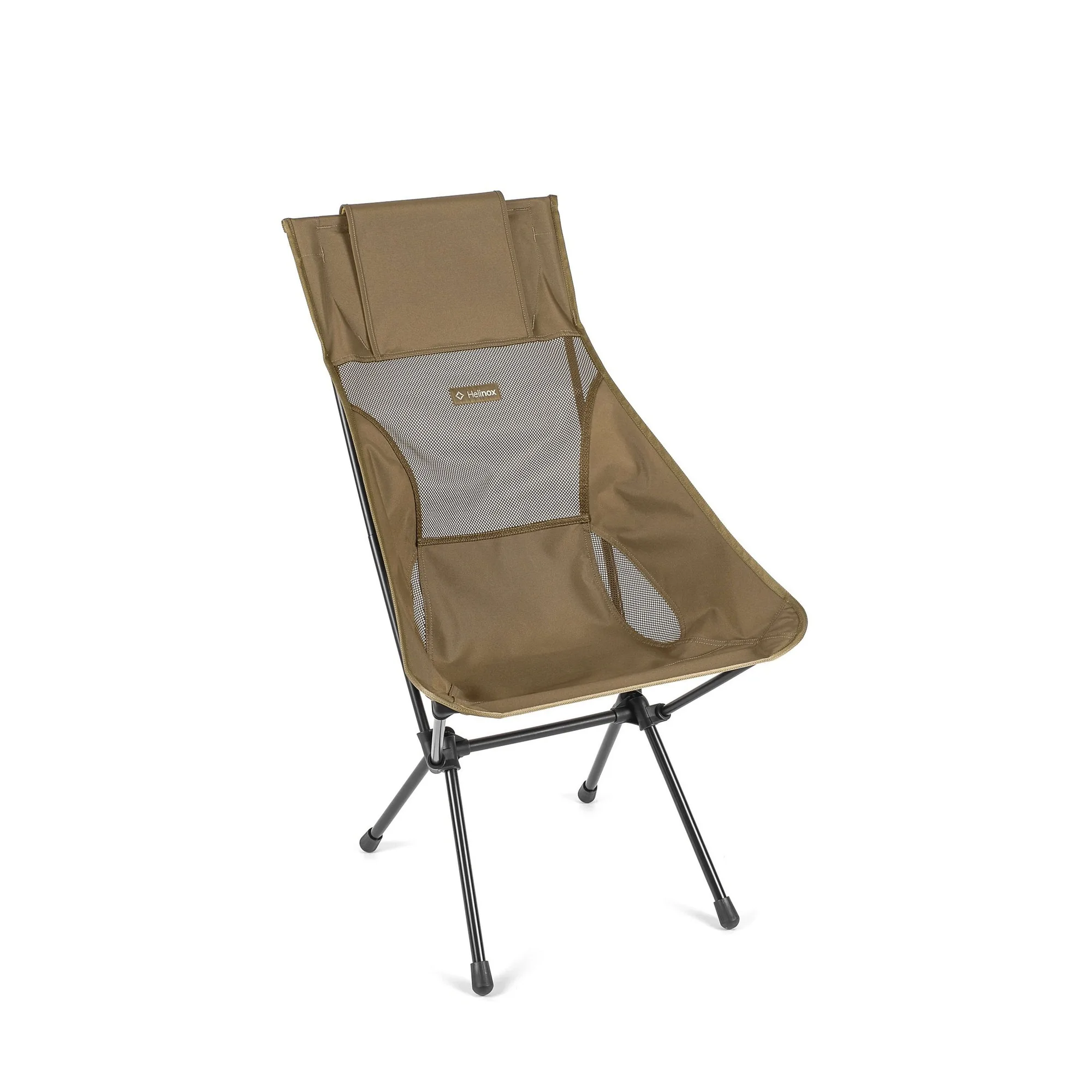
In a small tent, the limiting factor is usually the walls, not the floor. A chair with a taller back and a higher seat needs more vertical and diagonal clearance than a low chair. The Sunset Chair sits high off the ground so it is a breeze getting in and out, and its supportive high-back design suits campers, glampers, loungers, and picnickers. That same height is what makes it awkward in a low tent, because the back edge can press into a sloping wall.
Sunset Chair
The practical move is to angle the chair so its back faces the tallest part of the tent and its front faces the door. That gives your knees room to exit and keeps the frame away from the fabric. On a balcony, push the rear legs toward the railing side and leave the entry side open so you are not stepping over the frame every time you sit down.
- Leave at least a hand-width gap between the chair frame and any tent wall. Fabric under tension can bow the frame.
- If you cannot open the chair fully without hitting a wall, the space is too small for that model.
Match the Chair to the Space You Actually Have
A tall, high-back chair and a low chair solve different problems. If your only usable spot is a narrow balcony or the floor of a small tent, a lower seat height gives you more headroom and a smaller footprint. If you have vertical clearance but limited floor area, a taller chair can still work as long as you can get in and out without twisting against a wall.
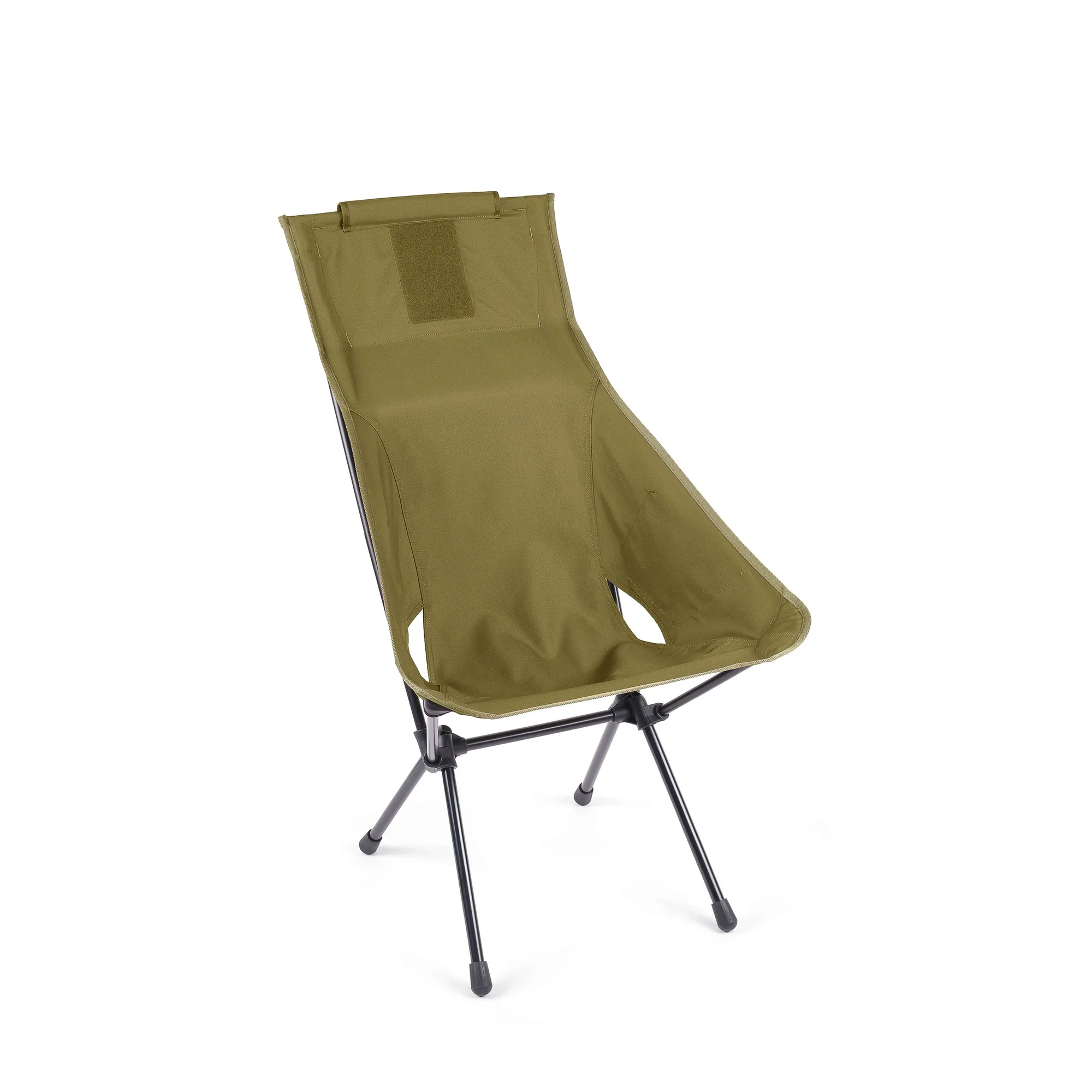
The Tactical Sunset Chair pairs the supportive, taller-back comfort of the Sunset Chair with the built-for-anything durability of a military-inspired line. That durability matters on rough balcony concrete and gravel pads, where a lighter fabric would wear faster. The tradeoff is the same as any taller chair: it needs more clearance behind and above it, so measure before you commit in a genuinely tight space.
- Measure your tightest dimension first, then check the chair against it rather than the other way around.
- If you are between two models, the lower one is almost always the safer choice in a confined space.
Tight-Space Setup Diagnosis
- Symptom: The chair sinks or leans on one side: The ground under the legs is soft or uneven, so one leg is carrying more load than the others. Add a Ground Sheet or move to a firmer patch. If neither is possible, this spot is not suitable for any chair.
- Symptom: The chair tips when you sit down or stand up: You are entering from the narrow side, or the leg span is running down a slope instead of across it. Rotate the chair so you enter from the open side and the widest span crosses the slope.
- Symptom: The chair back presses into a tent wall or railing: The chair is taller or deeper than the space allows, so the frame is being forced against a boundary. Stop adjusting. Step down to a lower, more compact chair model for this space.
Product Facts That Affect Tight-Space Setup
- Ground Sheet: Provides a wide, stable base that helps prevent sinking or tipping on sand, dirt, or grass. If your tight spot is on soft ground, this is the fix that stops the legs from sinking unevenly and making the chair lean.
- Sunset Chair: Sits high off the ground so it is a breeze getting in and out, with a supportive high-back design. Great for easy entry and long lounging, but the height and high back need more clearance, so it is a poor fit in a low tent or narrow balcony corner.
- Tactical Sunset Chair: Combines the supportive, taller-back comfort of the Sunset Chair with the durability of a military-inspired line. A better choice for rough balcony concrete or gravel pads, but it carries the same clearance needs as any taller chair.
Tight spaces reward a firm surface, smart orientation, and an honest look at whether your chair actually fits. Fix the ground first, rotate the chair second, and if the frame still fights the walls, choose a lower model instead of forcing the setup.