Quick answer
To set up a meditation cushion for back support, sit on the front third of a cushion that raises your hips 3–6 inches above your knees. Tilt your pelvis slightly forward, cross your legs comfortably, and stack your spine so your ears, shoulders, and hips align. Adjust the cushion height until your knees rest at or below hip level.
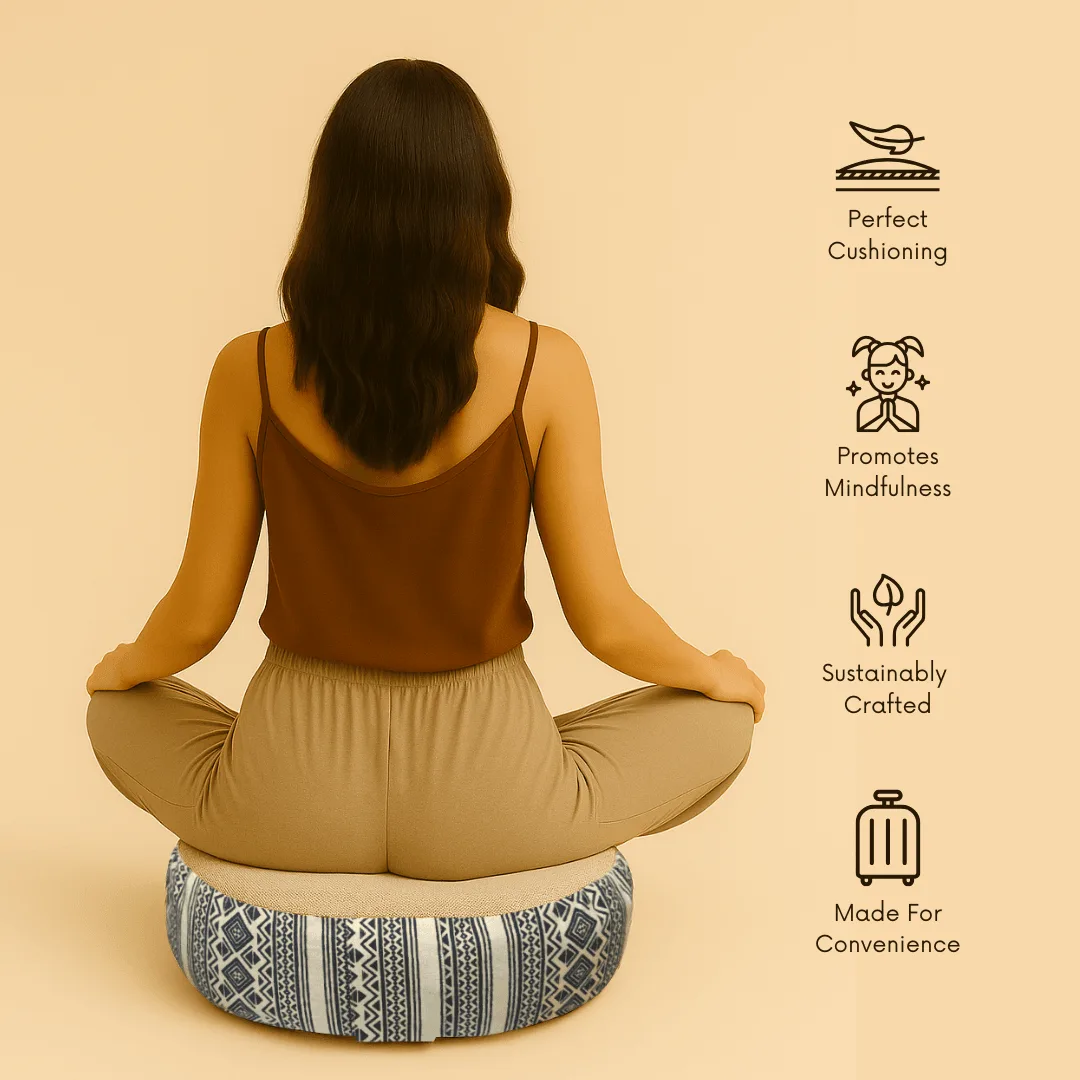
meditation cushion
Why hip elevation matters for back support
When your hips sit lower than your knees, your pelvis rolls backward and your lower back rounds. Elevating your hips above knee level restores the natural inward curve of your lumbar spine, so your back muscles can relax instead of working to hold you upright. A meditation cushion provides that lift; the right height depends on your hip flexibility and the thickness of your mat underneath.
Choosing the right cushion height for meditation
Most people need 3–6 inches of lift, but the correct height is personal. If your knees float above your hips, add height. If you feel pressure in your knees or groin, reduce height or switch to a lower cushion. Test by sitting for two minutes: your knees should be at or below hip level, and you should feel your sitting bones grounded without slumping.
Step-by-step meditation cushion setup
- Place your mat and cushion: Set your mat on a level surface. Put the cushion at the back edge of the mat so your crossed ankles rest on the mat, not the floor. Checkpoint: the cushion should not wobble when you press down on it.
- Sit on the front third of the cushion: Scoot forward until your sitting bones are near the front edge of the cushion. This lets your pelvis tilt forward instead of rolling back. Mistake to avoid: sitting in the center or back of the cushion, which encourages slouching.
- Cross your legs comfortably: Place one ankle in front of the other in a simple cross-legged position, or use a folded blanket under each knee if they don't reach the mat. Checkpoint: knees should be at or below hip level. If not, add cushion height.
- Stack your spine: Imagine a string lifting the crown of your head. Gently draw your chin in, relax your shoulders, and let your lower back find its natural curve. Mistake to avoid: forcing an exaggerated arch or tucking your chin too far.
- Adjust until you can breathe easily: Take five slow breaths. If you feel strain in your back or hips, change cushion height or add support under your knees. Checkpoint: you should feel stable and relaxed, not rigid.
A mat that supports your setup
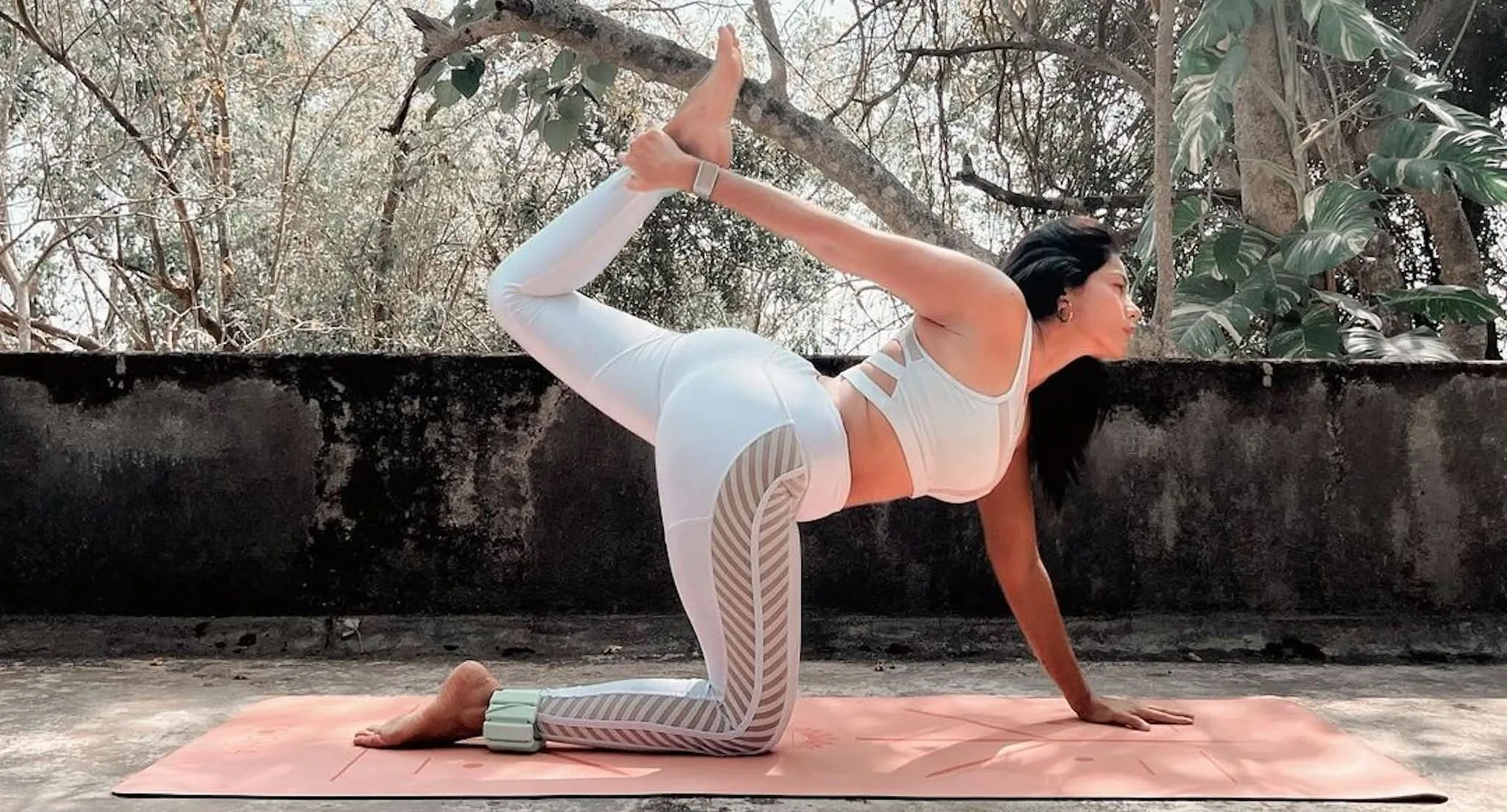
- PUre Align Yoga Mat: PUre Align Yoga Mat is made from 100% natural rubber and was developed over 26 months to resist slipping during sweaty practice. A stable, non-slip mat under your cushion prevents the cushion from sliding and keeps your base steady during long sits.