Quick answer
Place a nightstand at least 12 inches from the crib, anchor it to the wall, and keep the top clear of cords and small items. Choose a model with drawers for closed storage and assemble it fully before moving it into the nursery.
Why spacing and anchoring matter more than style
A nightstand beside the crib is convenient, but it introduces two risks: tipping and entrapment. Babies can pull on furniture or squeeze into gaps, so anchoring and spacing are non-negotiable. Even a sturdy-looking piece can tip if a toddler climbs or pulls on an open drawer.
Anchor the nightstand to a wall stud using the manufacturer's anti-tip kit. If no kit is included, buy a furniture strap rated for the weight. Keep the nightstand at least 12 inches from the crib to prevent a child from reaching across or getting wedged between the two. Also check that the nightstand does not block a window, radiator, or monitor cord.
What to store and what to keep out
Use the nightstand for caregiver essentials: diapers, wipes, burp cloths, a night light, and a water bottle. Avoid storing anything small enough to choke on, such as pacifier clips or loose batteries, in unlocked drawers. Keep the top surface minimal—a lamp with a cord secured behind the furniture and a baby monitor placed at least three feet from the crib.
If the nightstand has open shelves, use fabric bins to hide clutter and reduce visual noise. The Jordyn Nightstand's two drawers with wooden pulls offer closed storage that keeps supplies out of sight and out of reach.
Assembly decisions that affect safety
Ready-to-assemble furniture can be safe if built correctly. Follow the instructions exactly, tighten all screws, and check stability before loading drawers. A common mistake is skipping the anti-tip strap because the nightstand feels heavy—empty furniture is lighter than it looks and can still tip.
Assemble the nightstand in the room where it will be used, or move it carefully after assembly. Once in place, confirm it sits level on the floor and does not wobble. If the floor is uneven, use shims under the feet rather than adjusting the anchor strap.
Step-by-step nightstand setup
- Choose the spot: Pick a wall near the crib but at least 12 inches away, avoiding windows, cords, and heating vents. Check that the nightstand does not block a door or closet. Mark the floor with tape to visualize the footprint before moving furniture.
- Assemble the nightstand: Build the nightstand according to the instructions, using all provided hardware. Tighten screws firmly but do not overtighten. Attach any included anti-tip strap to the back of the unit now. A common mistake is leaving out the anti-tip strap because the nightstand seems stable—always install it.
- Anchor to the wall: Locate a wall stud and secure the anti-tip strap to it with appropriate screws. If no stud is available, use a heavy-duty wall anchor rated for the furniture weight. Pull firmly on the nightstand to test the anchor. If the strap feels loose, do not load the drawers until it is fixed.
- Set clearance and level: Position the nightstand so there is a 12-inch gap between it and the crib. Check that it sits level; use shims under the feet if needed. Confirm the anchor strap still has slight slack for movement. Recheck the gap after anchoring—anchoring can shift the furniture closer to the crib.
- Load and secure: Place heavier items in the bottom drawer and keep the top surface minimal. Secure lamp and monitor cords behind the nightstand with cord clips, and keep them at least three feet from the crib. Avoid hanging bags or items from drawer pulls—they invite climbing.
Product facts
-
Jordyn Nightstand, Ready-to-Assemble, Biscotti: The Jordyn Nightstand is ready-to-assemble and has two drawers with wooden pulls. Closed drawers keep small items out of reach, and the ready-to-assemble design lets you build it in the nursery before anchoring.
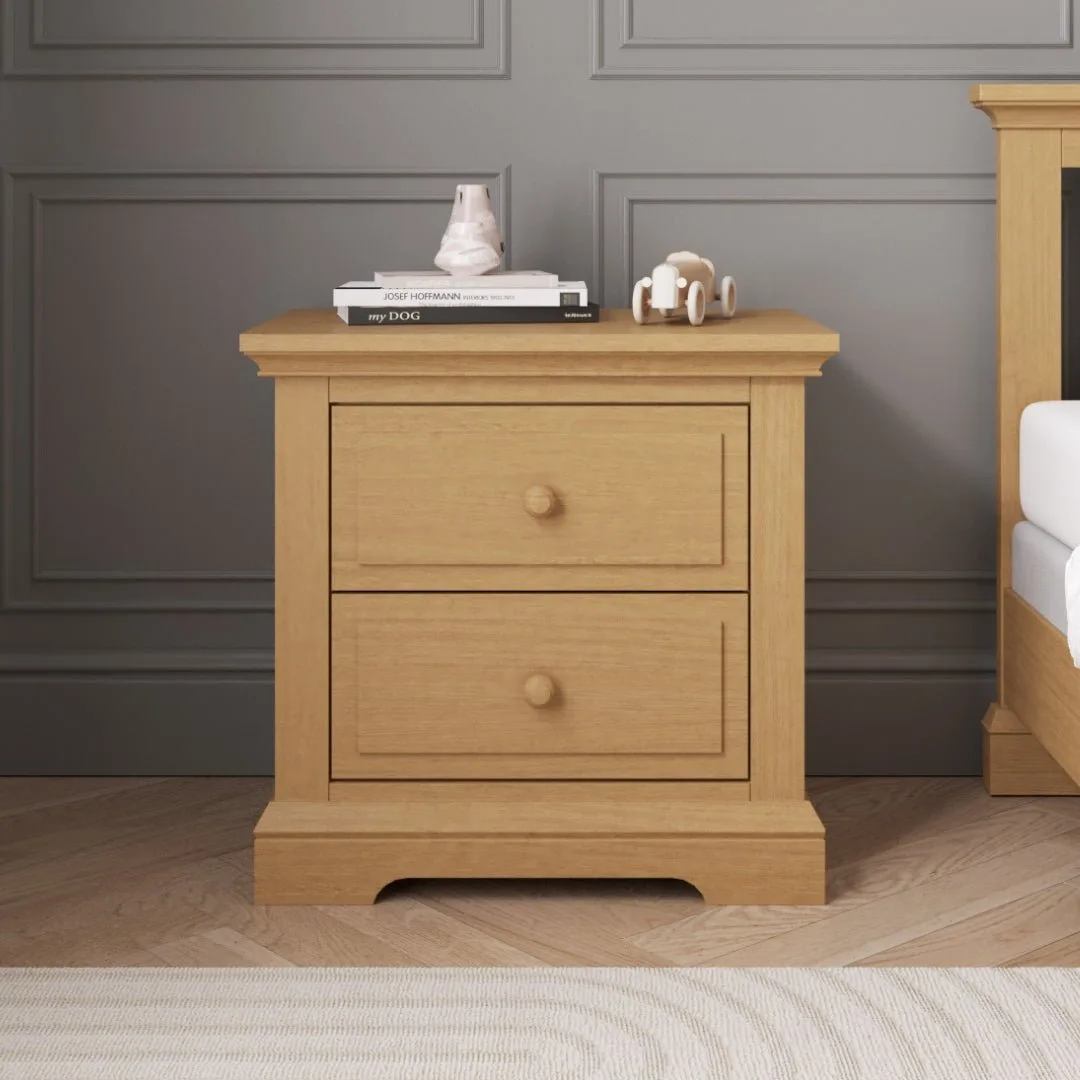
Jordyn Nightstand, Ready-to-Assemble, Biscotti