Quick answer
Set up your TECKNET personal safety alarm by charging it fully, choosing your activation mode (pin-pull or button-hold), and attaching it to your keychain or bag for easy reach.
Why a rechargeable alarm makes sense for daily carry
A rechargeable keychain alarm eliminates the need for disposable batteries, so you never have to worry about finding replacements before heading out. With a 130dB siren and strobe light, the TECKNET BASICS alarm draws immediate attention in an emergency. The low-battery alert ensures you know when it needs charging, which is critical for a device that might sit unused for weeks.
Choosing between the two activation modes
The alarm offers two ways to trigger it: pull the pin for instant sound and strobe (ideal for fast escape), or press and hold the back button. Each mode suits different scenarios. The pin-pull is easier under stress because it requires less fine motor control. The button-hold gives you more deliberate control but may be harder in a panic. Test both to see which feels natural for your hand size and dexterity.
Setup steps for daily carry
- Charge the alarm fully before first use: Plug the included USB cable into the alarm and a USB power source. Wait until the indicator shows a full charge. A partially charged alarm may not reach the full 130dB volume or strobe brightness. First charge takes about 2 hours; after that, top up when the low-battery alert appears.
- Attach it to your keychain or bag loop: Slide the keychain ring through the hole on the alarm body. Secure it to a zipper pull, bag strap, or belt loop. Make sure the pin is accessible without digging through pockets. Avoid attaching it to a lanyard that could get tangled; a short keychain is safer.
- Test both activation modes in a safe space: Pull the pin to hear the siren and see the strobe. Reinsert the pin to stop. Then press and hold the back button for 2 seconds to test mode 2. Practice until you can do it without looking. If the alarm sounds weak, recharge it. Never test near someone who might be startled.
- Set a weekly check routine: Once a week, pull the pin for a quick sound check. Look for the low-battery alert light. If the alarm has been stored for months, recharge it even if the alert hasn't appeared. A monthly check is enough if you carry the alarm daily; weekly if it's stored in a bag.
Product details
-
TECKNET BASICS Personal Safety Alarm, 130dB Rechargeable Keychain with Strobe Light & Low Battery Alert for Women, Men, Kids, Seniors - Blue: Emits 130dB siren with high-frequency flashing lights to draw immediate attention and scare off attackers. The combination of loud sound and strobe light makes this alarm effective in noisy environments and at night, which is when many incidents occur.
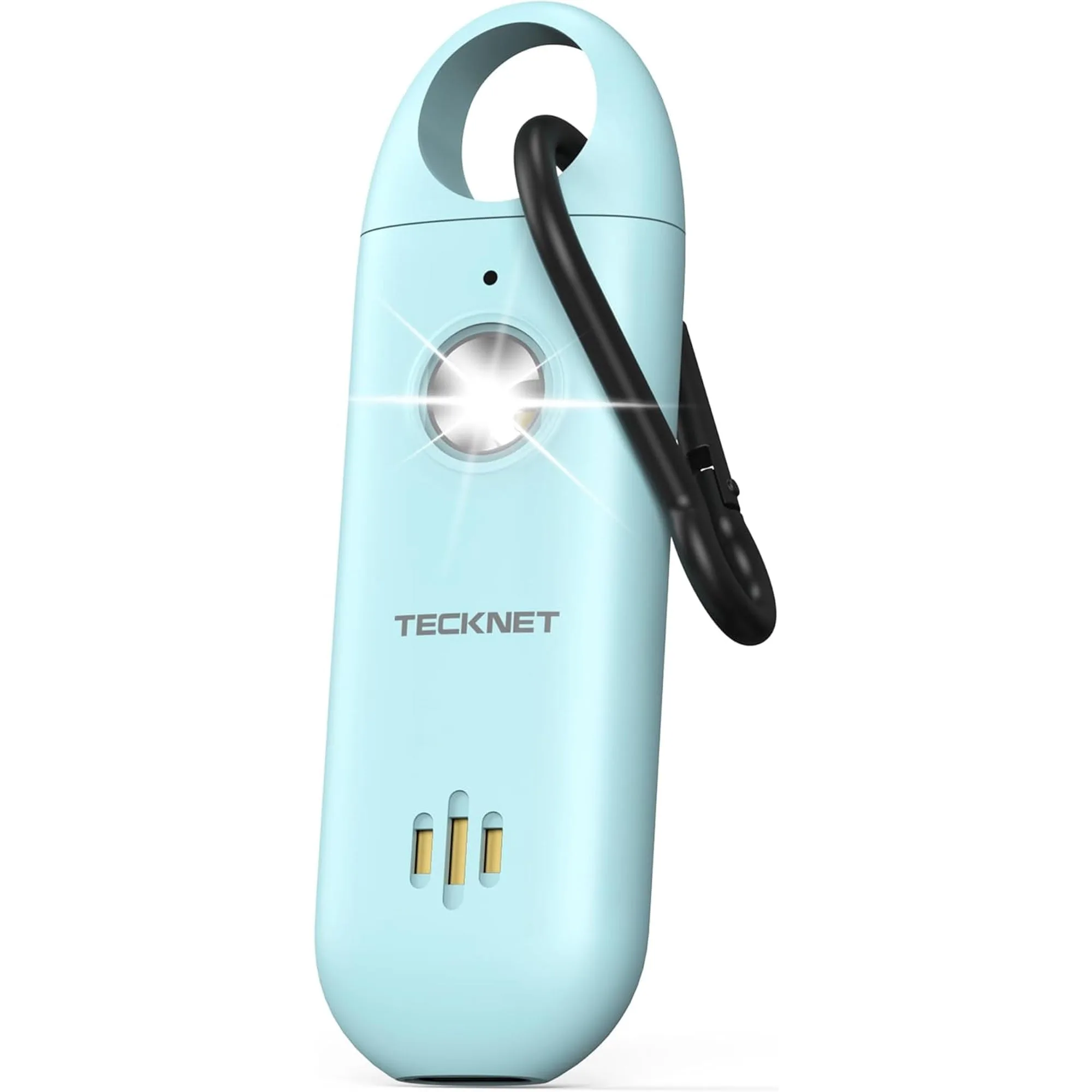
TECKNET BASICS Personal Safety Alarm, 130dB Rechargeable Keychain with Strobe Light & Low Battery Alert for Women, Men, Kids, Seniors - Blue