Quick answer
Set up a balanced poker game with 300 dice chips by dividing the chips into equal stacks for each player, using a blind count to verify totals, and keeping extra chips in the case for rebuys.
Why 300 chips works for most home games
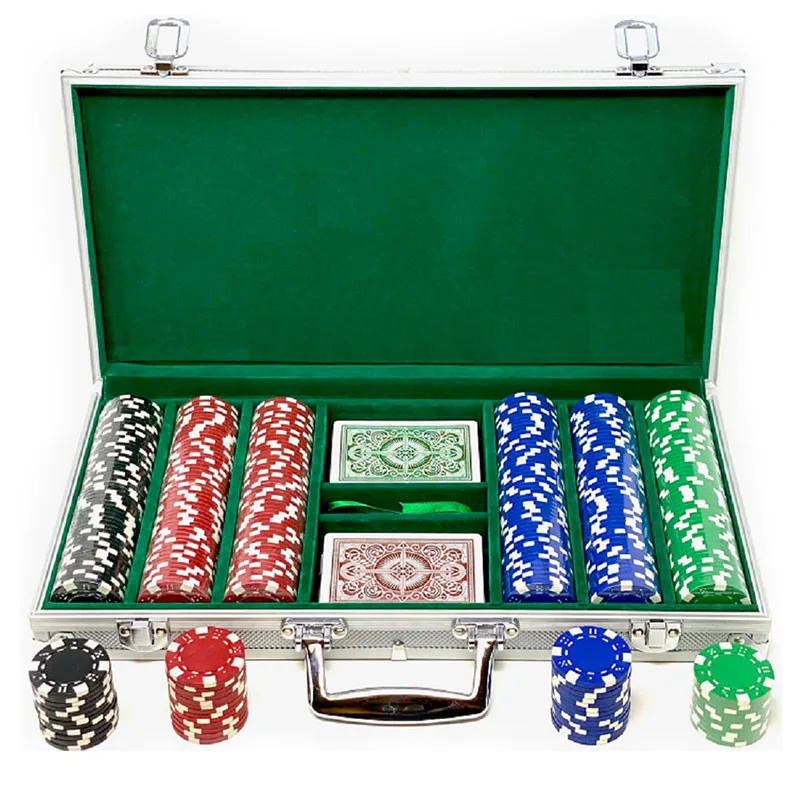
A 300-chip set like the Kem Poker Chip Set offers enough chips for 6 to 8 players without overwhelming the table. The 11.5 gram dice chips have a solid feel that stacks neatly and doesn't slide around during play. Because the chips come in four colors (red, blue, green, black), you can assign each color a different value, making blind counts and pot management easier.
Trade-off: chip count per player
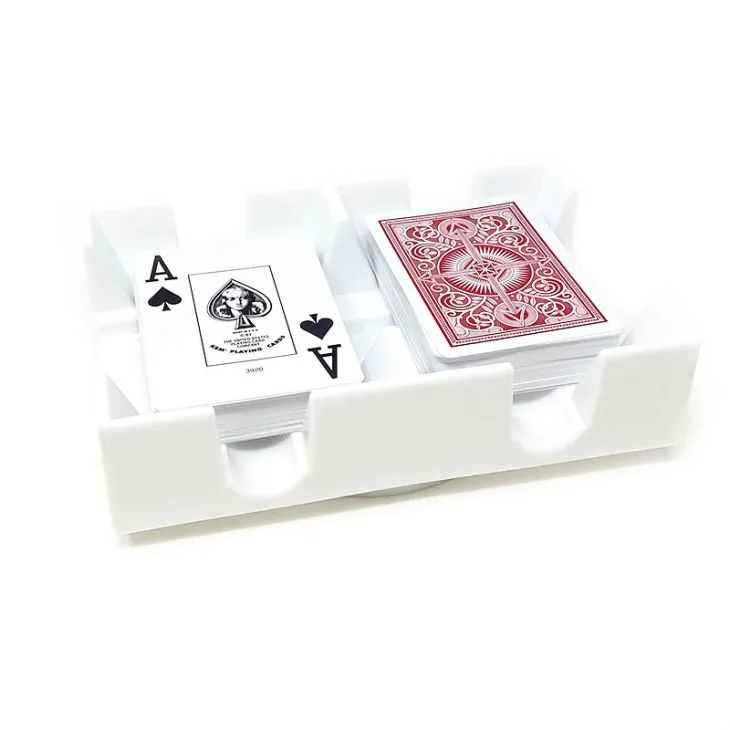
With 300 chips, each player in a 6-player game gets 50 chips. In a 7- or 8-player game, stacks become 37 or 42 chips respectively. That's plenty for low- to mid-stakes cash games but may feel tight if you're playing deep-stack variants like No-Limit Hold'em. For those games, consider using the included Kem Arrow Playing Cards (Red and Blue Super Index decks) to keep the action moving even with smaller chip stacks.
Step-by-step setup process
- Count and sort chips by color: Open the aluminum case and separate the chips into four piles by color: red, blue, green, black. Use the case's chip tray to keep colors distinct. A common mistake is assuming the case already has equal counts per color—it doesn't (100 red, 100 blue, 50 green, 50 black). Verify the counts before assigning values. Always confirm chip counts before assigning values to avoid mid-game confusion.
- Assign chip values and distribute stacks: Decide a chip value scheme, e.g., red = 1, blue = 2, green = 5, black = 10. Then divide the total chips among players. For 6 players, give each player 50 chips (e.g., 20 red, 20 blue, 5 green, 5 black). For 8 players, give 37 chips each. A common mistake is giving equal numbers of each color—that makes the pot harder to value. Match chip distribution to your value scheme so each player starts with the same total value.
- Perform a blind count check: Before the first hand, ask each player to stack their chips by color and count without looking at the numbers. This catches mis-counts early. Then collect all chips, count them as a group, and redistribute if needed. A common mistake is skipping this step, which can lead to disputes later. A blind count check builds trust and prevents chip-count disputes.
- Set up rebuy chips in the case: Place the remaining chips (if any) back in the aluminum case's storage tray. These are your rebuy chips. During the game, if a player runs out, they can buy more chips from the case. A common mistake is leaving the case open and unorganized, causing chips to mix with the active stacks. Keep rebuy chips separated and in the case to maintain game flow.
- Deal the cards and start the game: Use one of the included Kem Arrow Super Index decks (Red or Blue) for the first game. The Super Index design makes cards easier to read across the table. A common mistake is shuffling both decks together—they are marked differently and should be used separately. Use one deck at a time to avoid card mix-ups.
Product facts
-
Kem Poker Chip Set: 300 11.5 Gram Dice Chips, Red and Blue Marion Decks in Aluminum Case: Each set includes 100 red, 100 blue, 50 green, and 50 black 11.5 gram dice chips, plus a Red and Blue Kem Arrow Super Index deck in an aluminum case. The four-color distribution lets you assign chip values quickly, and the aluminum case keeps everything organized between games.

Kem Poker Chip Set: 300 11.5 Gram Dice Chips, Red and Blue Marion Decks in Aluminum Case