Quick answer
To set up the Ski Rescue Tarp as an emergency shelter, choose a protected site, lay the tarp flat, and anchor each corner with skis, poles, or snow stakes before securing the patient inside.
Why the Ski Rescue Tarp works as an emergency shelter
The Ski Rescue Tarp is designed for backcountry skiers who need reliable support when someone is injured. Its lightweight, durable, and reusable construction makes it a practical piece of safety equipment to carry on ski tours. While its primary role is transporting an injured person, the same features that make it effective for rescue—compact size, robust fabric, and simple design—also let you turn it into a temporary shelter.
Setting up a tarp in snow is different from pitching a tent. You have no trees or rocky anchors in many alpine zones, so you must rely on your skis, poles, and snow itself. The tarp's shape and corner tie-outs are designed to work with these tools, but you need to practice the steps before you need them in an emergency.
Trade-offs and limitations
The Ski Rescue Tarp is not a four-season tent. It offers protection from wind, snow, and light precipitation, but it does not provide insulation or a sealed floor. You'll need an insulated sleeping pad and bivy or emergency blanket underneath the patient to prevent heat loss to the snow.
Because the tarp is compact, it may not fully cover two people and gear. In a rescue scenario, prioritize sheltering the injured person. The tarp is also not designed for high winds; if winds exceed 30 mph, seek a natural windbreak or dig a snow pit for additional protection.
Step-by-step setup for emergency shelter
- Choose a safe, protected site: Look for a flat area away from avalanche paths, cornices, and falling ice. If possible, use a natural windbreak like a rock outcrop or dense trees. Dig a shallow pit in the snow to create a wind-protected recess, about 6-8 inches deep, large enough for the patient and one rescuer. Check overhead for hanging snow or loose rocks before committing.
- Lay the tarp flat and orient it: Unfold the Ski Rescue Tarp and lay it flat on the snow with the corner tie-outs facing up. Orient the long axis parallel to the prevailing wind so the low profile sheds gusts. If you have a patient, place them on a sleeping pad or emergency blanket in the center of the tarp before you secure the corners. Ensure the patient is positioned on an insulated layer to prevent cold from the snow.
- Anchor the windward corners first: Use your skis, poles, or dedicated snow stakes to anchor the two upwind corners. Push each anchor deep into the snow at a 45-degree angle away from the tarp, then attach the tie-out cord. Tighten the line so the tarp is taut but not pulling the anchors out. Test each anchor by pulling on the line; if it moves, reset it deeper.
- Secure the remaining corners: Anchor the downwind corners in the same way, adjusting the tension to create a low, aerodynamic shape. The tarp should sit close to the snow, with the center high enough to cover the patient's head and torso. If you have extra cord, use it to create a small ridge by propping the center with a ski pole. Make sure no part of the tarp flaps; a taught pitch resists wind better.
- Seal the edges and monitor: Pile snow along the bottom edges of the tarp to block drafts and anchor the fabric. Leave a small opening on the leeward side for ventilation to prevent condensation. Check the anchors periodically and adjust tension as the snow settles. If wind increases, lower the tarp by loosening the lines and adding more snow to the edges.
Product facts
-
Ski Rescue Tarp: The Ski Rescue Tarp is lightweight, durable, and reusable, designed with members of the American Mountain Guide Association. Its lightweight design means you can carry it on every tour without adding significant weight, and the AMGA collaboration ensures the tarp handles real backcountry rescue demands.
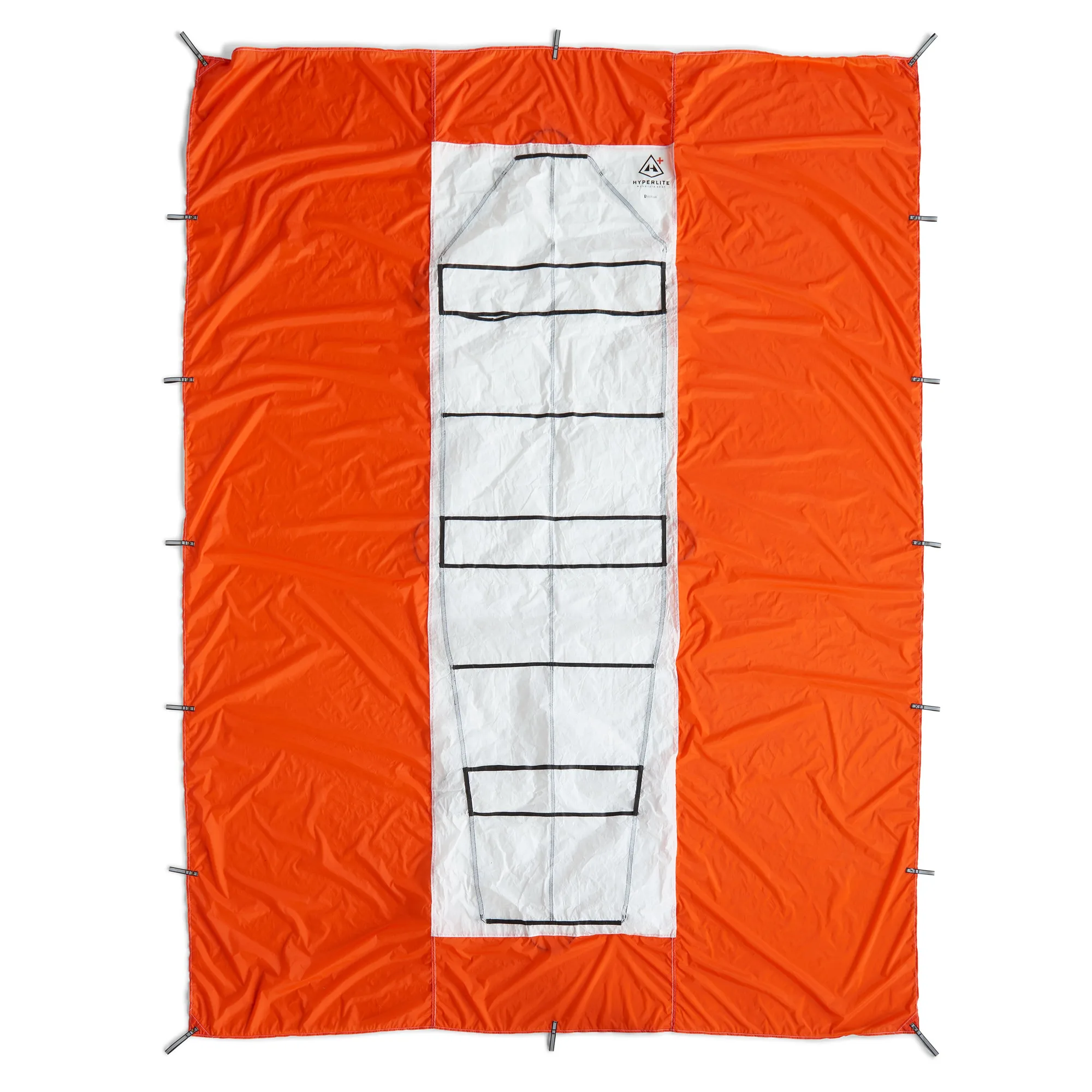
Ski Rescue Tarp
Practice this setup at home or on a day tour before you need it in an emergency. Knowing how to deploy the Ski Rescue Tarp quickly can make a critical difference in a backcountry incident.