Quick answer
Mount a small hay manger at nose height over a shallow litter tray, not directly on bedding. Fill it loosely so hay stays fluffy, then top it up daily and empty stale hay every two to three days. This one change keeps hay cleaner, reduces waste, and makes the habitat easier to tidy.
Why a manger beats a loose hay pile
Loose hay scattered on bedding gets soiled fast, and most small pets will not eat hay once it is damp or mixed with droppings. A manger holds hay up and away from the floor, so your pet pulls clean strands from the rack instead of foraging through bedding. That means less waste, a drier habitat, and less daily sweeping.
The tradeoff is that a manger needs a little planning. If it sits too high, shy or young pets cannot reach it comfortably. If it sits too low or over deep bedding, hay still ends up on the floor. The steps below walk through placement, mounting, filling, and maintenance so the setup works from day one.
Pick the right wall and check clearance
Choose a solid wall or panel away from the water bottle and the sleeping area. Hay stays fresher when it is not next to a dripping bottle, and keeping it away from the nest reduces the chance your pet soils it overnight. Leave at least a hand-width of clearance around the manger so your pet can pull hay from any angle without bumping into toys or hideouts.
If you use a wire cage, pick a section with horizontal bars that your mount can grip. For a playpen or hutch with solid walls, use the mounting hardware that came with the manger or a small screw hook rated for the weight of a full rack. Check that the manger does not block a door or a ramp.
Set the height for your pet's size
As a starting point, the bottom of the manger should sit roughly at your pet's nose level when standing normally. For most adult rabbits that is around 6 to 8 inches off the floor; for guinea pigs it is lower, closer to 3 to 5 inches. These are starting points, not fixed rules, because body size varies.
Watch your pet for the first hour. If they have to stretch or climb to reach hay, lower the manger one notch. If hay is being pulled straight onto the floor, raise it slightly or move it over a tray.
Place a tray underneath to catch the fallout
Even a well-placed manger drops some hay. Put a shallow litter tray or a low-sided pan directly under the rack. This catches dropped strands and gives your pet a natural eating spot. Line the tray with a thin layer of bedding or paper pellets, not a deep pile, so hay stays visible and clean.
Empty the tray every one to two days. If you skip this, the tray becomes a second messy hay pile and you lose the benefit of the manger.
Fill loosely and top up daily
Stuffing hay tightly into a manger looks tidy but makes it hard to pull, and pets often give up or yank out large clumps. Add hay in loose handfuls so air can move through it. A manger that is about two-thirds full is easier to eat from than one packed to the top.
Top up once a day and remove any hay that looks damp, discolored, or matted. Fresh hay encourages eating, and a clean rack is less likely to grow mold in humid rooms.
Add chews nearby to protect the manger
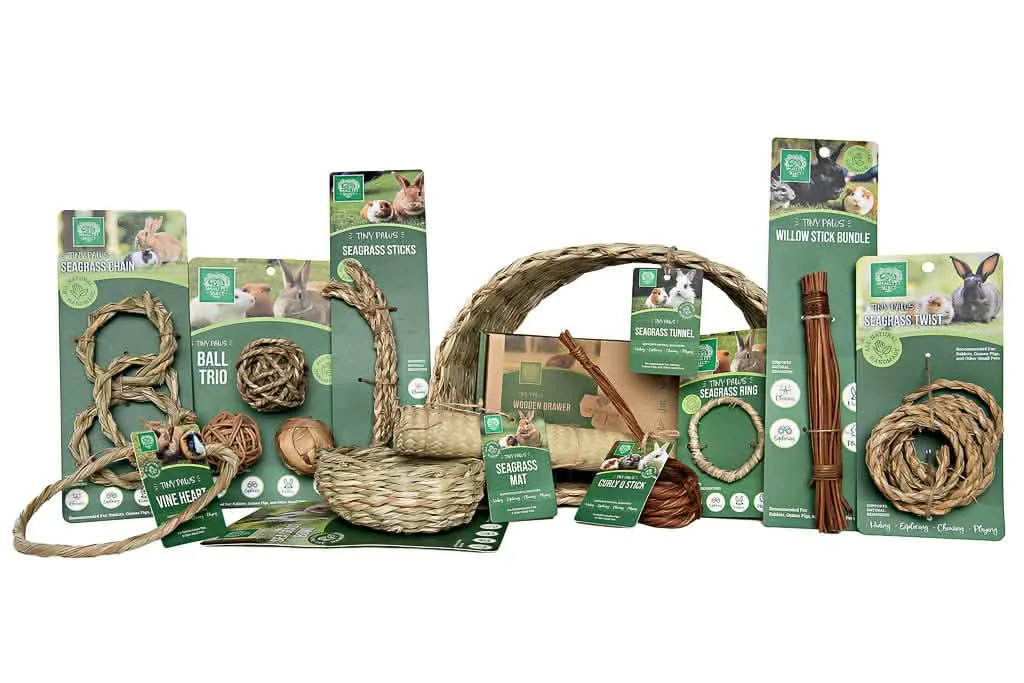
Some pets chew the rack itself once the hay is gone. Keep safe chew items within reach so wood and wicker get the attention instead. The Tiny Paws Apple Chew Sticks are made from organic apple wood and suit rabbits, guinea pigs, chinchillas, and hamsters, which makes them an easy companion item next to a hay station.
If your pet is a determined chewer, check the manger weekly for splinters or loose hardware. Replace or sand any rough edges before they become a mouth injury.
Step-by-step hay manger setup
- Choose the wall and clear the zone: Pick a solid wall away from the water bottle and sleeping area, then remove toys or hideouts within a hand-width of the mounting spot. Checkpoint: your pet should be able to approach the manger from at least two sides.
- Mount at nose height: Attach the manger so the bottom edge sits near your pet's nose level when standing, roughly 6 to 8 inches for adult rabbits and 3 to 5 inches for guinea pigs. Common mistake: mounting too high, which forces stretching and drops more hay.
- Set a shallow tray underneath: Place a low-sided tray or pan directly below the rack with a thin layer of bedding, not a deep pile. Checkpoint: dropped hay should land in the tray, not on the main bedding.
- Fill loosely, two-thirds full: Add hay in loose handfuls so air moves through it and strands are easy to pull. Common mistake: packing hay tight, which makes eating frustrating and increases waste.
- Top up daily and clean every two to three days: Remove damp or matted hay each day, and empty the tray and refresh the rack every two to three days. Checkpoint: if hay smells musty or looks discolored, replace it immediately.
- Add a safe chew nearby: Place an apple wood chew or a small natural toy within reach of the hay station to redirect chewing away from the manger. Next step: inspect the rack weekly for splinters or loose hardware.
Products that pair well with a hay station
- Tiny Paws Apple Chew Sticks: Tiny Paws Apple Chew Sticks are made from 100% organic apple wood and suit rabbits, guinea pigs, chinchillas, and hamsters. Placing a safe wood chew near the manger gives your pet something to gnaw besides the rack and helps redirect chewing away from hardware.
- Tiny Paws - 4 Toy Sampler: The Tiny Paws 4 Toy Sampler bundles natural, chewable toys made from all-natural, pet-friendly materials. A small sampler adds variety near the hay station without committing to a large toy collection, which is useful if you are still learning what your pet prefers.