Quick answer
Set up your adjustable dumbbell set on a level, non-slip surface with enough clearance to move around it, and store it on its docking platform or a sturdy rack when not in use. Always adjust the weight while the dumbbell is resting in its dock, not while you are holding it.
Why the setup spot matters more than the dumbbell itself
An adjustable dumbbell set saves space, but it also introduces moving parts and a wider footprint than a single fixed dumbbell. A level floor and a clear zone around the set reduce the chance of the dumbbell tipping or the plates catching on something mid-change.
If you train on carpet, place a thin, firm mat under the docking platform so the set sits flat. On hard floors, check that the platform does not slide when you lift the handle.
When a docking platform is not enough
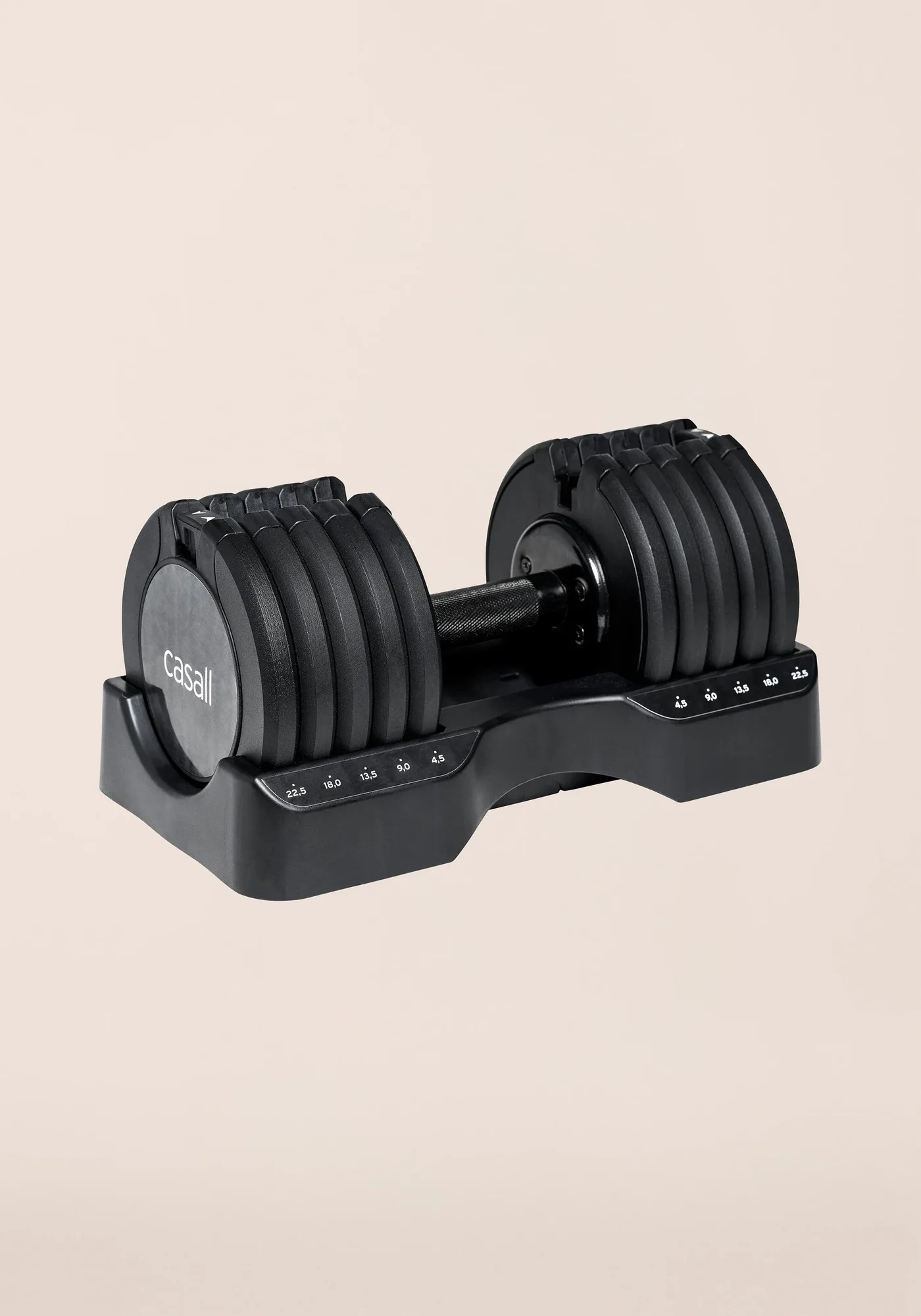
The supplied Adjustable Dumbbell Set 4,5-22,5kg includes a docking platform, which keeps the plates aligned and gives you a defined place to return the dumbbell. That works well for a single set in a corner, but if you share the space with other equipment or train in a living area, you may still want a dedicated rack or a marked floor zone.
Small-space storage is less about hiding the dumbbell and more about keeping the change mechanism clean and unobstructed. Leave at least a hand-width gap around the platform so you can reach the weight selector without twisting.
Safety checks before every session
Adjustable dumbbells rely on a locking mechanism. Before you lift, confirm the selected weight is fully seated and the handle feels solid. If the dumbbell rattles or a plate feels loose, stop and reseat it in the dock.
Never change the weight while the dumbbell is overhead or in motion. The common mistake is rushing a change between sets and letting a plate drop; slow down for the few seconds it takes.
Step-by-step setup and storage
- Choose a level, clear training zone: Pick a spot with a level floor and at least one arm's length of clear space on all sides of the dumbbell. Avoid areas where the platform overlaps a rug edge or a doorway. Check the floor with a spirit level or a marble; if it rolls, move the set.
- Place the docking platform first: Set the platform down before you load any weight. Make sure it sits flat and does not rock. On smooth floors, test whether it slides when you press it sideways. If the platform moves, add a thin rubber mat underneath rather than taping it down.
- Load and test the weight selection: With the dumbbell in the dock, move the selector to your chosen weight and lift the handle straight up. Set it back down and confirm the plates seat cleanly. Repeat once at a lighter and once at a heavier setting. If a setting feels vague or the handle does not lift cleanly, reseat the dumbbell and try again before training.
- Set a return rule for every set: After each set, return the dumbbell to the platform before changing weight. Do not rest it on a bench, sofa, or floor between sets. A consistent return spot keeps the change mechanism aligned and protects your floor.
- Store it compactly when not in use: Leave the dumbbell on the docking platform in its lowest or a mid setting, with the handle clear of nearby objects. If you need to move it, carry it with both hands close to your body. Keep the platform in the same spot; moving it repeatedly is when plates and selectors get knocked out of alignment.
Product facts
-
Adjustable Dumbbell Set 4,5-22,5kg - Black: Adjustable weight from 4,5 to 22 kg, sold individually with a docking platform included. The platform gives you a fixed storage and change point, so you can build your setup around one consistent footprint.
Adjustable Dumbbell Set 4,5-22,5kg - Black