Quick answer
Sew crinkled cotton with a fine universal needle, a slightly longer stitch, and minimal pressing. Treat the crinkle as a design feature, not a flaw to iron out.
Why crinkled cotton behaves differently
The crinkle in this Katia cotton comes from a textured finish, not from stretch. The fabric has no elastane, so it will not bounce back like a knit. That means you can sew it with standard woven techniques, but you need to handle the surface carefully to keep the texture intact.
Because the fabric is semi-opaque and lightweight at 110 gsm, it works best for loose-fitting garments where a little show-through is acceptable or can be lined. Avoid tight-fitting styles that put stress on the seams, since the crinkle can make seam edges look wavy if stretched during sewing.
Choosing a project that suits the crinkle
Crinkled cotton is ideal for relaxed shirts, pull-on pants, and simple dresses. The texture hides wrinkles and adds visual interest, so you can skip complex details like darts or tailored seams. Keep silhouettes simple and let the fabric do the work. For garment ideas, think boxy tops, elastic-waist skirts, and loose tunics.
If you want a more structured look, consider using the fabric as an accent rather than the main material. The Panama stripe is bold, so a little goes a long way. A contrasting yoke or pocket can be enough.
Step-by-step sewing process
- Pre-wash and dry: Wash the fabric in cool water and tumble dry low before cutting. This removes any shrinkage and helps set the crinkle. Common mistake: skipping pre-washing can cause the garment to shrink unevenly later. Always pre-wash crinkled cotton before cutting.
- Cut with the crinkle relaxed: Lay the fabric flat without stretching. Let the crinkle sit naturally. Pin only within the seam allowance to avoid distorting the texture. Cut single layer if the stripe needs matching. Checkpoint: do not smooth or iron the fabric before cutting; you want the crinkle as it will be in the finished garment. Cut without stretching or pressing the fabric flat.
- Choose the right needle and stitch: Use a fine universal needle (size 70/10 or 80/12) and a slightly longer stitch length (2.5–3 mm). A longer stitch helps prevent puckering on the textured surface. Common mistake: using a sharp needle can snag the crinkle; a universal needle is gentler. Test on a scrap first to adjust stitch length.
- Sew seams with light pressure: Sew slowly and let the feed dogs move the fabric without pulling. Use a walking foot if you have one to keep layers even. Checkpoint: if the fabric starts to pucker, stop and adjust tension or stitch length. Light pressure and a walking foot reduce distortion.
- Press minimally and carefully: Press seams open with a warm iron (not hot) and a pressing cloth. Do not press the right side of the fabric; steam lightly if needed. Common mistake: ironing directly flattens the crinkle permanently. Checkpoint: always press on the wrong side or use a cloth. Never press the right side of crinkled cotton.
- Finish edges without flattening: Use a narrow zigzag or overlock stitch on seam allowances. Avoid heavy topstitching that would compress the texture. Checkpoint: test the finish on a scrap to ensure it doesn't stiffen the seam. Keep seam finishes light to preserve drape.
Fabric facts that affect sewing
-
Crinkled Cotton | Panama Stripes | Katia Fabrics: 83% cotton / 17% viscose, 110 gsm, no stretch, semi-opaque. The cotton-viscose blend gives it a soft drape, but the lack of stretch means you need to fit carefully and avoid tight seams.
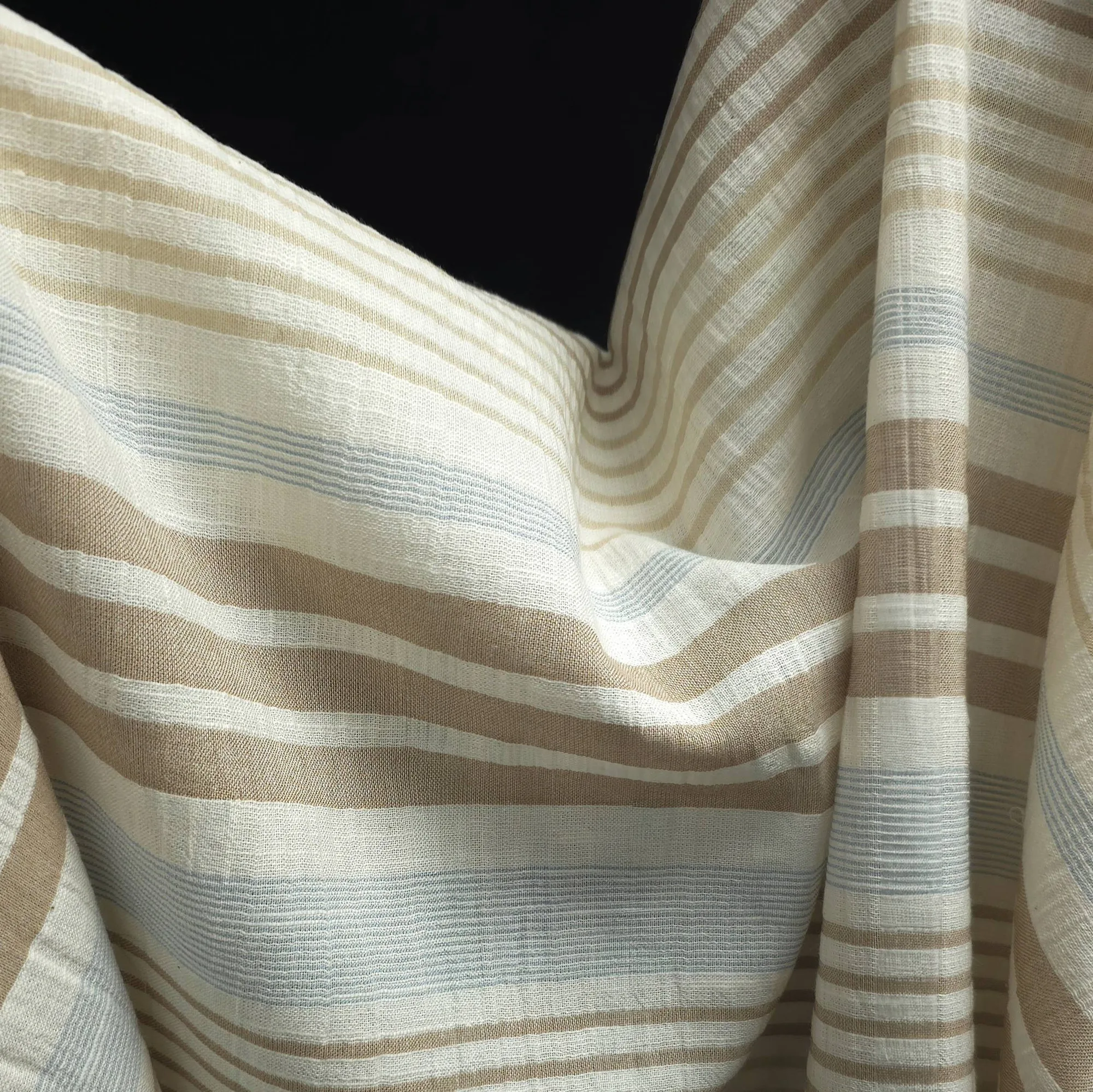
Crinkled Cotton | Panama Stripes | Katia Fabrics