Quick answer
Sew herringbone webbing straps by heat sealing the cut ends, stitching with a heavy-duty needle and polyester thread, then reinforcing the attachment points with a box-and-X pattern.
Why herringbone webbing is a great choice for bag straps
Herringbone webbing has a distinctive woven pattern that resists stretching and lies flat, making it ideal for bag straps and handles. Nylon herringbone webbing, like the Dusty Rose option from Zipper Valley, adds strength and a stylish look without adding bulk. It sews easily and holds up to daily wear.
How to sew herringbone webbing straps
- Cut and seal the webbing: Cut herringbone webbing to your desired strap length using sharp scissors. Immediately heat seal the cut ends with a lighter or soldering iron to prevent fraying. Nylon melts cleanly, so work quickly and press the edge flat while warm. A common mistake is skipping the heat seal; frayed ends weaken the strap and look messy.
- Set up your sewing machine: Use a size 16 or 18 heavy-duty needle and polyester or nylon thread. Set stitch length to 3.5–4 mm for a strong seam. Test on a scrap piece to ensure the needle penetrates without skipping stitches. If your machine struggles, reduce fabric layers by trimming the webbing end at an angle before stitching.
- Attach the webbing to the bag: Pin or clip the webbing strap to the bag panel, aligning raw edges. Sew a straight stitch 1/8 inch from each long edge of the webbing, backstitching at start and end. For extra strength, add a box-and-X stitch pattern at each attachment point. Sewing too close to the webbing edge can cause the thread to slip off; keep the seam allowance consistent.
Product facts
-
Dusty Rose - Nylon Herringbone Webbing: 100% nylon webbing designed for bag straps and handles; easy-to-sew and feels amazing. Nylon herringbone webbing combines durability with a soft hand, so your straps are strong yet comfortable against the skin.
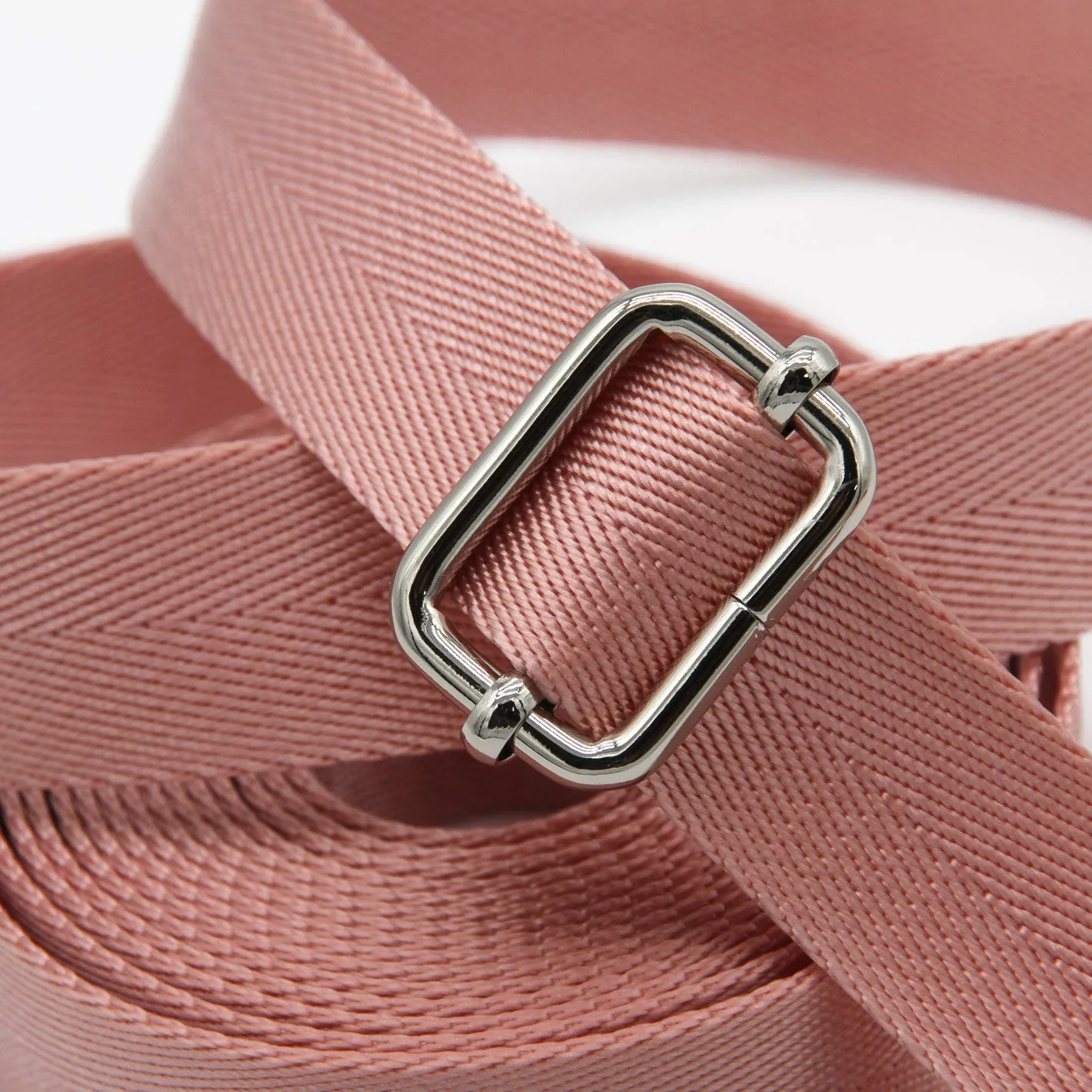
Dusty Rose - Nylon Herringbone Webbing