Quick answer
Choose a puzzle with a piece count that matches your group's youngest or least experienced member, set up a large flat surface with separate zones for sorting and assembly, and assign rotating roles so everyone stays engaged. Then work edges first, sort by color or motif, and keep the pace relaxed rather than racing to finish.
A family puzzle night works best when the puzzle fits the people around the table, not the other way around. The fastest way to lose a group is to pick a 1000-piece image for a mixed-age crowd, or to crowd everyone around a table that is too small for the finished size. Before you open the box, check the completed dimensions and decide where the puzzle will live for the next few days.
Once the setup is right, group puzzle solving becomes a series of small, repeatable jobs: sorting, edge-building, color matching, and filling gaps. The steps below walk you through that process, including the mistakes that most often stall a collaborative puzzle session.
Pick a puzzle the whole group can finish
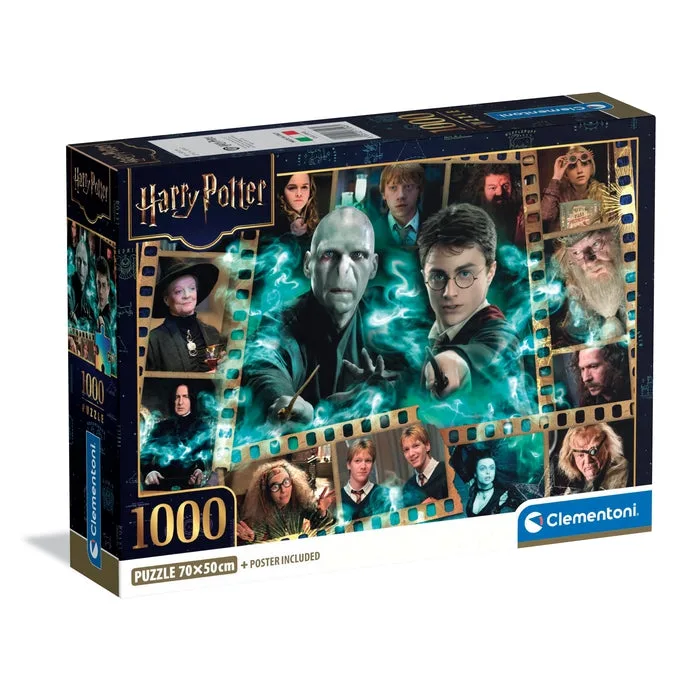
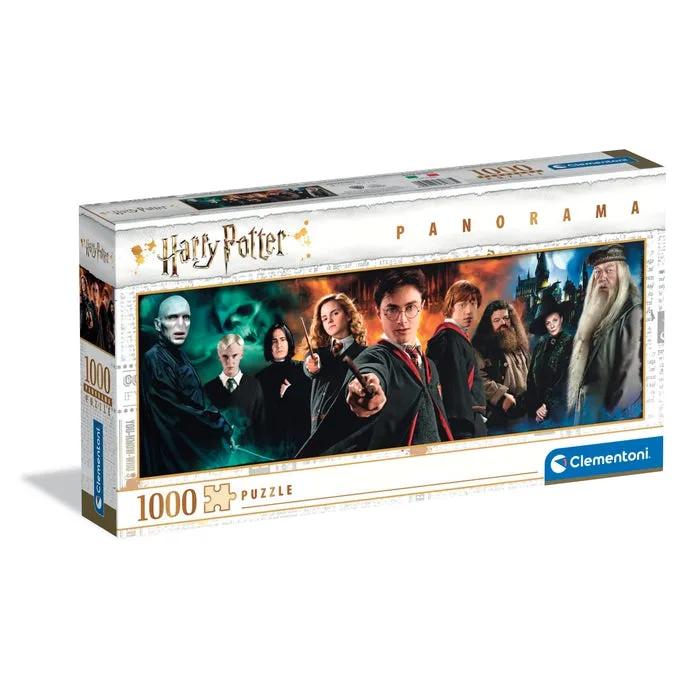
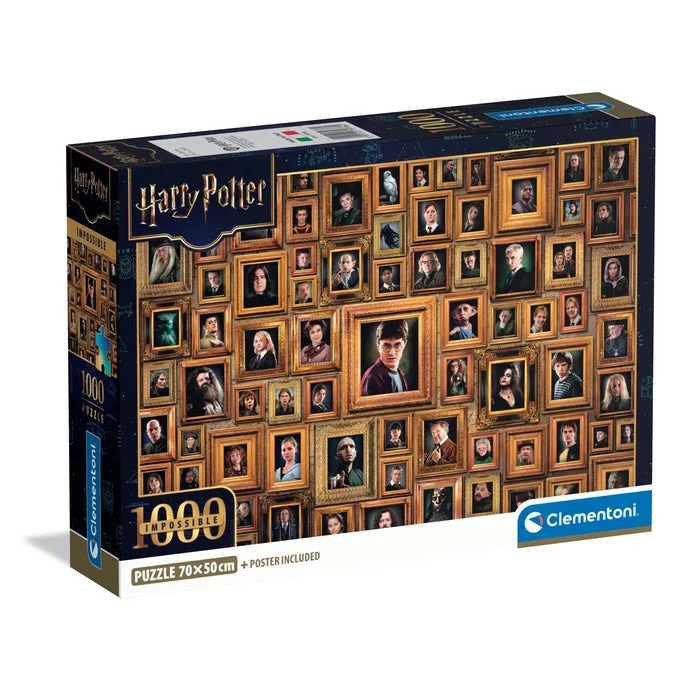
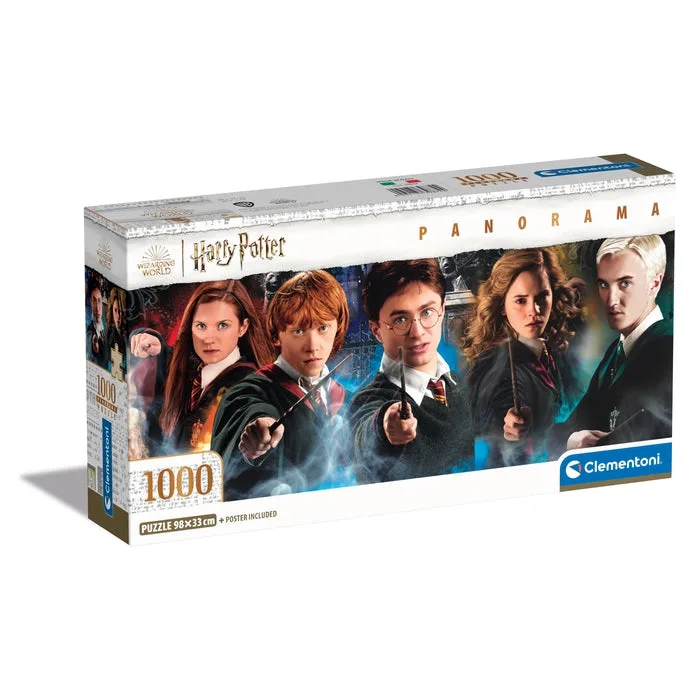
Match the piece count to the least experienced puzzler, not the most enthusiastic one. A 60-piece maxi puzzle like Sonic - 60 pezzi, with a finished size of 62 x 42 cm, lets younger children place pieces successfully and still leaves enough work for adults to help. If your group is all adults or teens, a 500-piece puzzle such as Disney Stitch - 500 pezzi (49 x 36 cm) or a 1000-piece like https://clementonijgz.com/products/harry-potter-1000-pezzi-15-22d47047af1cff3277569fa3-1565951https://clementonijgz.com/products/harry-potter-1000-pezzi-1-61d657c07888a0f8bf0428b7-1565964https://clementonijgz.com/products/harry-potter-1000-pezzi-3-c1a8909f68597e3a024b395f-1565965https://clementonijgz.com/products/harry-potter-1000-pezzi-8-2597ed5c06f12218ce3d9651-1565967Harry Potter - 1000 pezzi (98 x 33 cm) gives a longer session without becoming frustrating.
Check the finished dimensions against your table before you commit. A 1000-piece puzzle at 98 x 33 cm needs a long, narrow surface, while a 500-piece at 49 x 36 cm fits a standard coffee table. If the puzzle is too large for the space, you will spend the evening moving pieces instead of placing them.
- Common mistake: choosing a puzzle for the photo on the box rather than the piece count your group can realistically finish in one or two sittings.
Set up zones before the first piece comes out
Divide your surface into three areas: an assembly zone for the border and connected sections, a sorting zone for loose pieces, and a holding zone for pieces you have grouped but not yet placed. This keeps the table from becoming a single pile that nobody can search. Use shallow bowls or box lids for sorted groups so pieces stay visible.
Good lighting matters more than most people expect. A lamp aimed at the assembly area reduces eye strain and makes subtle color differences easier to spot, especially on darker puzzle images. If you are working on the floor with children, sit at the same level so everyone can reach the puzzle without leaning over it.
- Checkpoint: if pieces are already overlapping in the middle of the table, stop and reset the zones before continuing.
Assign simple roles and rotate them
Give each person a clear job for the first 15 minutes: one person flips all pieces face-up, one builds the border, one sorts by color family, and one watches for the box image to guide placement. Rotating roles every 20 to 30 minutes keeps younger players from getting stuck on a task that is too hard or too repetitive.
For a collaborative puzzle, resist the urge to direct every move. Let each person own a section, even if it is small. A child who completes a corner or a character's face stays engaged far longer than one who is only allowed to hand pieces to an adult.
- Common mistake: one person quietly takes over the whole puzzle, which leaves everyone else watching instead of solving.
Build the border, then work inward by color and motif
The border gives the group a shared frame and a visible sign of progress. Once the edge is complete, sort the remaining pieces into broad color groups, then into smaller motif groups such as sky, faces, or repeating patterns. On a puzzle like PAW PATROL - 104 pezzi (37.9 x 26.9 cm), the bright character colors make sorting fast and give children clear targets.
Place pieces in their approximate area even when you are not sure they fit. Loose placement narrows the search for the next person and turns individual guesses into group progress. If a section stalls, move to a different area rather than forcing the same spot for too long.
- Checkpoint: if a section has not grown in 10 minutes, reassign one person to it or switch to a different part of the puzzle.
Keep the session short enough to end on a high note
Plan for 45 to 90 minutes, depending on the age range. Stop while people are still enjoying it, not after the energy has drained. If the puzzle is not finished, cover it with a puzzle mat or a large board and agree on when you will return to it. A puzzle that stays out on the table invites quick five-minute contributions during the week.
For younger groups, a card game like Asino can work as a warm-up or a break between puzzle sessions. It uses the same table space and gives children a change of pace without ending the family puzzle night early.
- Common mistake: pushing to finish a large puzzle in one sitting, which turns a fun group activity into a chore.
Family puzzle night step-by-step
- Choose the puzzle by piece count and finished size: Match the piece count to the least experienced person in the group. Check the completed dimensions against your table before opening the box. Checkpoint: if the finished size is wider than your table, choose a smaller puzzle or plan a floor setup.
- Set up sorting, assembly, and holding zones: Use shallow bowls or box lids for sorted groups, aim a lamp at the assembly area, and keep the three zones separate. Checkpoint: reset the zones if loose pieces start piling up in the middle.
- Assign and rotate roles: Give each person a clear job for the first 15 minutes, then rotate every 20 to 30 minutes so no one gets stuck on a repetitive task. Checkpoint: make sure no single person is placing most of the pieces.
- Build the border first: Complete the edge before sorting the interior. The border creates a shared frame and a visible sign of progress for the group. Checkpoint: if the border stalls, switch two people to edge duty.
- Sort by color and motif, then place approximately: Group pieces into broad color families, then smaller motif groups. Place pieces near their likely area even if you are not certain they fit. Checkpoint: if a section has not grown in 10 minutes, move one person to a different area.
- End on a high note and plan the next session: Stop after 45 to 90 minutes while everyone is still enjoying it. Cover the puzzle and agree on when you will return to it. Checkpoint: a puzzle left out on the table invites short contributions during the week.
Puzzles and games that fit a group session
- Sonic - 60 pezzi: Puzzle bambini 60 maxi pezzi, dimensione puzzle completo: 62 x 42 cm. Large pieces and a manageable count let younger children place pieces successfully, so the group stays together instead of waiting on one person.
- PAW PATROL - 104 pezzi: Puzzle bambini 104 pezzi, dimensione puzzle completo: 37,9 x 26,9 cm. A mid-size children's puzzle that fits a standard table and gives sortable character colors for fast group progress.
- Disney Stitch - 500 pezzi: Puzzle adulti 500 pezzi, dimensione puzzle completo: 49 x 36 cm. A good step up for mixed teen and adult groups that want a longer session without committing to 1000 pieces.
- Harry Potter - 1000 pezzi: Puzzle adulti 1000 pezzi, dimensione puzzle completo: 98 x 33 cm. Best for experienced groups with a long, narrow table; the finished size needs more space than a typical coffee table.
A successful family puzzle night comes down to choosing a puzzle your group can actually finish, setting up clear zones, and giving everyone a real job. Start with a piece count that fits your youngest puzzler, rotate roles, and stop before the table turns silent. The puzzle will still be there tomorrow, and so will the group.