Quick answer
Sort a 1000-piece movie puzzle in two passes: first pull out every edge piece, then group the rest by color and artwork zone before you build. Store the sorted trays or bagged groups flat, dry, and away from sunlight so pieces stay together between sessions.
Why movie puzzles need their own sorting plan
Movie artwork often packs large dark areas, skin tones, and dense detail into one image, so a single color sort can leave you with a huge pile of near-identical pieces. Splitting the poster into zones, such as faces, background, and lettering, gives each pile a clearer job.
A 1000-piece puzzle is small enough to finish on a standard table but large enough that a half-sorted pile becomes fragile. Decide on a storage spot before you open the box, not after the first session.
When sorting by color stops working
If a pile grows past roughly a few hundred pieces and every piece looks the same, stop sorting by color and switch to shape or artwork landmarks. This is common in dark backgrounds and in poster-style designs with repeating patterns.
Skip sorting entirely only if you plan to finish in one sitting on a dedicated board. Otherwise the extra ten minutes of setup saves far more time later.
Step-by-step: sort, build, and store your puzzle
- Set up a flat, dry work surface: Clear a table or puzzle board large enough for the finished size and keep drinks, pets, and direct sun away from it. Common mistake: working on a soft surface such as a bed, where pieces tip and edges bend. Check that the board or table can stay in place for several days before you start.
- Do a first pass for edge pieces: Turn every piece face up and pull out all pieces with a straight edge, setting them in one tray. Common mistake: assuming every straight edge is a border piece, when some puzzles include straight-edged interior pieces. Count your edge pieces against the box's stated border count if one is printed.
- Sort the remaining pieces by artwork zone: Use the box image to divide the art into three to five zones, such as faces, background, and lettering, and give each zone its own tray or bag. Common mistake: making too many tiny groups, which slows you down more than it helps. Keep a small unsorted pile for pieces that clearly belong to no zone yet.
- Build the border first, then fill by zone: Assemble the frame on your board, then work one zone at a time and slot completed sections into the frame. Common mistake: forcing a piece that almost fits, which bends knobs and weakens the fit. If a piece resists, set it aside and revisit it after the surrounding area is built.
- Store unfinished sections flat and covered: Slide a rigid sheet or the puzzle board under partial sections, or bag each sorted group in a zip-top bag with the air pressed out. Common mistake: stacking heavy boxes on top of loose pieces. Label bags by zone so you can rebuild your sorting system next session.
- Keep stored pieces dry and out of sunlight: Store the board or bags in a closet or drawer away from radiators, windows, and damp basements. Common mistake: leaving a puzzle in a garage or attic where humidity warps pieces and fades printed art. Check stored pieces after a season change for warping or dampness.
Product facts
-
Spider-Verse 1000-Piece Puzzle: This 1000-piece puzzle uses DKNG's design, originally released as a timed-edition poster in March 2017. Poster-style art with bold graphic zones gives you natural sorting boundaries, so group pieces by those zones rather than by color alone.
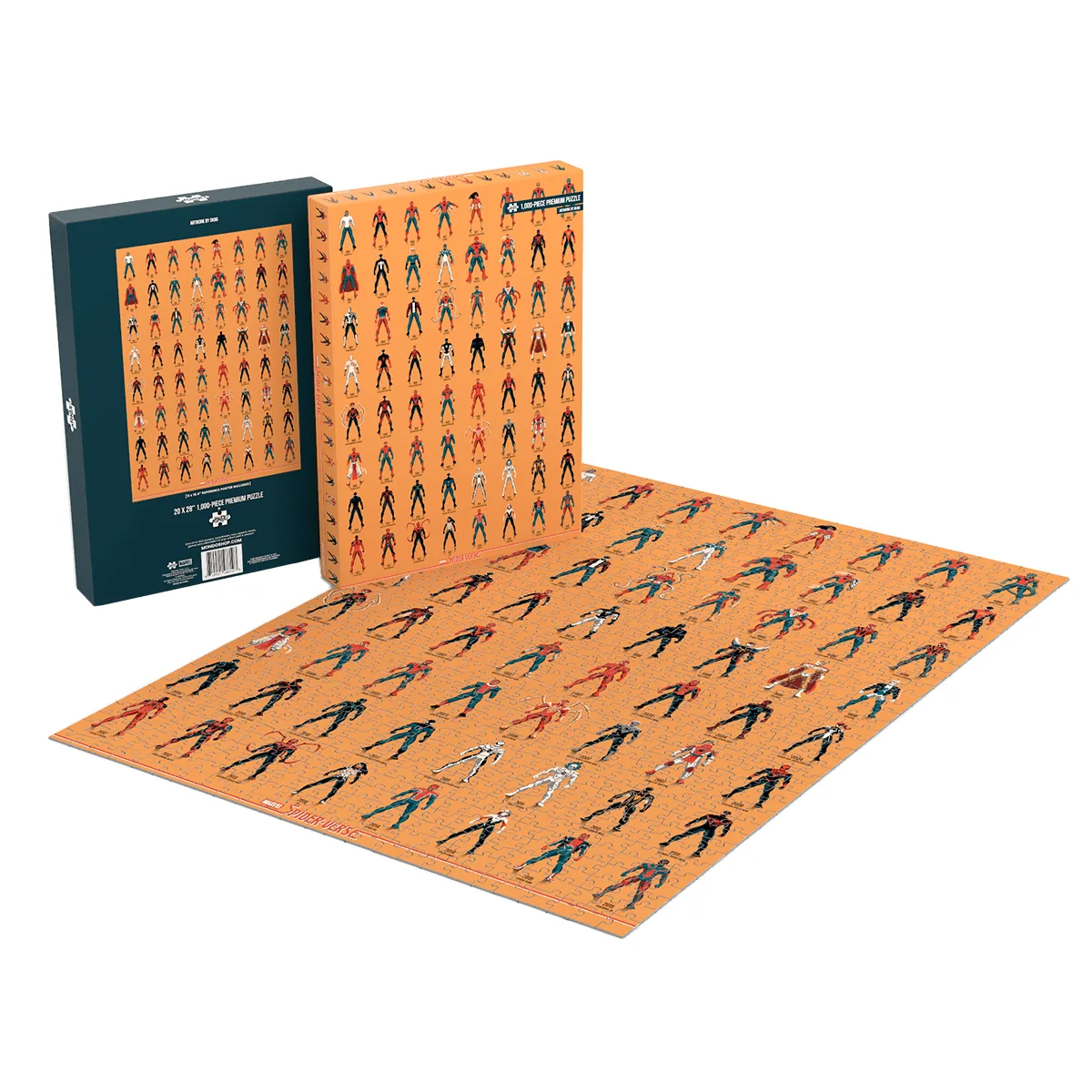
Spider-Verse 1000-Piece Puzzle