Quick answer
Start your drink journal by logging one cocktail you already make, then let each new drink add a single ingredient to your home bar. The Bar None Drink Journal is built around that one-ingredient-at-a-time approach, so you always know what you have and what to buy next.
Why a one-ingredient-at-a-time log beats a blank notebook
A cocktail recipe journal only works if you actually use it, and most people stall because they try to record everything at once. The Bar None Drink Journal flips that: it starts with a simple two-ingredient cocktail, then each consecutive drink adds one new component to your bar. That structure gives beginners a clear next step instead of a blank page and a vague plan.
The tradeoff is that this is not an encyclopedia you read cover to cover. It is a working log, so the value comes from writing in it consistently, even if your notes are short.
What to write beyond the recipe
A useful cocktail tasting log captures more than ingredients. Note the ratio you used, the brand or style of spirit, and one sentence about whether you would make it again. Those details are what turn a recipe journal into something you can actually repeat.
The journal also includes space to write down your thoughts, which is where the honest notes live: too sweet, too strong, better with less syrup. Keep those notes specific and you will stop remaking the same disappointing drink.
Your first five steps to a working drink journal
- Pick your starting two-ingredient drink: Choose one simple cocktail you already like and make it once before you write anything down. Common mistake: starting with a complex recipe that hides which ingredient you actually dislike. If you cannot taste the difference between two versions, simplify further before logging.
- Log the recipe and your ratio: Write the drink name, the two ingredients, and the exact amounts you used. Checkpoint: note the brand or style of each ingredient, because swapping brands changes the result more than beginners expect.
- Add one new ingredient for the next drink: Follow the journal's progression and let the next recipe introduce a single new component. Common mistake: buying three new bottles at once, which makes it impossible to tell which one improved the drink. Keep a running list of what you own so you do not rebuy the same bottle.
- Write a one-line verdict after each drink: Record whether you would make it again and one change you would try, such as less syrup or a different garnish. Checkpoint: date the entry so you can spot which experiments actually worked.
- Review your log before your next shop: Flip back through your entries and pick the next ingredient based on what you wanted to adjust, not on a random recipe. Common mistake: shopping without the journal, then guessing at what you already have. A five-minute review before shopping is the habit that keeps the journal useful.
Product facts
-
Bar None Drink Journal: The Bar None Drink Journal starts with a simple cocktail made from two ingredients, and each consecutive drink adds a new component to your bar. That built-in progression removes the guesswork of what to buy next, so beginners can build a usable bar without overbuying.
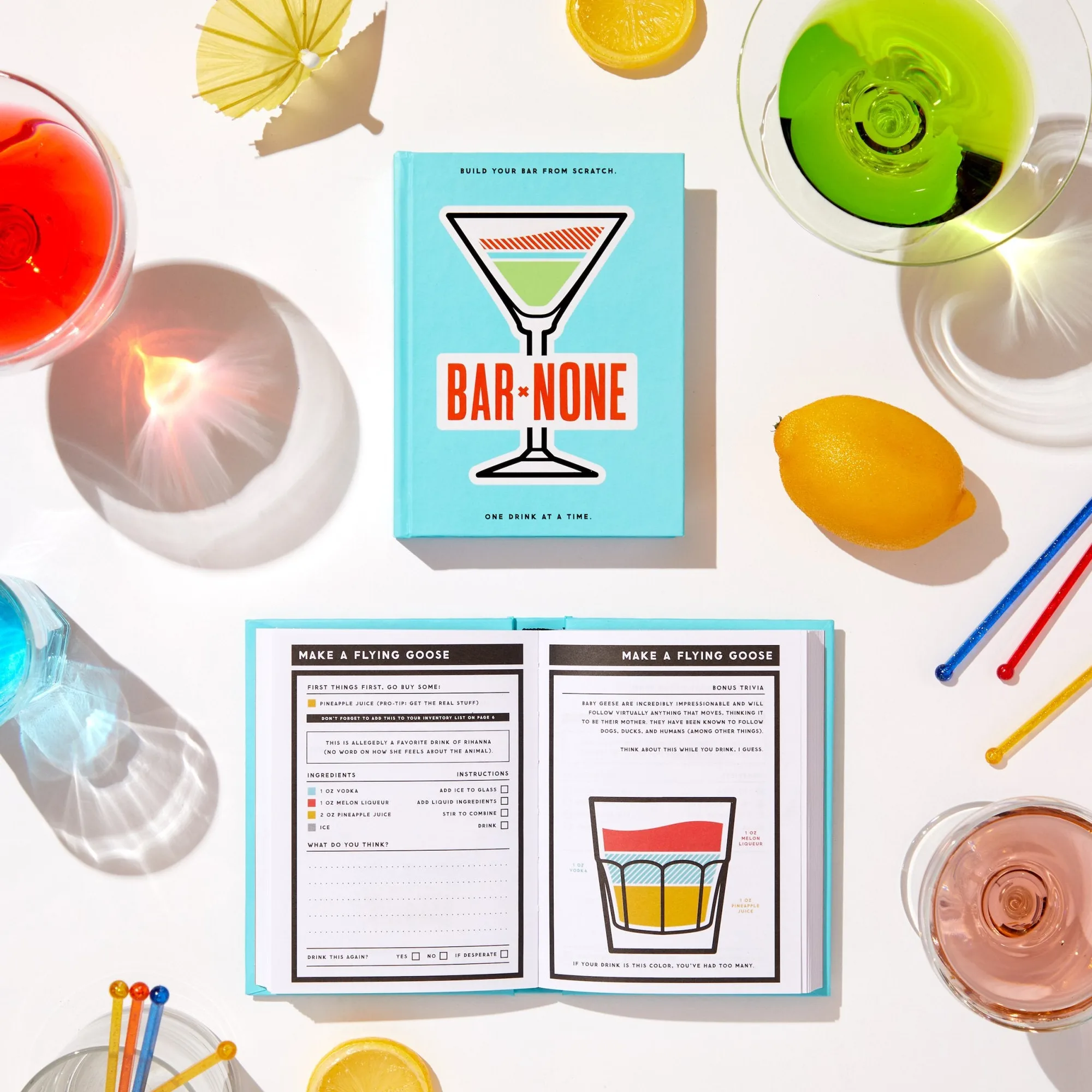
Bar None Drink Journal
-
Bar None Drink Journal: It includes recipes for hundreds of cocktails plus space to write down your thoughts. You get reference recipes and a personal log in one place, which makes it easier to compare what you made against what the recipe intended.