Quick answer
Before you tighten the sliders, check your band. A band that rides up is the most common reason for slipping straps, and shortening the straps only makes it worse. If the band sits level and snug, move the straps inward or switch to a style with sewn-on, adjustable straps. Tighten the sliders last, and stop once the straps lie flat without digging in.
You shrug, reach, or lift a bag, and one strap slides off your shoulder again. It is a small annoyance that can ruin an otherwise comfortable bra, and tightening the sliders rarely solves it for long. The real cause is usually upstream of the strap itself.
This guide walks through the most common reasons bra straps slipping happens, how to test each one in under a minute, and when to stop adjusting and choose a different bra style instead. The fixes are simple, but order matters.
Start with the band, not the straps
A bra band does most of the supporting work. When it is too loose, it creeps up your back during the day, which lifts the strap attachment points and lets the straps slide off your shoulders. Tightening the straps cannot fix a band that is riding up; it just adds pressure on your shoulders and can leave red marks.
Test it: fasten the bra on the loosest hook, then try to pull the band away from your back. If you can fit more than two fingers underneath, go down a band size or move to a tighter hook. The band should sit level all the way around, not angled up toward your shoulder blades.
- Fasten on the loosest hook when the bra is new so you have room to tighten it as the elastic relaxes.
- If the band rides up but the cups still fit, try a smaller band with a larger cup rather than tightening the straps.
- A band that leaves deep marks or feels hard to breathe in is too tight, not too loose.
Check strap placement and width
Straps that sit too far apart for your frame will slide off narrow or sloping shoulders no matter how tight you make them. Some bras have straps set wider at the back, which works well for broader shoulders but not for everyone. If your straps fall off the outer edge of your shoulders, placement is likely the culprit.
Look at where the straps attach to the cups and the band. If they sit close to your armpits, they are probably too wide for your build. A style with straps that attach closer to the center, or one with fully adjustable, sewn-on straps, gives you more control over where they sit.
- Try a racerback converter or a clip that pulls the straps inward before you buy a new bra.
- Straps that twist or fold are usually too long, not too wide; shorten them a little at a time.
- If the straps dig into your shoulders while the band is loose, fix the band first.
Match the strap style to how you move
Some straps are simply more stable than others. Thin, smooth elastic slides more easily on bare skin or silky fabrics. Wider straps with a bit of texture, or straps that are sewn on rather than fully detachable, tend to stay put through reaching, driving, and carrying bags.
If you have tried adjusting the band and the sliders and the straps still slip, the bra's construction may not suit your shoulders. That is the point to stop adjusting and look for a different style rather than fighting the one you have.
- Sewn-on straps cannot pop off at the back, which removes one common failure point.
- A wire-free style can change how the band and straps sit on your frame, which sometimes solves slipping on its own.
- Keep one bra in your rotation that you know stays put for long days or travel.
Quick fixes you can try today
If you want relief before shopping, a few small tools can help. A bra strap adjuster clip pulls the straps together at the back, which changes the angle so they sit farther from the edge of your shoulders. A small piece of fashion tape under the strap can add grip for a specific outfit or event.
These are short-term fixes, not solutions. If you find yourself reaching for a clip every time you wear the same bra, that bra is telling you something about its fit or construction. Use the clip for occasional outfits, and plan to replace the bra if the slipping is constant.
- Move the sliders in small increments and re-check in a mirror before tightening more.
- Stop tightening when the strap lies flat against your skin without pressing in.
- If a strap leaves a deep groove or your shoulders ache by mid-day, loosen it and revisit the band.
Diagnose your slipping straps in 60 seconds
- Band rides up your back: The band should sit level and snug on the loosest hook. If it climbs toward your shoulder blades, the band is too loose or too large. Fix the band size or hook position before touching the straps.
- Straps sit too far apart: Check where the straps attach to the cups. If they sit near your armpits, they are likely too wide for your shoulder shape. Try a strap clip or a style with straps set closer to the center.
- Straps are over-tightened: If the band is snug but the straps still slip, you may be tightening them past the point of usefulness, which can pull the band up. Loosen the sliders until the straps lie flat, then stop.
- Nothing changes after these checks: If the band fits, the straps are placed well, and they still fall, the bra's construction does not suit your shoulders. Stop adjusting and choose a different style, such as one with sewn-on adjustable straps.
Styles worth considering when slipping is a fit problem
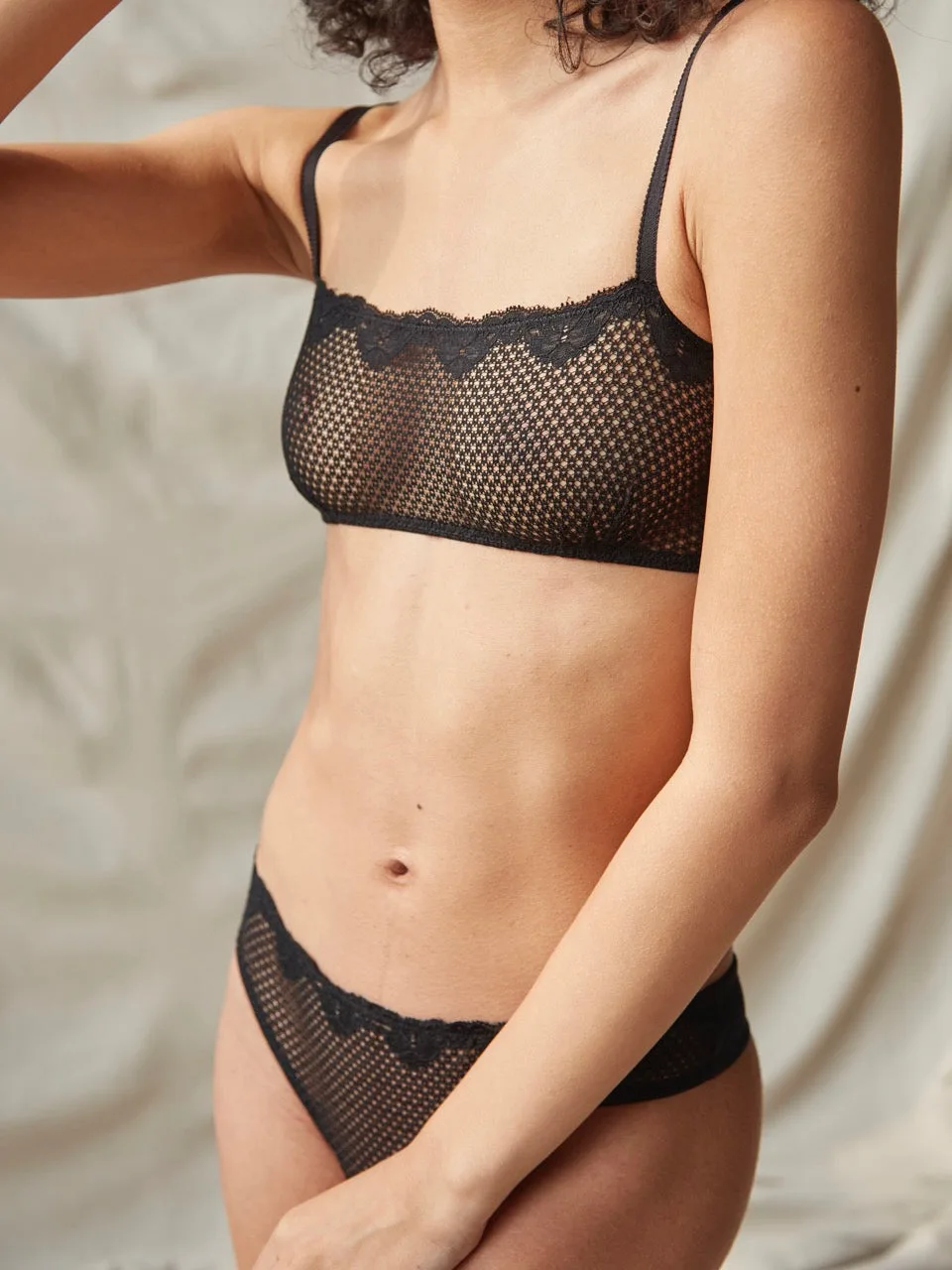
- Alice Bandeau bra: This wire-free style has fully adjustable, sewn-on straps designed to keep everything in place, unlike traditional bandeaus that slip and slide. Sewn-on straps remove the risk of a strap detaching at the back, and the adjustable length lets you fine-tune the fit without a clip.
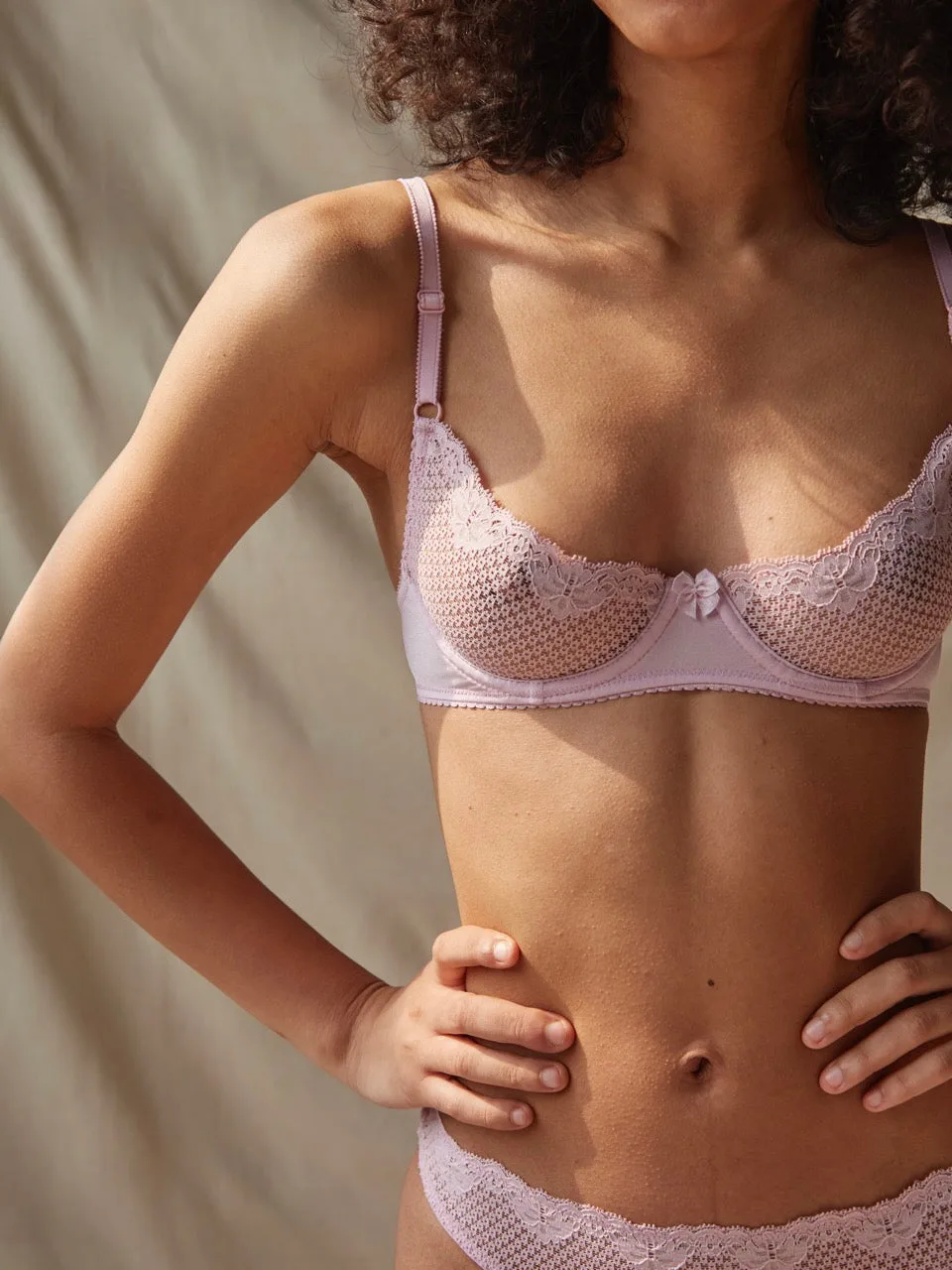
- Alice Demi Bra: It has a soft, supportive underwire and delicate lace with stretch, with cups made from a single panel of soft lace and no middle seams. A smooth single-panel cup can sit closer to the body, which helps the band and straps stay stable as you move.
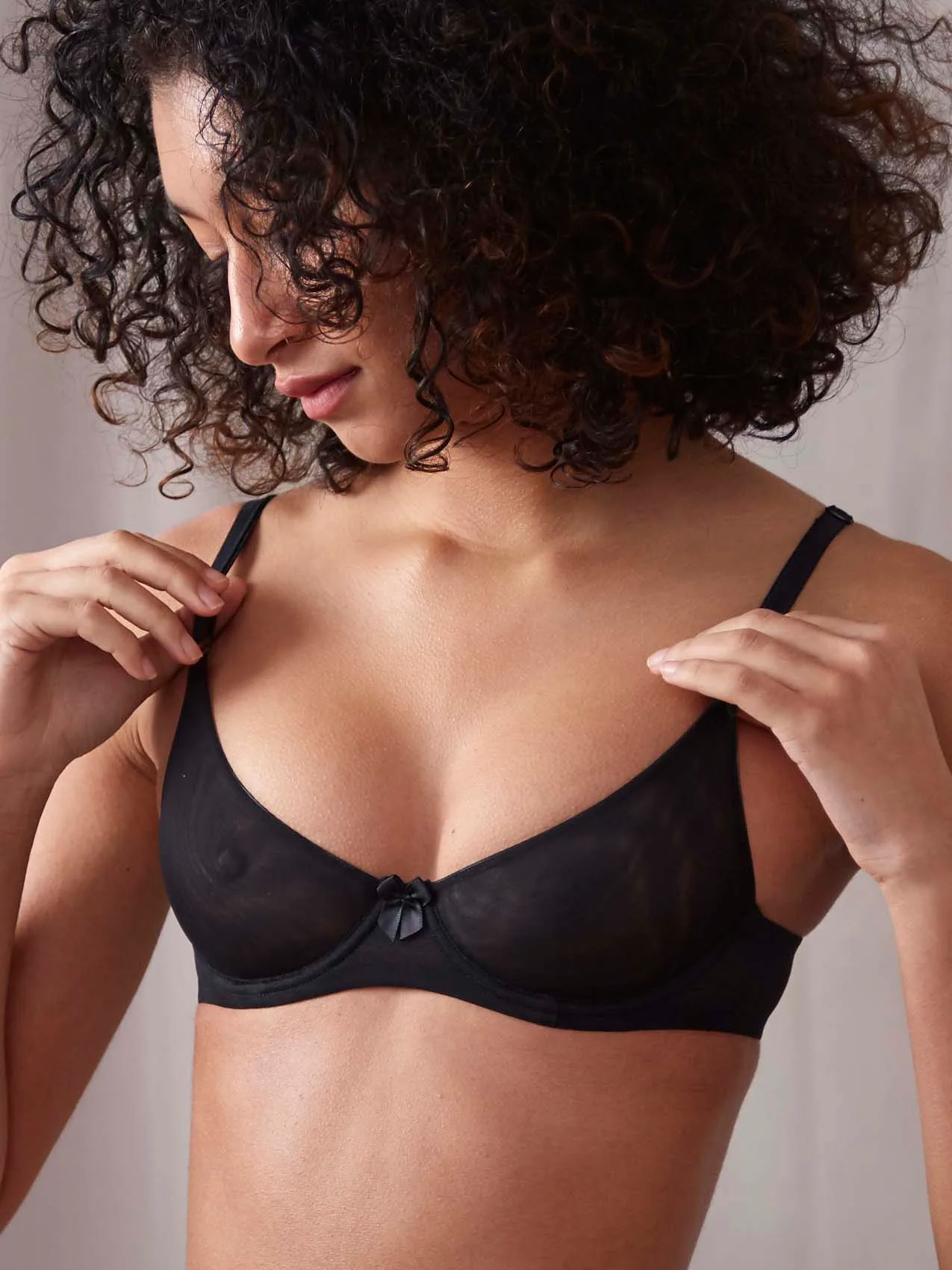
- Natacha Demi bra: It uses double-layered, lightweight mesh instead of lace, giving a smooth look with the Timpa swoop and lift and no foam padding. If lace texture or bulk has been part of your strap problem, a smoother mesh cup may sit more flush against your frame.
Slipping straps are usually a band or placement issue, not a strap-tightness issue. Work through the band first, then strap placement, then consider a different construction. If a bra still will not stay put after those steps, it is the wrong bra for your frame, and swapping styles will save you more time than another round of tightening.