Quick answer
Tighten the fixing screw a quarter turn at a time until the knob or handle feels firm, but stop before the screw spins freely. If the screw keeps turning without gripping, the thread or the door material is damaged, and continuing to tighten will only make it worse. In that case, switch to a slightly longer screw or a threaded insert rather than forcing the original fixing.
Why cabinet hardware works loose in the first place
Wood expands and contracts with changes in humidity, and every time a door or drawer is opened, the fixing screw experiences a small amount of movement. Over months of daily use, that movement gradually unscrews the fixing. This is normal, not a sign that you bought the wrong hardware. Handles on frequently used drawers and doors tend to loosen faster than knobs on cupboards that are opened once a day.
The type of fixing also matters. A knob fixed with a single screw through the front of the door relies on the screw biting into the wood or the threaded insert. If the hole was drilled slightly too large, or the screw is too short for the door thickness, it will never hold firmly no matter how often you tighten it.
How to tighten a loose knob or handle without causing damage
Start by opening the door or pulling the drawer out so you can access the back of the fixing. Hold the knob or handle firmly with one hand to stop it rotating, then turn the screw clockwise with the other. Use a screwdriver that fits the screw head properly; a loose-fitting driver will chew up the slot and make future adjustment harder.
Tighten in small increments. Once the hardware feels snug against the door face, give it a final gentle nip and stop. Over-tightening compresses the wood around the screw and enlarges the hole, which is the most common reason a fixing that was tight last month now spins freely.
For a bar handle with two fixing points, loosen both screws slightly before tightening either one. This lets the handle sit flat against the door and prevents one screw from taking all the load while the other stays loose.
When the screw spins but nothing tightens
If the screw turns without gripping, the thread has stripped either in the wood or in the insert. Do not keep turning it. Remove the screw completely and look at the hole. If the hole is enlarged but the surrounding wood is sound, you have two practical options: replace the screw with one that is slightly longer and the same gauge, or fill the hole with a hardwood dowel glued in place, then re-drill a pilot hole of the correct size.
If the hardware uses a threaded insert and the insert itself is spinning, the insert has lost its grip in the door. A slightly larger insert or a repair patch may be needed. This is the point to stop and assess whether the door material can take another fixing, or whether the hardware needs to move to a new position.
Prevention: simple habits that keep fixings tight
Check the fixings on your most-used doors and drawers every few months. A quarter-turn on a screw takes seconds and prevents the larger problem of a stripped hole. If you are fitting new hardware, make sure the pilot hole matches the screw gauge and the door material; too small a hole cracks the wood, too large a hole never grips.
Choose hardware with a solid, well-weighted fixing point where possible. A heavyweight handle with a deeper projection puts more leverage on its screws, so it benefits from being checked more often than a small knob. That is not a reason to avoid heavier hardware, just a reason to treat the fixings as something to maintain rather than fit once and forget.
Diagnose your loose hardware
- Symptom: knob or handle wobbles but the screw turns normally: The fixing has simply worked loose through use. Hold the hardware steady and tighten the screw a quarter turn at a time until snug. Stop when the hardware feels firm. Do not force it.
- Symptom: screw spins freely and never tightens: The thread has stripped in the wood or insert. Remove the screw and inspect the hole. A longer screw or a glued dowel repair is the next step. Stop tightening immediately. More turns will enlarge the hole.
- Symptom: threaded insert rotates inside the door: The insert has lost its grip. A larger insert or a repair may work, but if the door material is crumbling, the hardware may need a new fixing position. Stop and assess the door. Do not re-drill the same hole larger without a plan.
Hardware that stays put with the right fixing
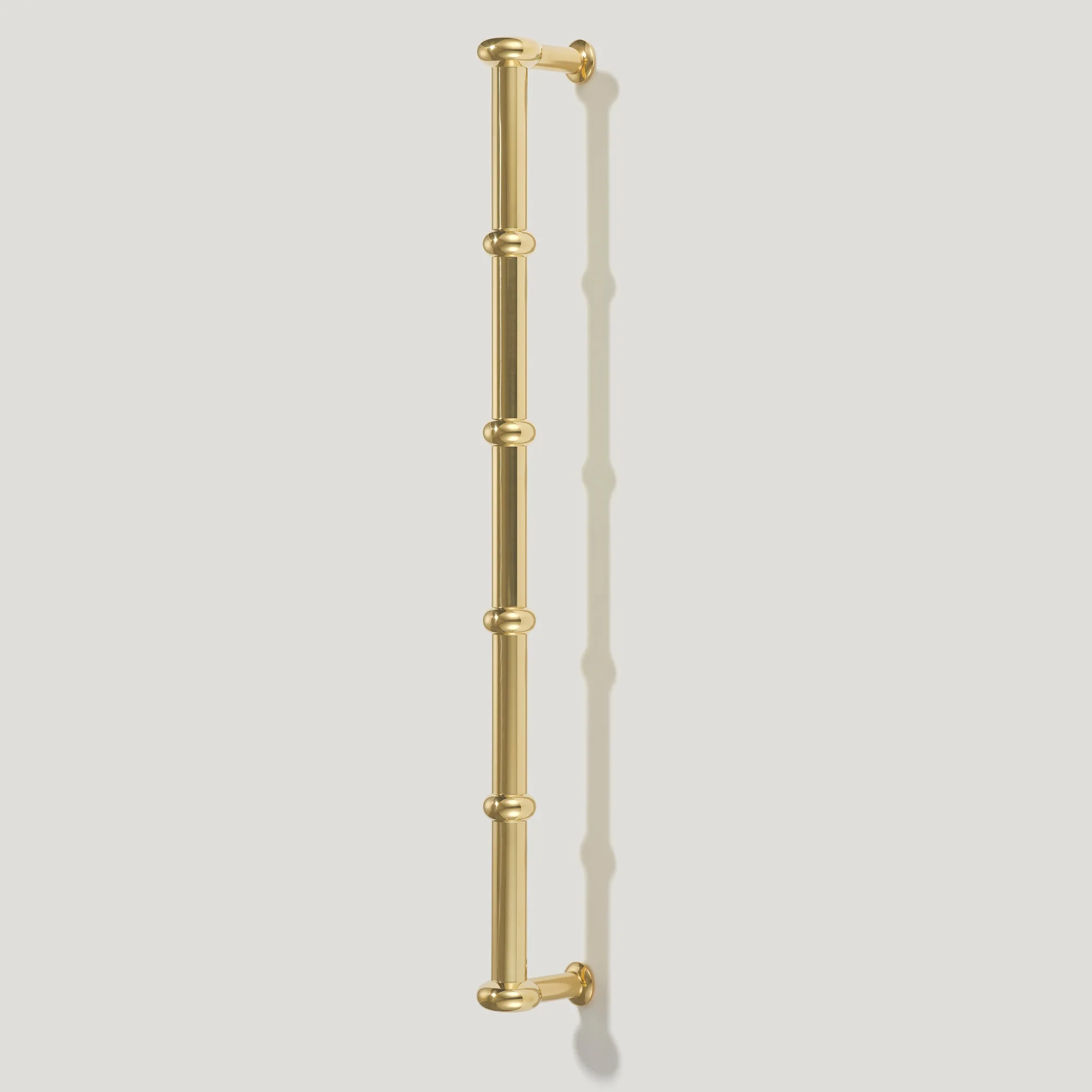
- PEYTON Heavyweight Long Handle - Unlacquered Brass: Unlacquered solid brass bar handle for large doors, 457mm fixing centres and 479mm overall with a 42mm projection. The long fixing centres spread the load across the door face, so each screw carries less leverage than on a short handle. Check both screws evenly when tightening.
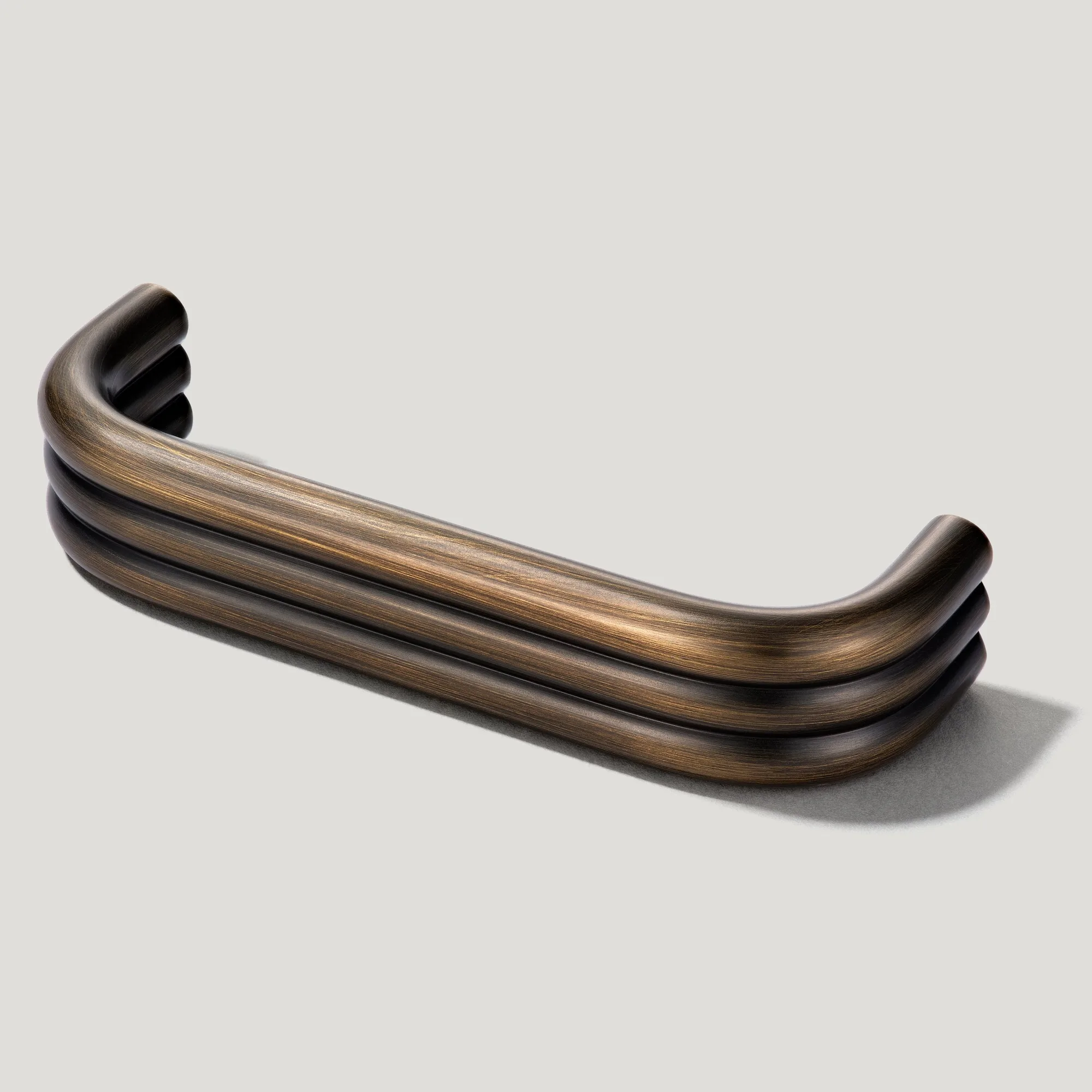
- ALVA Handle - Antique Brass: Antique brass bar handle in solid brass, available in 96 and 220mm fixing centres (104mm to 228mm overall). The two length options suit different door widths. A handle that is too long for the door can put uneven stress on one fixing, so match the length to the cabinet.
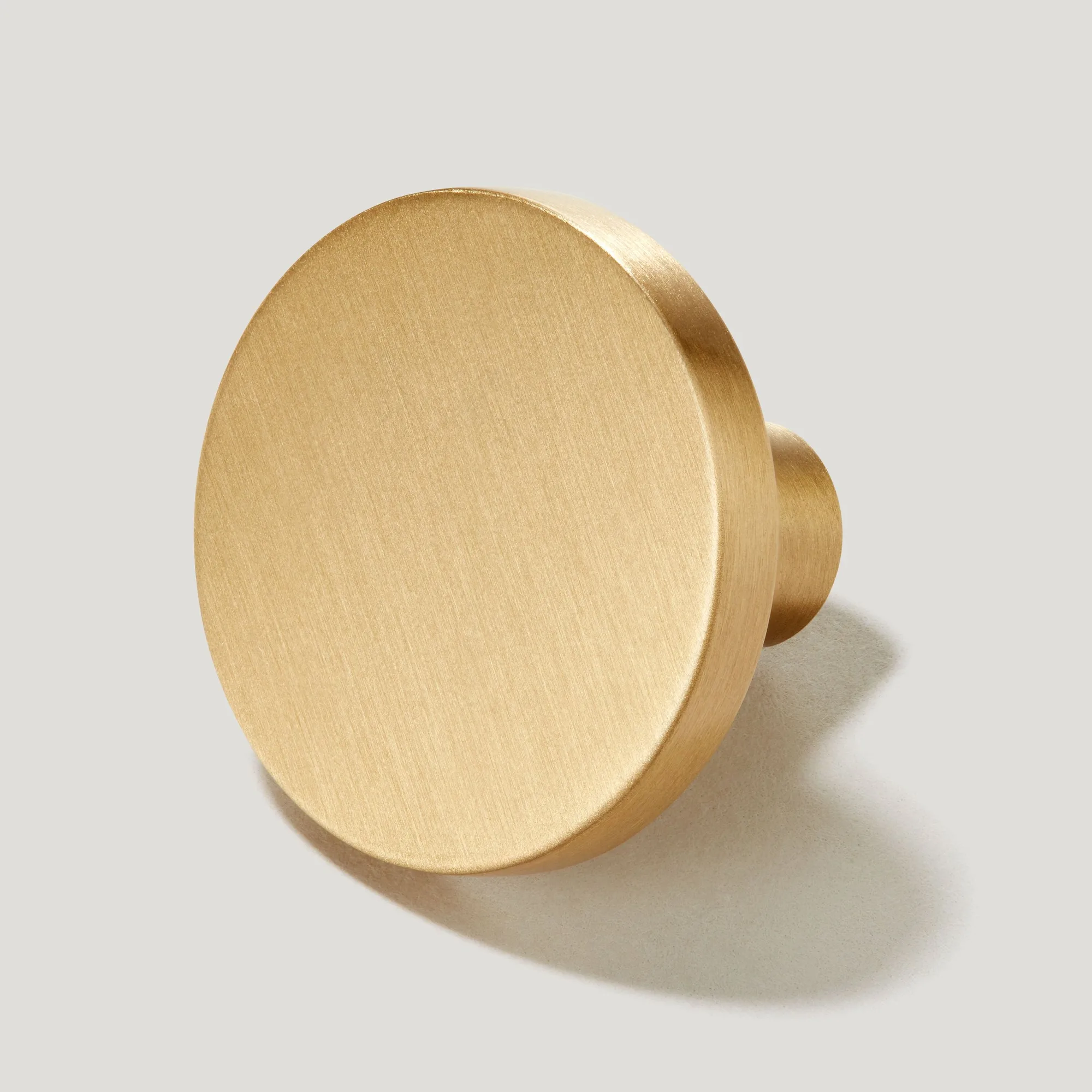
- LOVELL Knob - Satin Brass: Satin-brushed brass circular cabinet knob, 28mm in diameter with a 20mm projection, fixed with a single screw. A single-screw knob is the simplest fixing to maintain, but it has only one point of grip. If that screw strips, the whole knob is loose, so check it before it works free.