Quick answer
A g-string usually slips because the waistband or side straps are too loose, the rise does not match your torso, or the fabric has lost stretch. Check the band first: if you can pull it more than an inch away from your body, size down. If the band fits but the back string migrates, try a higher rise or a thong cut with more coverage. If the fabric is stretched out, replace it.
Symptom: The waistband slides down during the day
This is the most common g-string slipping complaint. The band starts at your natural waist in the morning and ends up at your hip by lunch. Before you blame the cut, test the band tension. A g-string waistband should sit flat and stay put when you twist or bend. If it rolls or gaps, the elastic has likely relaxed or the size is too large. Check the care label: heat from dryers breaks down elastane faster than anything else. If the band still feels springy but loose, go down one size. If it feels limp, the garment is worn out.
Symptom: The back string rides up between your cheeks
A g-string is designed to sit between the cheeks, so some contact is normal. The problem is when it keeps climbing and will not stay settled. This usually means the rise is too low for your torso or the side straps are too long. Measure your rise: from your natural waist down through your legs to the point where you want the string to sit. If the g-string's rise is shorter than that, it will pull upward every time you sit. A higher-rise g-string or a thong with a wider back panel often solves this without changing your size. If the side straps are adjustable, tighten them evenly. If they are fixed and still too long, the cut is wrong for your body, not the size.
Symptom: The g-string feels fine standing but slips when you sit or walk
Movement changes the geometry of your hips and waist. A g-string that passes the mirror test can still fail when you sit because your waist compresses and your hips expand. The fix is to test fit in motion, not just standing still. Put on the g-string, then sit, stand, and take ten steps. If the band gaps at the back when you sit, the band is too loose. If the front panel pulls down, the rise is too short. If the side straps dig in, they are too tight. Adjust one thing at a time. If no adjustment keeps the g-string in place during normal movement, switch to a thong, which has more fabric to anchor the fit.
When to stop adjusting and choose a different cut
If you have sized down, tried a higher rise, and checked the fabric, and the g-string still slips, the cut is not working for your body. That is not a failure. G-strings suit some shapes and not others. A thong gives you a similar minimal feel with a bit more coverage and a more stable waistband. If you want to stay with a g-string, look for one with a wider waistband or adjustable side ties. If you want to stop the slipping entirely, a thong is the more reliable choice. Do not keep buying the same cut in different sizes hoping it will work.
Fit diagnosis: match the symptom to the fix
- Waistband slides down: Test band tension by pulling it away from your body. More than one inch of stretch means the size is too large. Check for relaxed elastic from heat damage. Size down if the band is springy but loose. Replace if the elastic is limp.
- Back string keeps riding up: Measure your rise from natural waist to where you want the string to sit. Compare it to the g-string's rise. If the g-string rise is shorter, it will pull upward. Choose a higher-rise g-string or switch to a thong with more back coverage.
- Slipping only when you sit or walk: Test fit in motion. Sit, stand, and take ten steps. Note where the band gaps or the front pulls down. If no adjustment stops the slipping during normal movement, the cut is wrong for your body. Stop adjusting and try a thong.
Products that address common slipping causes
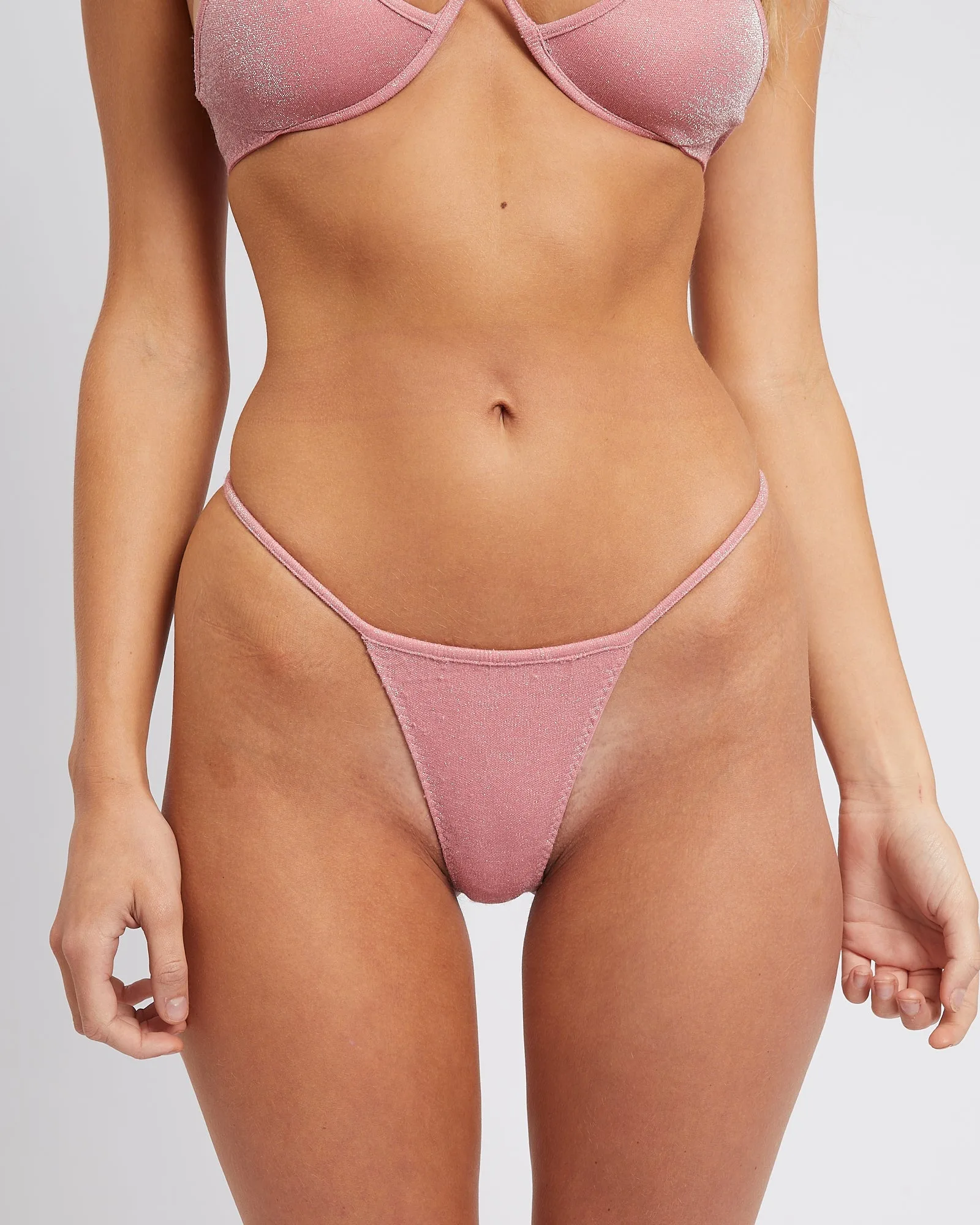
- Strawberries & Cream G-String: Strawberries & Cream G-String is made from sustainable and recycled materials and is part of a limited, exclusive in-house print run. Recycled fabrics can have different stretch recovery than conventional nylon, so check the band tension when it arrives and size accordingly.
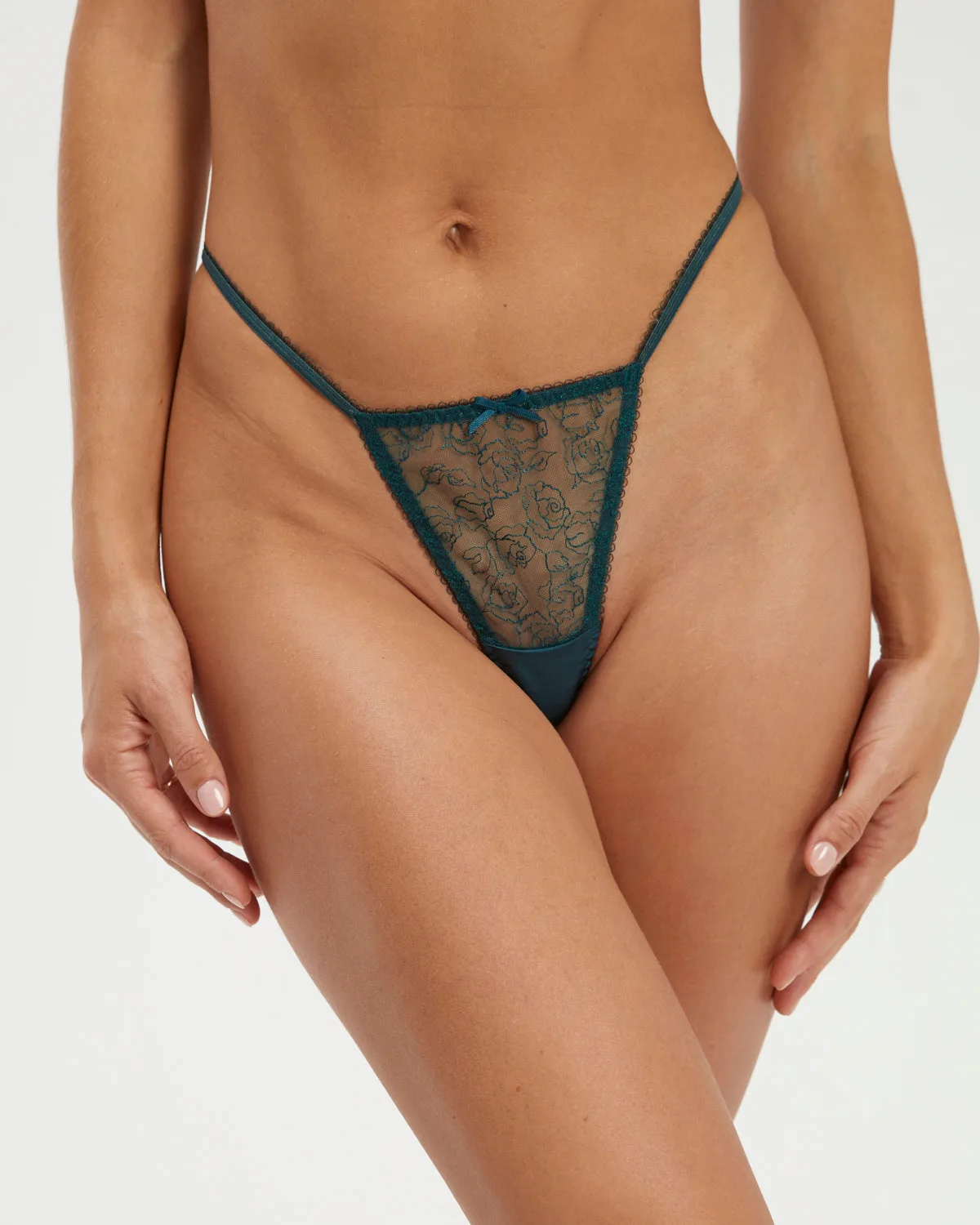
- Rose G-String - Green: Rose G-String - Green features a bespoke hand-designed rose pattern and is produced in limited runs. If you like the cut but the pattern is sold out, you may need to switch to a different style rather than wait for a restock.
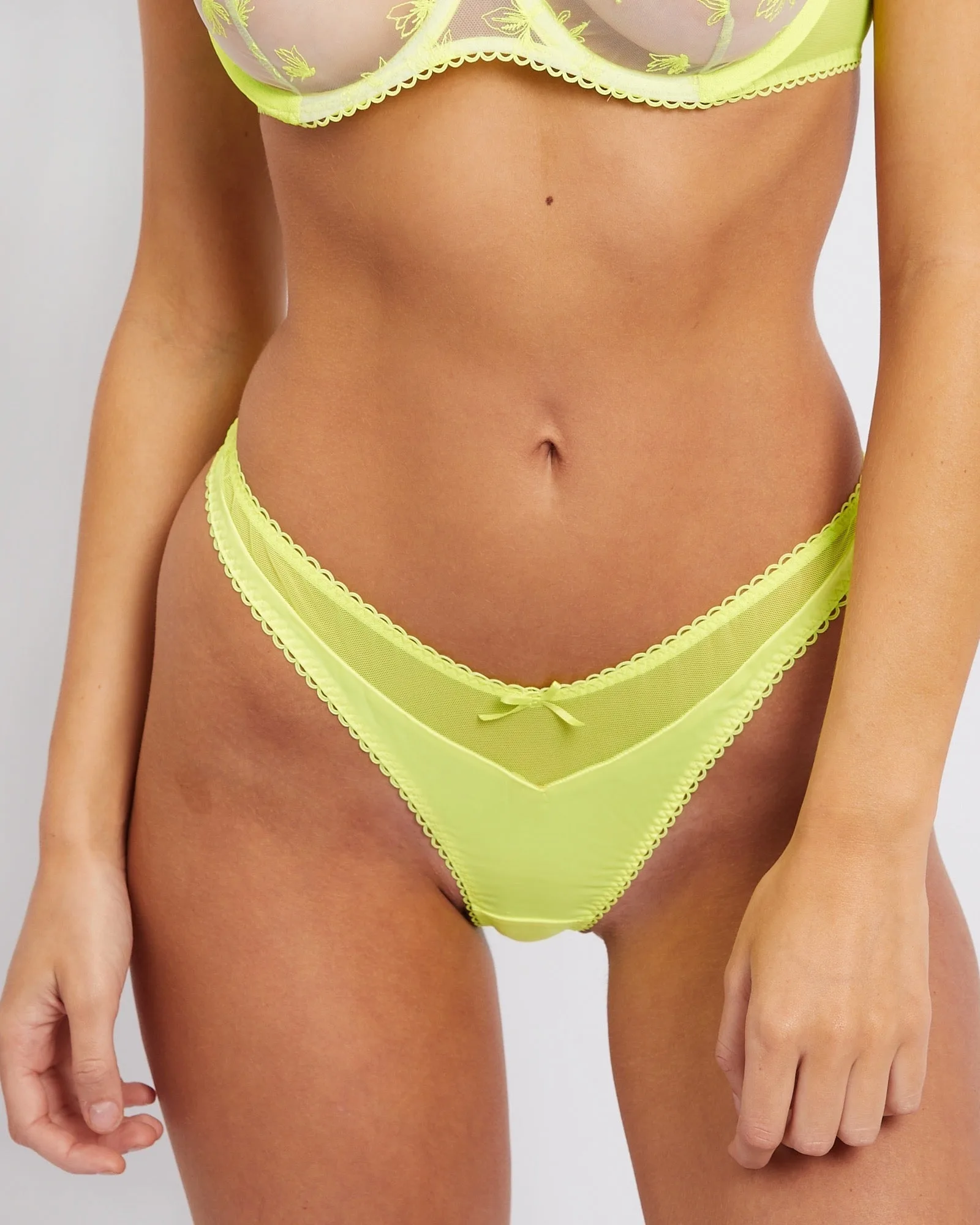
- Cindy Thong: Cindy Thong is made from neon yellow satin and is part of a limited collection. Satin has a smoother surface than cotton, so it can slide more against outer clothing; a thong cut with a wider back panel helps anchor the fit if g-strings keep slipping on you.