Quick answer
Stop ruched swim bottoms from riding up by checking the size and rise first, then pulling them on evenly and adjusting the leg openings before you swim. Most ride-up comes from a fit mismatch, not the ruching itself.
Why ruched bottoms ride up more than flat ones
The gathered fabric at the front adds texture and stretch, but it also changes how the suit grips your body. If the rise is too low or the size is too small, the elastic has to work harder and tends to creep upward as you move. A high-waisted cut that sits above the belly button gives the bottom more surface to anchor against, which is why rise matters as much as size.
When the problem is the suit, not your body
If you have tried several sizes and the back still climbs, the cut may not match your torso length or leg shape. Ruched styles with a lower front leg opening can feel secure for some swimmers and restrictive for others. In that case, a different rise or coverage level will solve more than any adjustment trick.
Steps to keep ruched bottoms in place
- Check the size against your hip and waist measurements: Use the brand's fit finder or size chart rather than your usual clothing size. Ruched styles are listed as true to size, but the gathered front can make a too-small pair feel tighter than a flat bottom in the same size. If the waistband leaves deep marks or the fabric pulls flat across the front, size up before trying anything else.
- Put them on before you apply sunscreen or lotion: Lotion and oil make the lining slippery, so the suit slides against your skin. Step into the bottoms first, then apply products to exposed skin and let them dry before you get in the water. A slippery lining is a common hidden cause of ride-up that no size change will fix.
- Pull the back seam into place, then smooth the front gathers: Guide the center back seam to sit comfortably between your cheeks, then use your palms to flatten the front ruching rather than tugging the waistband up. Tugging stretches the elastic unevenly and encourages the back to climb. Adjust from the seams, not the waistband, so the elastic stays evenly tensioned.
- Check the leg openings sit flat against your skin: Run a finger around each leg opening. If the elastic rolls or digs in, the opening is too tight and will ride up as you move. If it gapes, the bottom is too large and will shift when you swim. Leg openings should lie flat without pressure points; rolled elastic means the fit is off.
- Rinse in cool water after every swim and dry flat: Chlorine and salt break down elastic over time, and hanging a heavy wet suit stretches the gathers out of shape. Rinse in cool water, gently squeeze out excess water, and lay flat to dry away from direct sun. Elastic that has lost its snap will ride up no matter how well you adjust it, so care protects the fit.
Product facts to know
-
Ruched Bottoms 2.0: High-waisted design that typically hits right above the belly button, with full bottom coverage and a gathered front center. A higher rise gives the waistband more room to stay put, and full coverage reduces the chance of the back creeping up during movement.
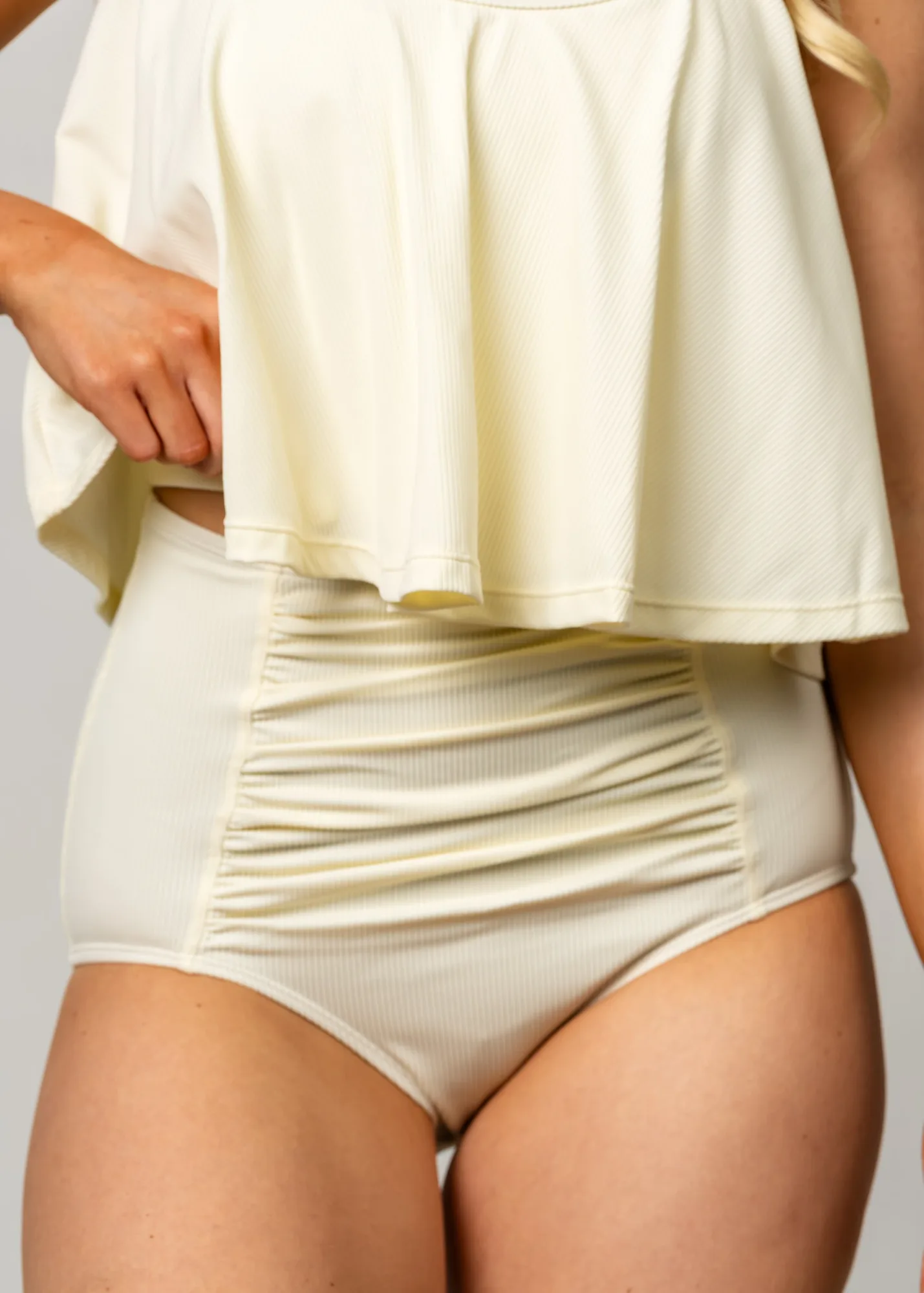
Ruched Bottoms 2.0