Quick answer
Store E-Blox and Circuit Blox pieces in a dry, room-temperature container with a lid, keep the teacher guide and project cards with the set, and wipe blocks with a dry or barely damp cloth instead of washing them. Check battery contacts and LED Blox pins before each build, because most failures come from dirt, moisture, or mixed-up parts rather than worn-out blocks.
Set up a storage system that matches how you use the blocks
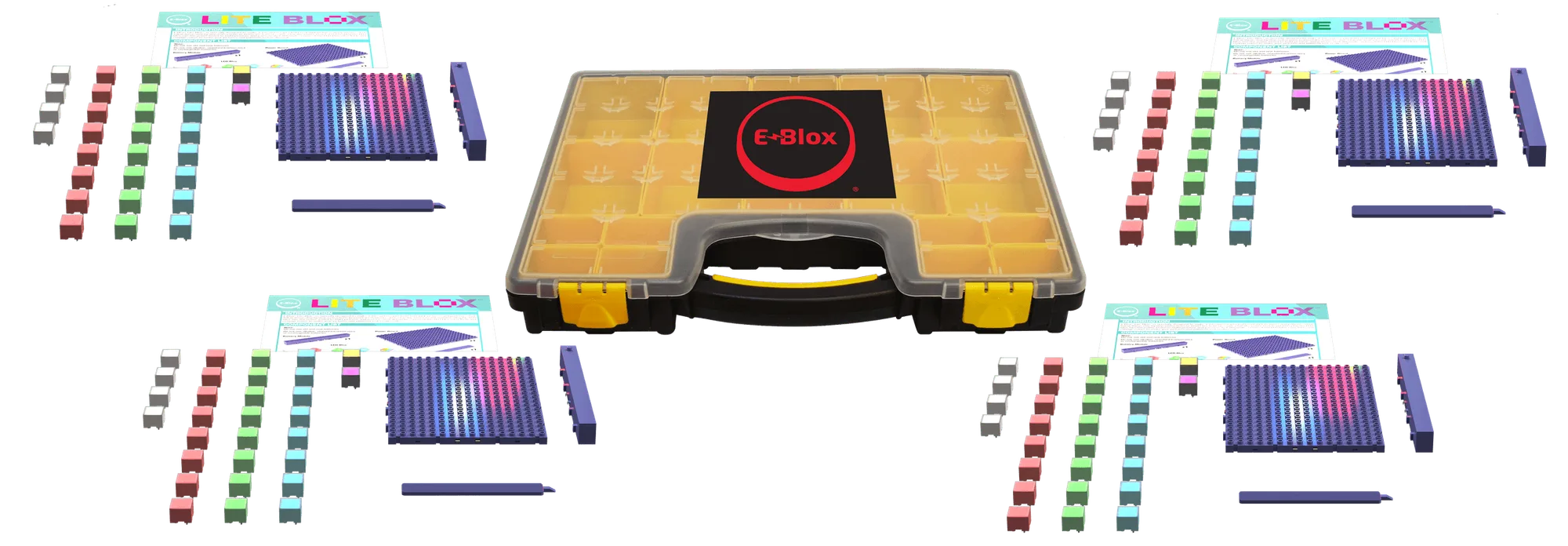
The best storage method depends on whether your E-Blox set stays in one classroom or travels between rooms. For a single classroom, a shallow lidded bin per set works well because students can see and reach every piece without dumping the whole container. For sets that move around, use a bin with a handle and a smaller inside tray for tiny parts like LED Blox and connector pins.
Keep the teacher guide, quiz sheets, and project cards in a zipper pouch or a labeled folder inside the same bin. When the curriculum materials live with the blocks, you avoid the common mistake of rebuilding a lesson from memory while the guide sits in a different cabinet.
Clean Circuit Blox pieces without damaging the electronics
Most Circuit Blox pieces only need a dry microfiber cloth or a soft brush to remove dust and pencil grit. If a piece feels sticky, wipe it with a cloth barely dampened with water, then dry it immediately. Never soak LED Blox, battery holders, or the power board, and never put them in a dishwasher.
For the Lite Blox power board and LED Blox, check the contact points where blocks snap together. A dry cotton swab can lift dust from those spots. If a build will not light, clean the contacts and try a fresh battery before assuming the block has failed.
Organize by set and label the parts that are easy to mix up
Circuit Blox sets at different grade levels use similar-looking pieces, so mixing a Grade 1-3 kit with a Grade 4-6 kit creates confusion during lessons. Label each bin with the set name and grade range, and keep a printed parts list inside the lid.
For the smallest components, a divided craft box or a resealable bag per component type saves time. This is especially useful when you store multiple sets in the same room, because you can pull one bin and know the correct resistors, switches, and LED Blox are already sorted.
Your E-Blox storage and care routine
- 1. Empty and sort each set after use: Tip the bin onto a clean mat and separate blocks by type: power boards, LED Blox, connectors, and structural pieces. Check for pieces left on the floor or stuck inside other blocks. Checkpoint: every part on the printed parts list should be accounted for before you close the lid.
- 2. Wipe blocks with a dry cloth: Remove dust and fingerprints with a dry microfiber cloth. Only use a barely damp cloth on stubborn spots, then dry the piece right away. Do not soak electronic blocks. Common mistake: storing blocks while they are still damp, which can corrode contacts over time.
- 3. Check contacts and battery compartments: Look at the metal contacts on LED Blox, switches, and the power board. Remove any visible dust with a dry cotton swab. If a set has been in storage, install fresh batteries and test one simple circuit. Checkpoint: a single working light or motor test confirms the set is ready before the next lesson.
- 4. Return the guide and cards to the bin: Place the teacher guide, quiz sheets, and any project cards in a zipper pouch or folder inside the same bin as the blocks. Common mistake: keeping curriculum materials on a shelf, which makes lesson prep slower and increases the chance they get lost.
- 5. Label and store in a dry spot: Write the set name and grade range on the outside of the bin. Store bins on a shelf away from windows, heaters, and damp basements. Stack only if the lids are secure and the bins are not overloaded. Checkpoint: bins should close fully with no pressure on the blocks inside.
Product facts that affect storage and care
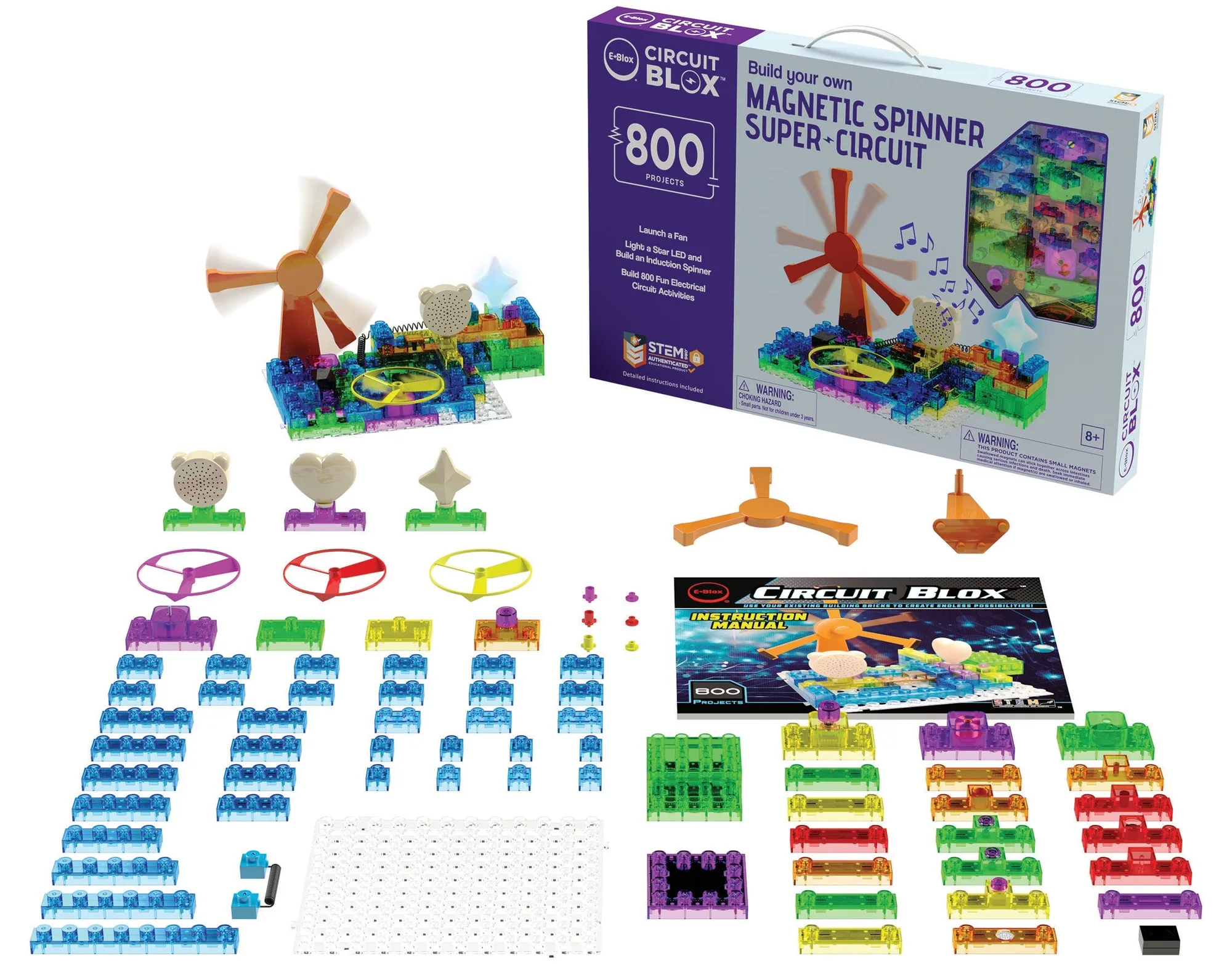
- Circuit Blox™ 800 - E-Blox® Circuit Board Building Blocks Toys for Kids Student Set: Circuit Blox 800 is a Grades 4-6 advanced STEM set that includes one 800 project set and a 139-page teacher guide with curriculum lessons, quizzes, and an answer sheet. Because the guide is a core part of the set, store it in the same bin as the blocks so lessons and quizzes are not separated from the pieces.
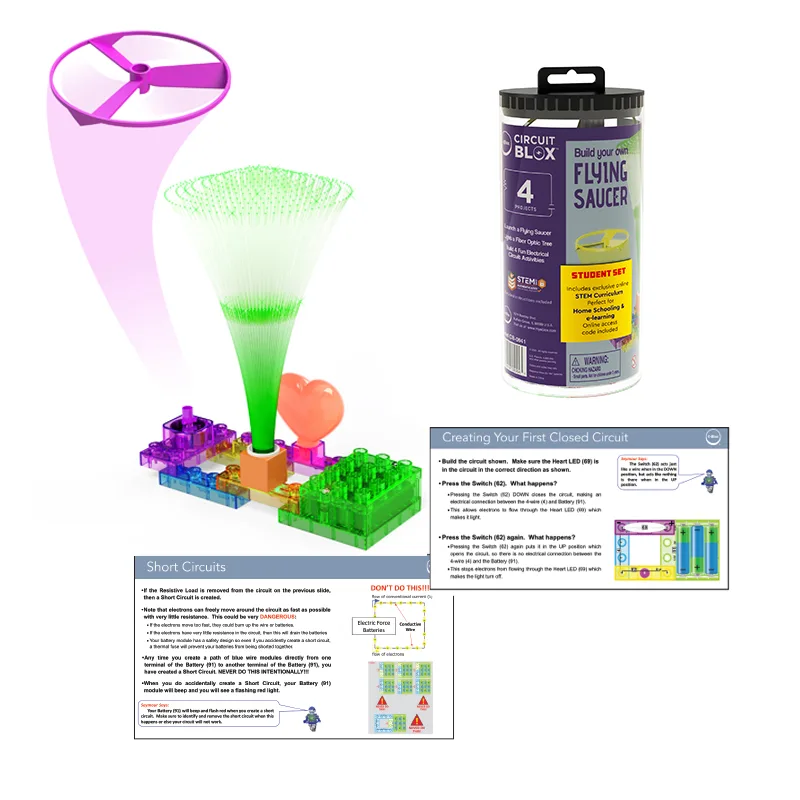
- Circuit Blox™ 4 project Student Set - E-Blox® Circuit Board Building Blocks Educational Sets: Circuit Blox 4 is a Grades 1-3 STEM basics set with a 45-page teacher guide, curriculum lessons, and quizzes covering electricity, motors, light, switches, and telecommunications. The smaller project count makes it easy to keep this set in one labeled bin, which reduces the chance that younger students lose the guide or mix parts with an older kit.
- Lite Blox Classroom Set - E-Blox® Building Blocks: Lite Blox Classroom Set includes 120 LEDs in various colors that attach to the power board, plus a removal tool for taking Blox off the board. Store the removal tool with the LEDs and power board so students can separate blocks without pulling or bending the contacts, which is a common cause of connection problems.