Quick answer
Store bread in a linen bread bag at room temperature, with the drawstring loosely closed, and refresh the bag between loaves by airing it out. This keeps the crust crisp and the crumb from turning soggy.
Why linen works better than plastic for everyday loaves
Plastic traps moisture, which softens crusts and speeds up mold. Linen breathes, letting excess humidity escape while holding enough moisture to keep the interior from drying out. That balance is why a linen bread bag is a practical switch for anyone who wants to store bread without plastic.
Linen is not a sealed environment, so very crusty breads will still stale over a few days. For longer storage, slice and freeze what you won’t eat within two to three days. The bag is for countertop freshness, not long-term preservation.
When a linen bag is not the right choice
If you live in a very humid climate or your kitchen runs damp, linen can stay slightly clammy and may not prevent mold on high-moisture breads. In that case, choose a smaller loaf size, air the bag more often, or refrigerate (accepting staling) as a short-term fix.
Also skip linen for breads you buy pre-sliced and plan to keep for over a week—freezing is more reliable.
Step-by-step: storing bread in a linen bag
- Let bread cool completely: Place the loaf on a wire rack until it reaches room temperature, about 1–2 hours. Warm bread releases steam that will condense inside the bag and soften the crust. Mistake to avoid: bagging while still warm—this traps moisture and can make the crust soggy.
- Choose the right bag size: Use the smaller bag for round boules and the longer bag for baguettes. The bread should fit with a little room, not be crammed in. Checkpoint: if the bread is hard to slide in, size up—too tight a fit crushes the crust and blocks airflow.
- Close the drawstring loosely: Pull the drawstring until the bag is mostly closed but not airtight. For crusty breads, leave a small gap; for soft sandwich bread, close it a bit more. Mistake to avoid: tying the bag shut like a sack—it needs some air exchange to work.
- Store at room temperature away from heat: Keep the bag on the counter, away from the oven, radiator, or direct sun. A cool, dry spot is ideal. Checkpoint: if your kitchen is humid, air the bag for an hour midday to release trapped moisture.
- Refresh the bag between loaves: Shake out crumbs, turn the bag inside out, and let it air dry completely before adding a new loaf. If it feels damp, hang it up for a few hours. Mistake to avoid: reusing a damp bag—it can transfer moisture and odor to fresh bread.
- Wash occasionally by hand: Hand wash in cool water with mild soap, rinse well, and hang to dry. Avoid bleach and high heat, which weaken linen fibers. Checkpoint: wash every few weeks or whenever the bag smells stale—clean linen keeps bread tasting neutral.
Product facts
-
Linen Bread Bags: Woven from 100% flax linen, the fabric breathes naturally, helping bread maintain a balanced crust without the moisture trap that plastic creates. That breathability is what keeps crusts from turning leathery or soggy, so you can store bread without plastic and still get good texture.
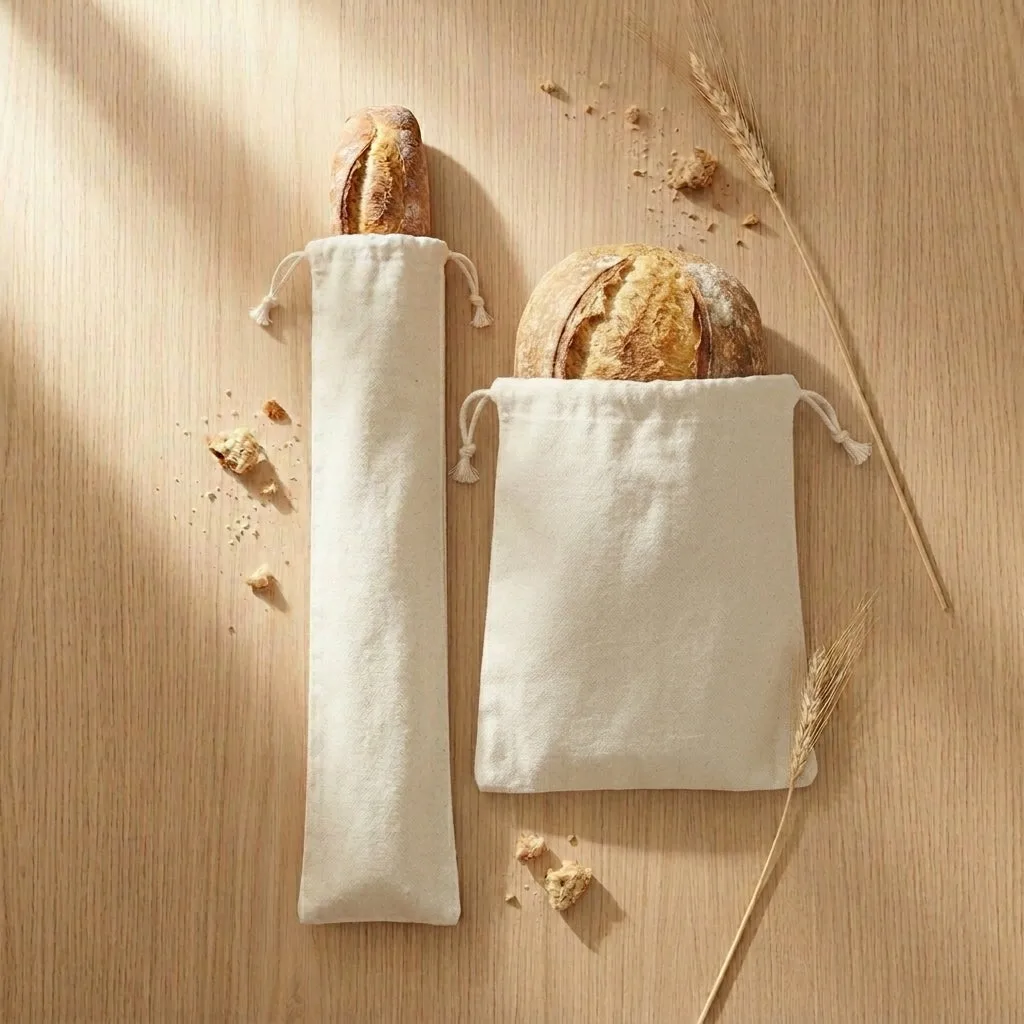
Linen Bread Bags
-
Linen Bread Bags: Two bag sizes mean sourdoughs and long baguettes each get a proper fit, and the drawstring closure keeps everything secure without fuss. A close fit reduces air pockets that dry bread out, and the drawstring lets you adjust airflow—loose for crusty loaves, snugger for soft ones.