Quick answer
Store Case Study Playing Cards in a sealed box or zipper bag at 45–50% relative humidity, keep them flat under a light, even weight, and avoid rapid temperature swings. If a deck already bows, press it between two flat boards for a few days before assuming the warp is permanent. For long-term storage, a hard case or snug cardboard box plus a silica packet is the simplest reliable setup.
Why Case Study Decks Warp in the First Place
Paper expands and contracts with moisture. When one side of a card absorbs more humidity than the other, the fibers on that side swell and the card curls toward the drier face. Case Study Playing Cards are printed on Japanese paper and pressed to Dan and Dave's specifications, so they respond to humidity like any quality paper deck — the coating and finish slow moisture exchange but do not stop it.
The most common triggers are a damp basement, a dry forced-air room, a car glovebox, and direct sunlight through a window. Stacking decks loosely on a shelf also lets the top and bottom cards breathe differently from the middle, which is why a box of cards can look flat on top and bowed at the bottom after a season of storage.
A Storage Routine That Keeps Decks Flat
Start with a stable location: an interior closet or drawer away from exterior walls, heating vents, and windows. Aim for 45–50% relative humidity. A cheap hygrometer takes the guesswork out of it; if your room reads above 55%, add a silica packet to each box and replace it every few months, or run a small dehumidifier in the room. If it reads below 35%, a humidifier in the same room is the better fix than trying to rehydrate the cards directly.
Keep each deck in its own box or a snug zipper bag, then stack decks flat rather than standing them on edge. If you have a small collection, a hard plastic storage case with dividers works well. For a single deck you use often, a simple wooden or acrylic card clip keeps the stack compressed between sessions. Avoid rubber bands — they dig into the edges and leave dents that no amount of pressing will remove.
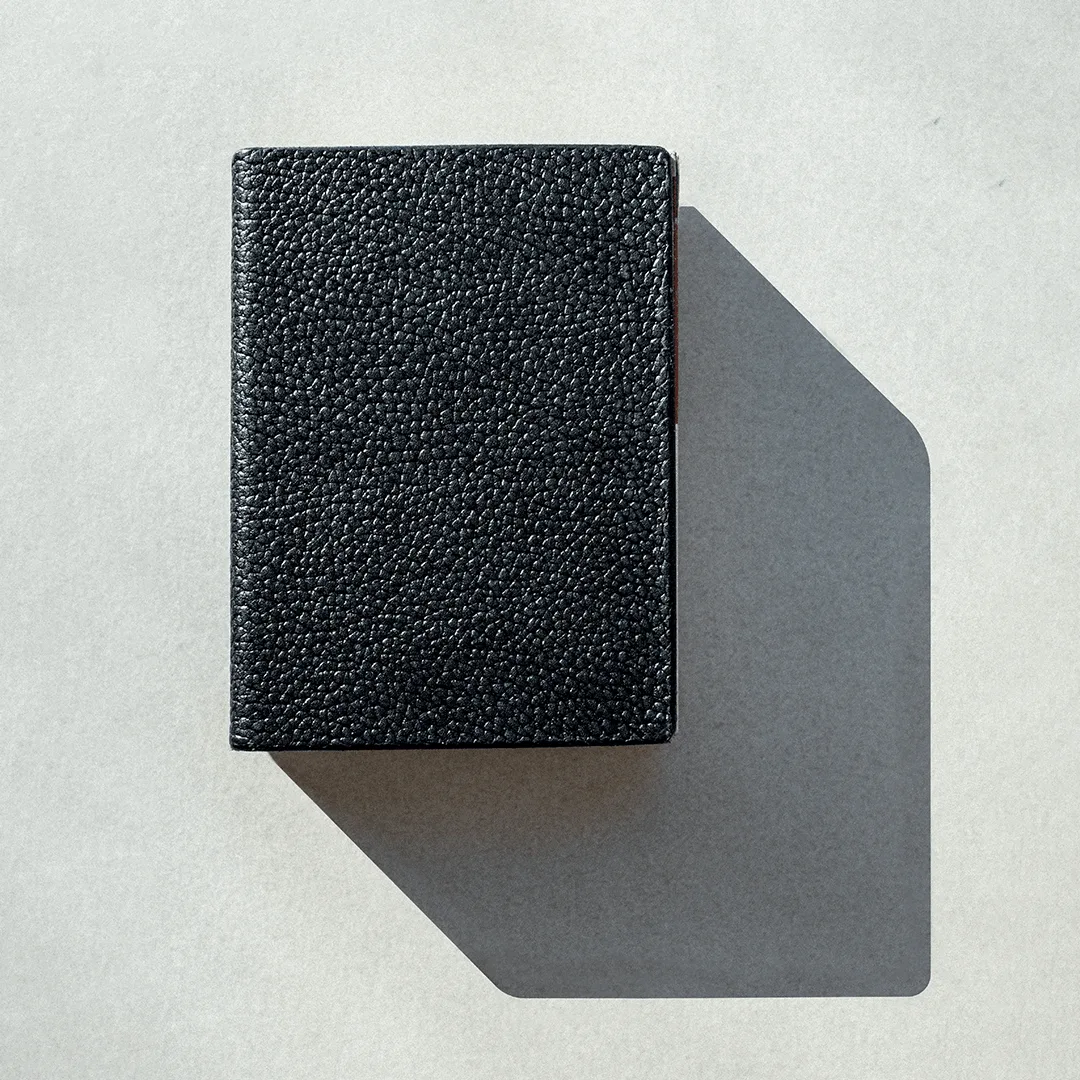
card clip
- Store at 45–50% relative humidity, away from vents and direct sun.
- Keep decks in their boxes or zipper bags, not loose in a drawer.
- Stack flat, not on edge, and avoid rubber bands.
- Rotate silica packets every three to six months in humid climates.
How to Fix a Deck That Has Already Bowed
If the cards bow but still spring back when you flex them, the warp is likely moisture-related and reversible. Place the deck between two flat boards — two hardcover books work — and add a light weight on top, roughly the weight of a full mug. Leave it for two to four days in the same stable room. Do not use heavy weights or a vice; you can crush the embossing and leave the deck feeling dead.
If the bow persists after pressing, try the opposite environment. A deck that curled in a dry room often flattens after a few days in a slightly more humid space, and vice versa. Change one variable at a time and give it at least 48 hours before judging the result. For a deck you plan to keep long-term, this pressing routine is also a good annual check — pull each deck out, inspect it, and re-stack it flat.
When to Stop and Replace Instead
Some warps are permanent. If the cards have a visible crease, a delaminated edge, or a bow that survives two weeks of pressing in a stable room, the paper fibers have taken a set and further pressing will not restore the original snap. At that point the deck is still fine for casual games or as a display piece, but it will not handle cleanly for cardistry or magic.
If you are buying a replacement, the Case Study line gives you a few options at different price points, and the storage routine above applies to all of them. Version 08 and Version 12 both list at USD 20.70 and USD 20.10 against a USD 30.00 comparison price, while Version 02 lists at USD 19.20. Each includes 52 regulation playing cards, 2 jokers, and 2 info cards at 3.5 x 2.5 inches, printed in China on Japanese paper and pressed to Dan and Dave's specifications. The differences between versions are in the artwork and the optional Type, not in the card stock or finish, so pick the design you want and store it the same way.
Diagnose Your Warp Before You Press
- Symptom: gentle bow, cards still spring back: The deck curves evenly and flexes without a crease. This is almost always a humidity imbalance, not damage. Press between flat boards for 2–4 days in a 45–50% room.
- Symptom: bow returns within a day of pressing: The storage environment is still too wet or too dry, so the deck re-absorbs moisture as soon as the weight comes off. Fix the room first — add silica or a humidifier — then press again.
- Symptom: visible crease, delaminated edge, or bow after two weeks of pressing: The paper fibers have taken a permanent set. Further pressing risks crushing the embossing without restoring the snap. Stop pressing. Keep the deck for casual play or display, or replace it.
Case Study Decks to Store
- Version 08: Version 08: 52 regulation playing cards, 2 jokers, and 2 info cards measuring 3.5 x 2.5 inches. Printed in China on Japanese paper. Pressed and finished to Dan and Dave's exact specifications. The Japanese paper stock responds to humidity, so the 45–50% storage target and flat stacking routine apply to this deck directly.
- Version 12: Version 12: 52 regulation playing cards, 2 jokers, and 2 info cards measuring 3.5 x 2.5 inches. Printed in China on Japanese paper. Pressed and finished to Dan and Dave's exact specifications. Same paper and press as Version 08, so the same storage approach works — no need for a different routine per version.
- Version 02: Version 02: 52 regulation playing cards, 2 jokers, and 2 info cards measuring 3.5 x 2.5 inches. Printed in China on Japanese paper. Pressed and finished to Dan and Dave's exact specifications. The lowest-priced version in the line at USD 19.20, which makes it a sensible choice if you want a deck to practice the pressing and storage routine on before committing a rarer version.