Quick Answer
To maintain grip socks elasticity and keep them sticky, store them flat or loosely rolled in a cool, dry place away from direct sunlight and heat. Avoid folding them tightly around elastic bands, and never hang them by the cuff, as this can stretch the fabric and reduce grip over time.
Grip socks are a small but mighty part of your Pilates kit. The silicone dots on the sole and the snug elastic cuff are what keep you stable on the reformer carriage and footbar, so when they stretch or lose their tack, your practice suffers. The good news: how you store them between sessions matters just as much as how you wash them.
This guide walks through a simple, step-by-step process to store grip socks correctly. You’ll learn how to keep the elastic from bagging out, protect the silicone grip from dust and oils, and make each pair last longer—so you’re not replacing them as often.
Step 1: Wash Before Storing
Always start with clean socks. Sweat, body oils, and lotion break down the silicone grip over time and attract dust that reduces stickiness. If you store dirty socks, the residue hardens and makes the grip less effective the next time you wear them.
Wash your grip socks after every few uses, following the care label. Let them air dry completely before storing—any dampness can cause mildew or make the elastic lose its shape. Never put them in the dryer; the heat damages the elastic fibers and can melt the silicone dots.
- Checkpoint: After washing, feel the grip dots—they should be tacky, not slippery. If they feel smooth, they may need a gentle scrub or a new pair.
Step 2: Dry Flat, Not Hanging
Moisture is the enemy of elastic. Hanging wet socks by the cuff stretches the ribbed band and can cause water to pool at the toe, which weakens the fabric over time. Instead, lay them flat on a clean, dry towel or a mesh drying rack.
If you’re in a hurry, roll them in a towel and press gently to squeeze out excess water, then reshape them to their original form. Avoid direct sunlight or radiators—high heat dries out the silicone and makes it crack or peel.
- Checkpoint: After drying, the elastic should snap back when you gently pull it. If it stays stretched, the sock is likely beyond saving.
Step 3: Fold or Roll Without Tension
How you fold matters. Avoid folding the cuff over itself repeatedly in the same spot, as this creates a permanent crease that weakens the elastic. Instead, lay the socks flat and fold them once at the heel, or roll them from the toe up to the cuff.
When rolling, don’t pull the cuff tight—leave a little slack so the elastic isn’t stretched to its limit. This is especially important if you store multiple pairs together, as compression can flatten the grip dots.
- Checkpoint: When you unroll a sock, it should return to its natural shape without deep wrinkles. If you see creases, ease up on tension next time.
Step 4: Choose the Right Storage Spot
Store your grip socks in a cool, dry place, like a drawer or a fabric bin. Avoid humid areas like bathrooms, where moisture can cause mildew and degrade the elastic. Direct sunlight is also a no-go—UV rays break down both the fabric and the silicone grip.
If you keep socks in a gym bag, use a small mesh pouch or a dedicated pocket so they don’t get crushed under heavier items. Crushing can permanently flatten the grip dots, reducing their stickiness over time.
- Checkpoint: Open your drawer—if it feels warm or damp, find a different spot. Your socks will thank you.
Step 5: Avoid Hanging by the Cuff
Hanging grip socks by the cuff—whether on a hanger or a hook—puts all the weight on the elastic band. Over time, this stretches the cuff and makes the sock slip down during practice, which defeats the purpose of a secure fit.
If you need to save space, fold the socks in half and tuck them over the top of a hanger or use a clip that grips the toe area, not the cuff. This keeps the elastic relaxed and the grip dots protected.
- Checkpoint: Give the cuff a gentle tug after a week—if it feels loose, switch to flat storage immediately.
Step 6: Rotate Your Pairs
Rotating between two or three pairs gives the elastic time to recover its shape between wears. Just like a mattress, elastic needs a break from being stretched for hours at a time. If you wear the same pair every day, the elastic will fatigue faster.
Keep a few pairs in rotation and wash them on a gentle cycle. This is especially practical if you practice multiple times a week—you’ll always have a clean, dry pair ready.
- Checkpoint: If you notice your go-to pair feels looser than the others, it’s time to retire it and start a new one.
Step 7: Know When to Replace
Even with perfect storage, grip socks don’t last forever. The silicone dots wear down from friction on the carriage, and the elastic eventually loses its snap. If you see smooth spots on the grip or the cuff no longer hugs your ankle, it’s time for a new pair.
Replacing worn socks isn’t just about comfort—it’s about safety. Slipping on a reformer because your grip failed is not worth it. Keep an eye on the condition of your socks and swap them out as needed.
- Checkpoint: Hold a sock up to the light—if you can see through the fabric or the grip dots are shiny, replace them.
Quick Storage Checklist
- Wash and dry flat: Clean socks after every few uses and air dry flat to preserve elastic and grip. Damp or dirty socks stored away will lose their tack faster.
- Fold or roll without tension: Avoid tight folds or stretching the cuff; roll from toe to cuff with slack. No permanent creases means longer-lasting elasticity.
- Store in a cool, dry place: Use a drawer or mesh pouch away from humidity and sunlight. Protects the silicone grip and prevents mildew.
- Rotate and replace: Rotate between pairs and replace when grip dots are smooth or elastic feels loose. Safety first—worn socks are a slipping hazard.
Grip Socks That Make Storage Easier
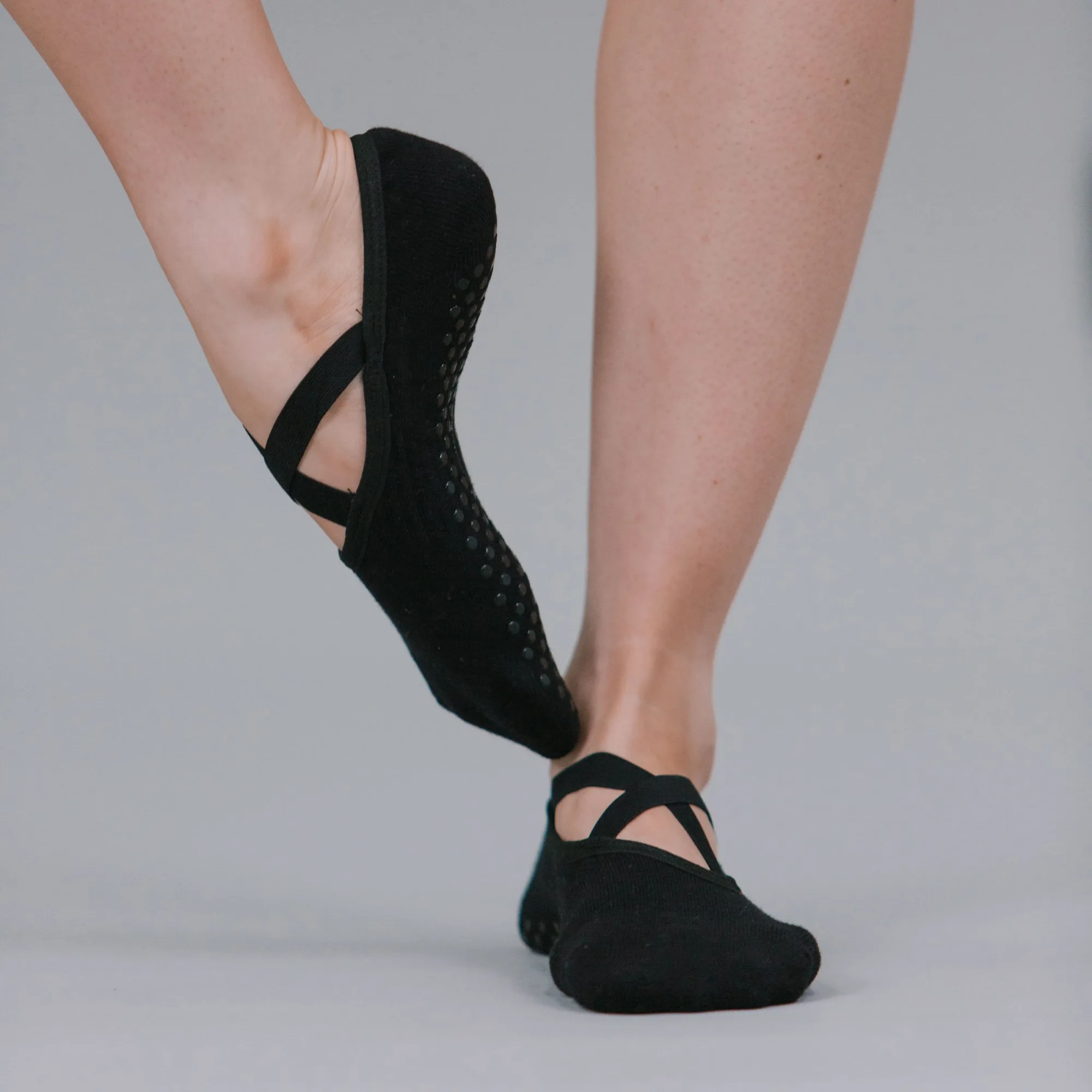
- Ballet Grip Socks: The Ballet Grip Socks from Your Reformer are cut low and close to the foot, so there's no bunching fabric between you and the footbar, no slipping on the carriage, and nothing pulling your attention away from the movement itself. Because they’re low-cut, they’re less likely to bunch and create creases when folded, which simplifies storage and helps maintain the elastic’s shape over time.
Storing your grip socks properly is a small habit that pays off in longer-lasting elasticity and better grip on the reformer. By washing them correctly, drying them flat, and keeping them in a cool, dry place, you’ll protect both the fabric and the silicone dots. When you notice signs of wear, don’t hesitate to replace them—your practice and your safety are worth it.