Quick answer
In a small kitchen, store knives either on a wall-mounted magnetic strip above the counter or in a compact block that uses vertical space, and keep drawer storage as a last resort with a dedicated in-drawer insert. Whichever you choose, the safe setup is the same: blades fully protected or fully secured, handles facing out, and nothing stored above a spot where someone reaches blindly.
Start by measuring the space you actually have
Before buying anything, measure three things: the free wall height between your backsplash and upper cabinets, the depth of your deepest drawer, and the counter footprint you are willing to give up permanently. Most small-kitchen storage mistakes happen because people buy a block or strip first and then discover it blocks a cabinet door, crowds the sink, or leaves no landing space for prep.
A wall strip needs clear wall space roughly as long as your longest knife plus a few inches on each side, and it should sit high enough that blade tips clear the counter. A free-standing block needs counter depth plus clearance to lift knives straight up. If neither exists, an in-drawer insert is the fallback, but only if that drawer is used for knives alone.
Match the storage type to your knives
Not every knife belongs on a magnet. Thin, flexible blades and very small paring knives can slide or rotate on a strip, and heavily curved blades may only contact the magnet at one point. Heavier chef's knives and steak knives with flat spines hold well.
If you own Damascus steel knives, treat storage as part of blade care, not just organization. Damascus blades are prized for their layered pattern and sharp edges, and repeated knocking against other metal or hard drawer contents can dull an edge or scratch a mirror-finished face. A storage method that holds each blade separately, with no metal-to-metal contact, protects both the edge and the finish.
- Magnetic strip: best for flat-spined chef's knives, santokus, and steak knives.
- Compact block: best for a matched set you use daily and want visible.
- In-drawer insert: best when wall and counter space are both gone, and you can dedicate a drawer.
- Knife roll or blade guards: best for knives you use rarely or store in a cabinet.
Set up the strip so it stays safe
Mount the strip into studs or use hardware rated for the weight of your heaviest knife, not just the strip itself. Place it at least a hand's width above the counter so you can lift a knife off without dragging the tip, and away from the stove, sink spray, and the path where people walk. Heat, steam, and splashing water are hard on handles and edges over time.
Load knives with handles all facing the same direction and blades pointing down or sideways, never tip-up where a hand could brush the point. Leave a gap between knives so you can grab one handle without touching the next blade. If the strip is magnetic on both sides, keep the back side clear of anything that could be knocked loose.
Use a block without giving up your counter
A free-standing block earns its space only if it holds the knives you reach for daily. If half the slots stay empty, you are paying for counter space you do not use. Look for a block with slots sized to your actual blades; a loose slot lets a knife wobble, and a too-tight slot can scrape the finish every time you pull it out.
Two-sided or angled blocks can be pushed into a corner and still let you see the blades, which suits small kitchens better than a wide horizontal block. Whichever block you choose, set it against a wall or in a corner, not in the middle of your prep zone, and never place it where a child can reach the handles.
Make drawer storage safe or skip it
A bare knife drawer is the least safe option: blades slide, edges chip against each other, and you cannot see what you are grabbing. If a drawer is your only option, use an insert with separate slots or a lined tray, open it fully before reaching in, and never store knives loose with utensils, foil boxes, or other hard items.
Keep the knife drawer near your main prep area so you are not carrying an exposed blade across the kitchen. If you cannot dedicate a drawer and cannot mount a strip, blade guards in a cabinet are safer than a crowded drawer.
Keep the setup working over time
Hand-wash and dry knives before they go back into storage; moisture left on a blade or handle is the most common cause of spots, rust, and swollen wood. Check magnetic strips and mounting screws every few months, and re-tighten anything that has loosened. If a knife starts to feel loose in its slot or on the strip, fix the storage before you use the knife again.
Rotate your setup as your cooking changes. A knife you have not used in months does not need prime counter space; move it to a guard in a cabinet and free the slot for the blade you actually reach for.
Your small-kitchen knife storage setup, step by step
- Measure wall, counter, and drawer space: Note the clear wall height above the counter, the counter footprint you can give up, and the depth of your deepest drawer. Check that a block or strip will not block a cabinet door or the sink. Checkpoint: if no wall or counter space exists, plan for an in-drawer insert instead.
- Pick the storage type by knife, not by trend: Flat-spined chef's and steak knives work on a magnetic strip. A matched set you use daily suits a compact block. Thin or curved blades are safer in a block slot or blade guard. Common mistake: putting every knife on a magnet and watching small blades slide.
- Mount or place the storage with clearance: Anchor a strip into studs or rated hardware, at least a hand's width above the counter and away from the stove and sink. Set a block in a corner, not in your prep zone. Checkpoint: lift your longest knife off the strip and confirm the tip never touches the counter.
- Load knives handle-out, blade-down: Face all handles the same direction, point blades down or sideways, and leave a gap between each knife. In a drawer, use separate slots and open the drawer fully before reaching in. Common mistake: tip-up blades and crowded slots, which are how hands get cut.
- Dry before storing and check hardware: Hand-wash and dry each knife before it goes back. Every few months, re-tighten strip screws and check that knives still sit firmly in their slots. Next step: move any knife you have not used in months to a guard in a cabinet and free the space.
Products that fit small-kitchen storage
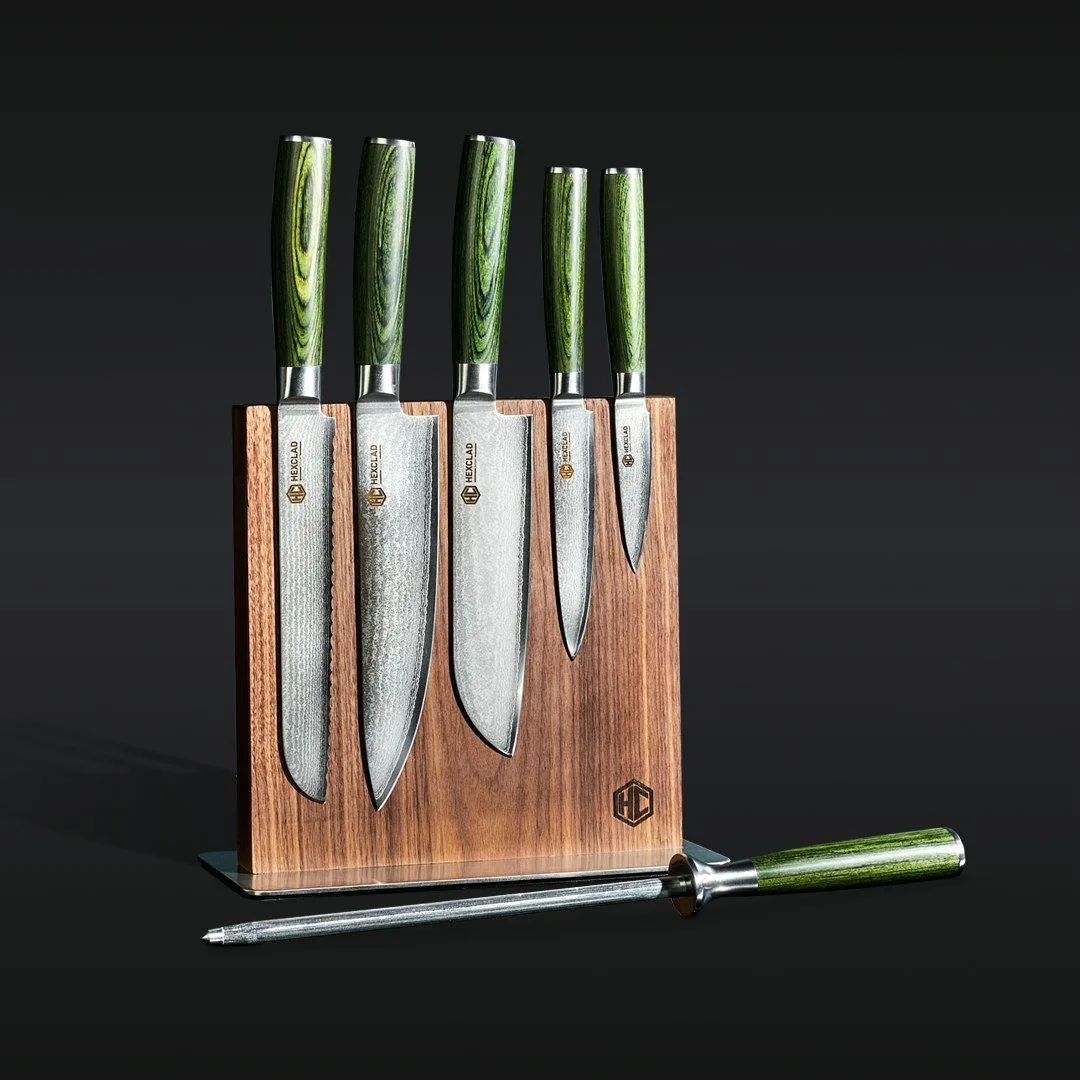
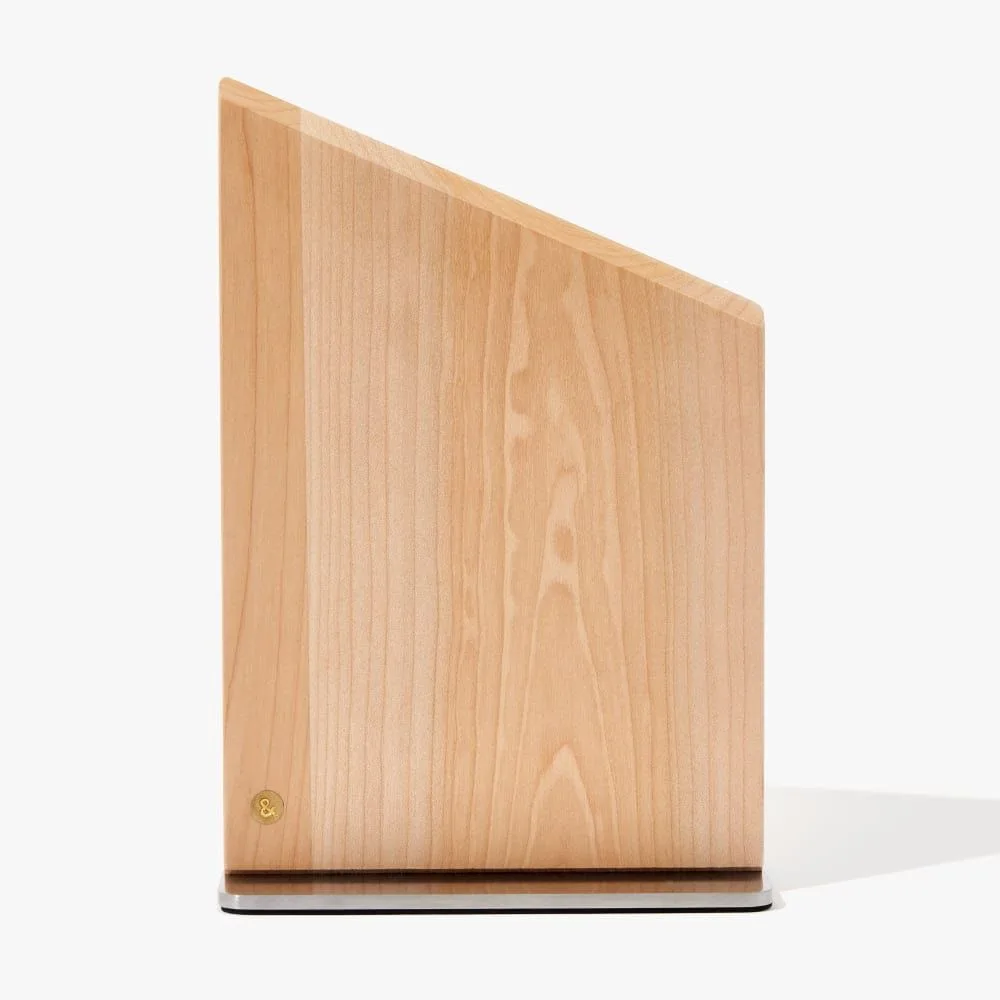
- Magnetic Knife Block, Walnut: HexClad's Magnetic Knife Block, Walnut is a two-sided, free-standing block made from natural walnut, with industrial-strength magnetized strips embedded in the wood to hold knives in place. A two-sided block can sit in a corner and still show both rows of knives, so it uses vertical space instead of a long stretch of counter.
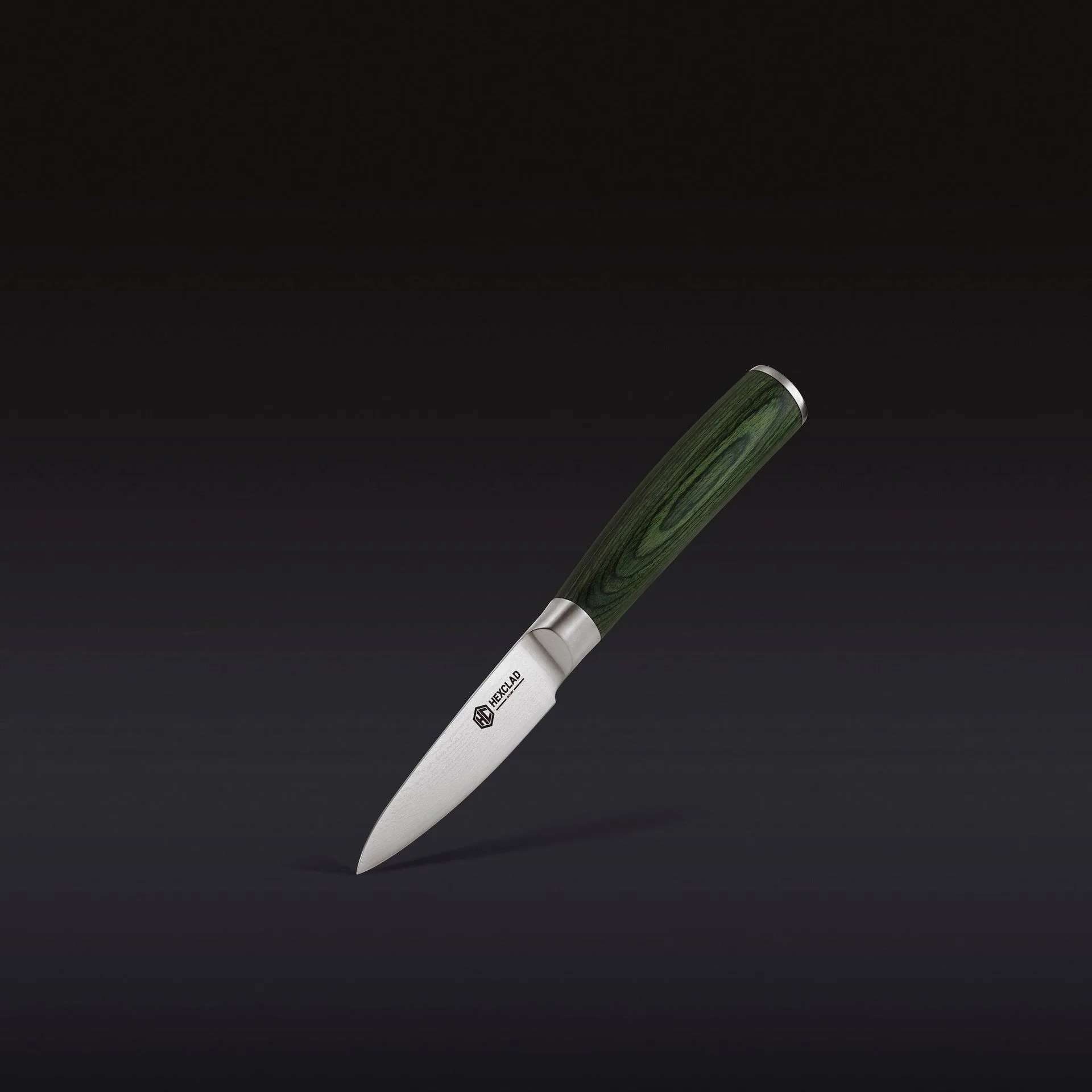
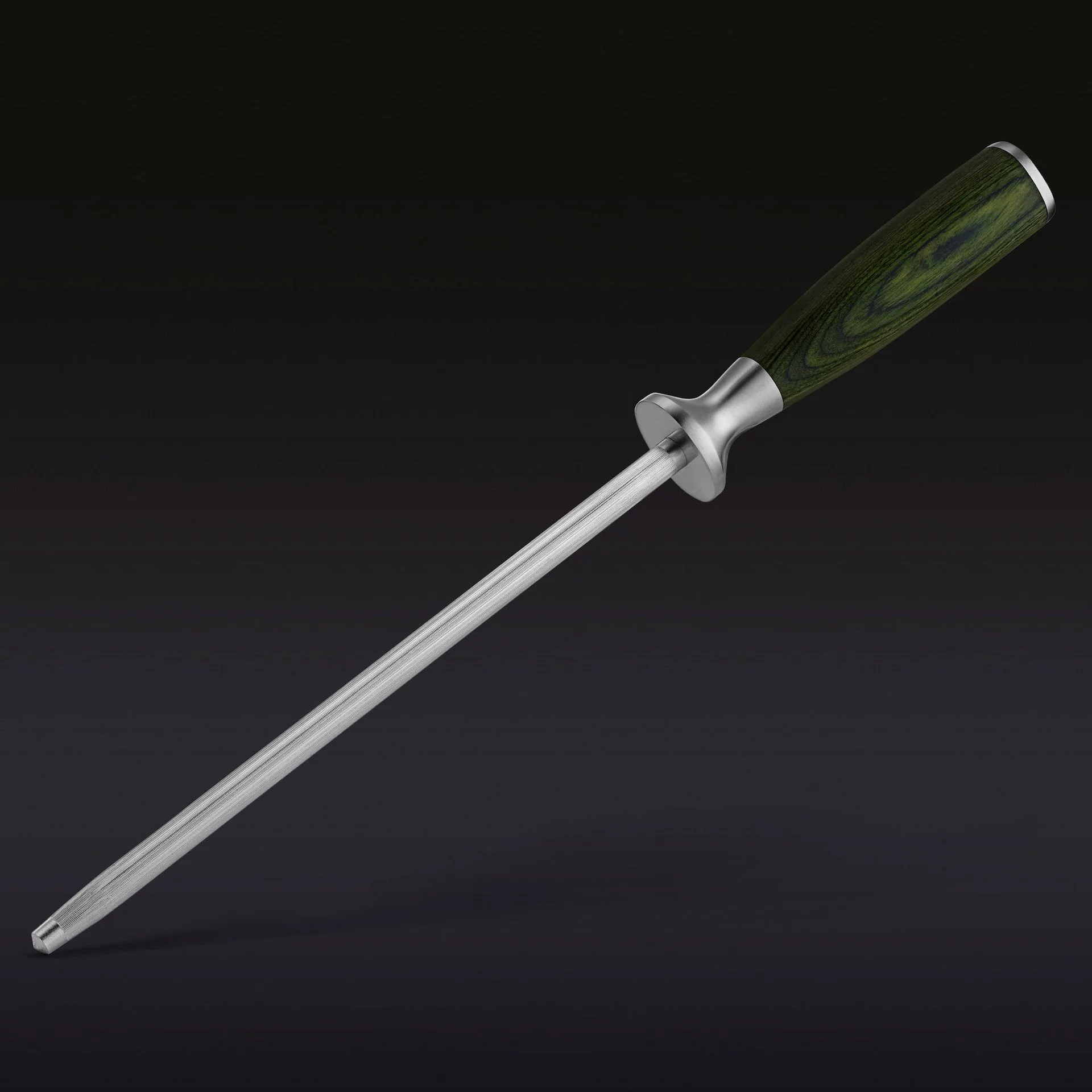
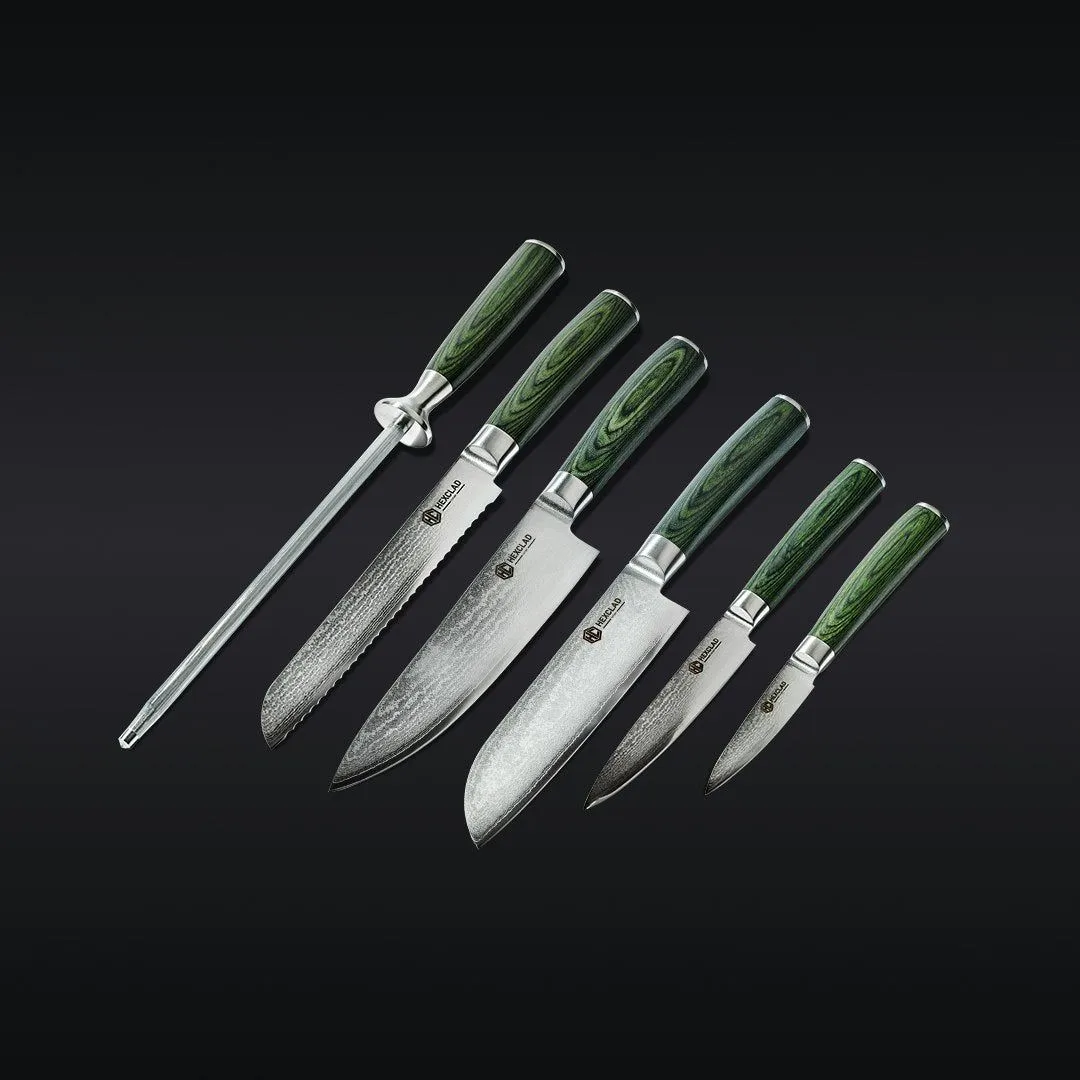
- Essential Damascus Steel Knife Set, 6-pc (Green): The Essential Damascus Steel Knife Set, 6-pc (Green) uses 67 layers of Damascus steel, twelve-degree blade sharpness, Rockwell ratings of 60 or higher, and pakkawood handles treated with anti-shrinking technology. A hard, thin-edged Damascus blade benefits most from storage that holds each knife separately, so edges and the layered finish are not knocked against other metal.
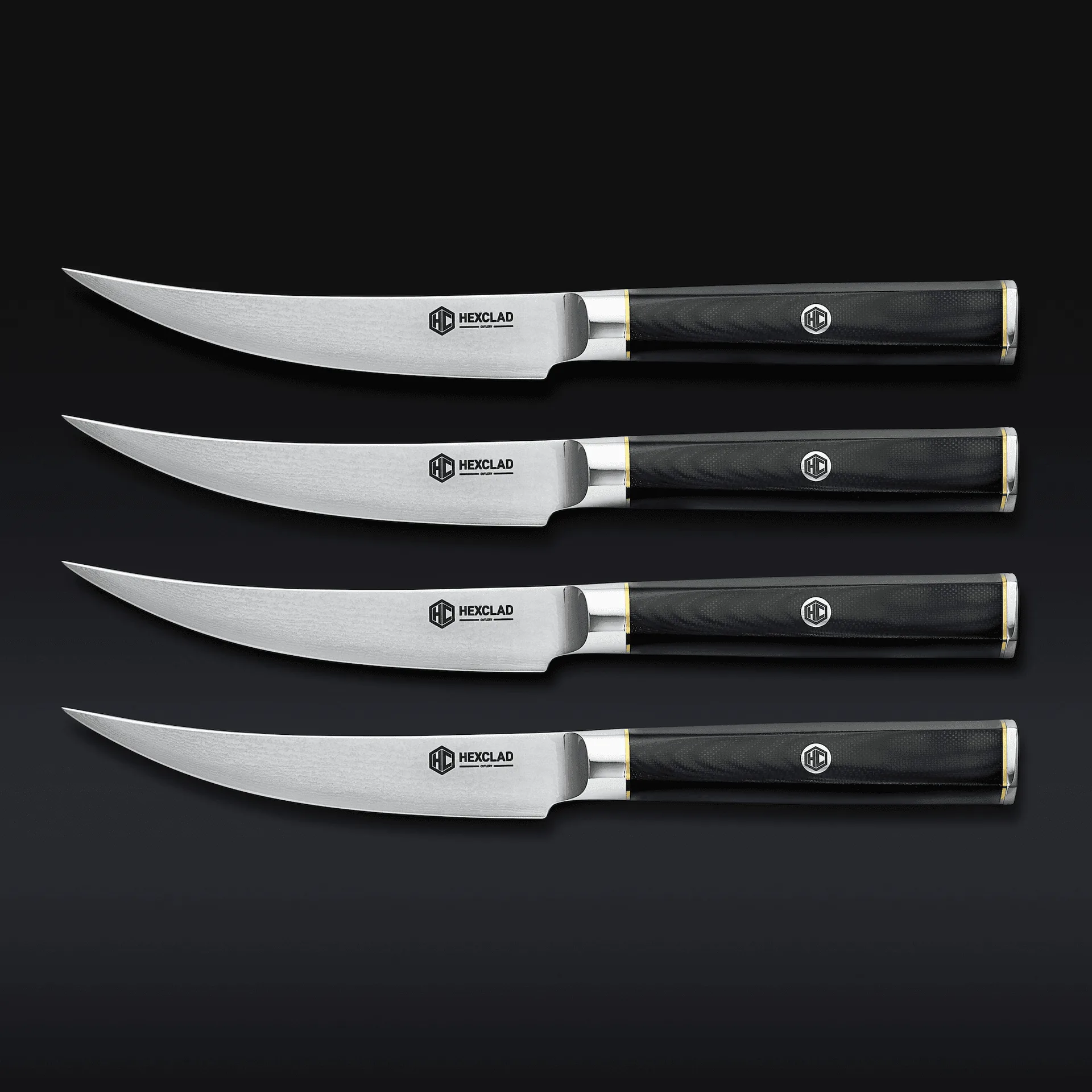
- Damascus Steel Steak Knife Set, 8-pc (Green): The Damascus Steel Steak Knife Set, 8-pc (Green) is forged from 67 layers of Japanese Damascus steel with a mirror-finished blade and forest green pakkawood handle. Mirror-finished steak knives show scratches easily, so a block or strip that keeps them apart protects the look as well as the edge.