Quick answer
Store quilting thread wound snugly on its spool, out of direct sunlight, in a closed container or drawer, and away from heat and moisture. Keep the thread tail secured so it can't unravel, and separate spools so they don't rub and fray. If you do those four things, your thread stays smooth, strong, and tangle-free.
Thread is one of the few quilting supplies you can ruin just by leaving it out. Sunlight fades dye, dust and lint work into the fibers, and a loose tail turns a tidy spool into a bird's nest. The fix isn't complicated, but it does need to be consistent.
This guide walks through a storage routine you can set up once and maintain in a few minutes a week. It works whether you keep a small sewing cabinet or a full longarm studio, and it pairs well with the thread care habits you already use.
Start with a clean, dry, dark home for your thread
Pick a storage spot that stays cool and out of direct sun: a closed drawer, a lidded bin, or a cabinet away from a window. Heat and light are the two biggest causes of faded, brittle thread, and damp basements or garages invite rust and mildew. A bedroom closet or an interior wall shelf is usually safer than a sunny windowsill.
Before you load the space, wipe it down and let it dry completely. Dust and stray lint settle into thread fibers and show up later as fuzzy stitches or tension hiccups.
- Checkpoint: if the spot feels warm or you can see sun on the spools, move them.
- Keep thread away from irons, pressing stations, and any heat source.
Secure every thread tail before it goes in storage
A loose tail is the number one cause of tangles. When spools shift, the tail wraps around neighboring spools and pulls loops of thread loose. Tuck the tail into the spool's own groove, or wrap a small piece of painter's tape over the end, and press it down so it stays put.
For longarm thread, a spool net or a slim hair band around the spool holds the tail without adding bulk. Never knot the tail to itself; knots create a weak point that can snap mid-quilt.
- Common mistake: storing spools with the tail dangling free because you plan to use them soon.
- Checkpoint: give each spool a gentle squeeze. If the thread shifts, the tail isn't secure.
Choose a container that keeps spools separate
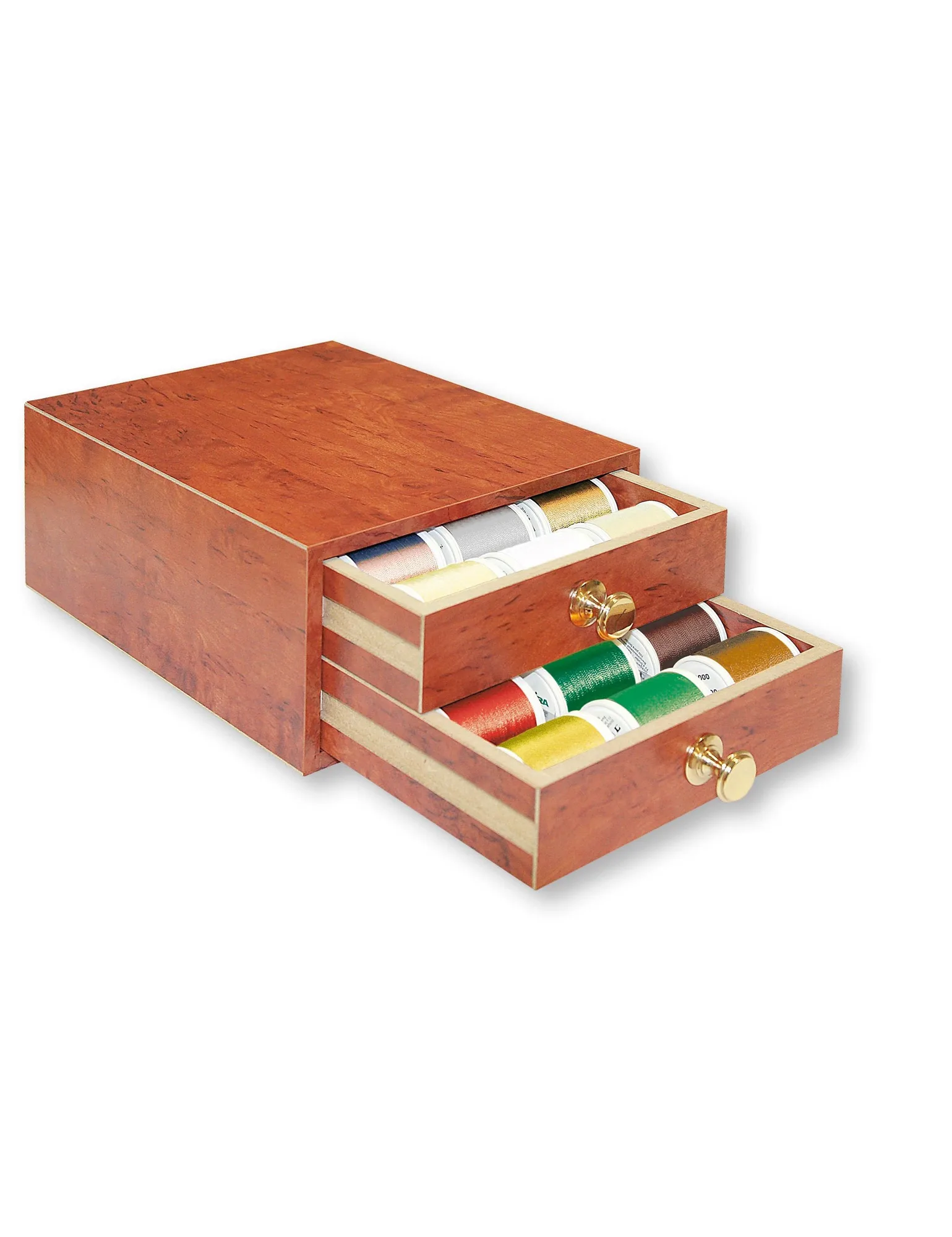
Spools that rub against each other fray and shed lint. Use a divided box, a spool rack, or a drawer insert with individual slots so each spool has its own space. Clear containers let you see colors without opening the lid, which cuts down on handling.
If you use bins, stand spools upright rather than piling them. Stacking puts pressure on the thread and can crush the spool core. For longarm cones, a cone tree or a wall rack keeps them vertical and easy to grab.
- Thread storage ideas: divided craft boxes, spool racks, drawer inserts, and labeled zip pouches for travel.
- Checkpoint: shake the container gently. If you hear spools knocking together, add dividers.
Keep like with like so you actually use what you own
Group thread by weight, fiber, or color family. That way you can grab a 50 wt. polyester for piecing and a 60 wt. for bobbin work without digging. It also helps you spot when a color is running low before a project stalls.
Label the outside of drawers or bins with the weight and fiber. If you quilt on a longarm, keep a separate tray for the threads you use most so you're not pulling the whole stash out for one spool.
- Common mistake: mixing weights in one bin and grabbing the wrong thread for a delicate quilt.
- Checkpoint: can you find a specific spool in under 30 seconds? If not, reorganize.
Rotate stock and check for damage before you stitch
Thread doesn't last forever. Use older spools first, and give each one a quick look before it goes on the machine. Faded color, a brittle feel, or fuzzy, fraying strands are signs it's time to retire that spool to practice work.
A simple rotation rule: new thread goes to the back of the drawer, and you pull from the front. This prevents a forgotten spool from sitting in the sun for years.
- Checkpoint: run a short length between your fingers. If it feels rough or snaps easily, don't use it on a show quilt.
- Keep a small "test" bin for questionable spools so you're not tempted to use them on a gift.
Your 5-step thread storage routine
- Step 1: Pick a cool, dark, dry spot: Choose a closed drawer, lidded bin, or cabinet away from windows, irons, and damp walls. Wipe it clean and let it dry before adding thread. Checkpoint: no direct sun and no heat source within a few feet.
- Step 2: Secure every tail: Tuck the thread end into the spool groove or tape it down. For longarm cones, use a spool net or slim band to hold the tail without knots. Checkpoint: a gentle squeeze shouldn't let the thread shift.
- Step 3: Give each spool its own slot: Use divided boxes, spool racks, or drawer inserts. Stand spools and cones upright instead of stacking them. Checkpoint: shake the container; if spools knock together, add dividers.
- Step 4: Group by weight and fiber: Sort 50 wt. polyester with 50 wt., 60 wt. with 60 wt., and label the outside of each bin. Keep a separate tray for your most-used longarm threads. Checkpoint: you can find any spool in under 30 seconds.
- Step 5: Rotate and inspect: Pull from the front and add new thread to the back. Before each use, check for fading, brittleness, or fraying, and move suspect spools to a test bin. Checkpoint: if thread snaps easily between your fingers, don't use it on a quilt you care about.
Threads that store well and why
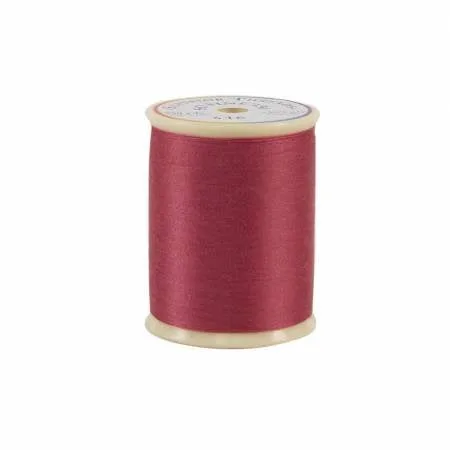
- https://piecenquiltcr.com/products/so-fine-thread-416-rose-petal-spool-71bf0116fc325f7744440288-1385353So Fine! Thread #416 Rose Petal - Spool: So Fine! #50 is a #50/3 lint-free and extra smooth all purpose polyester thread with 550 yards per spool, recommended for quilting and sewing and usable as bobbin thread. Lint-free thread sheds less debris in your storage drawer, and the 550-yard spool is easy to tuck into a divided slot without a bulky cone.
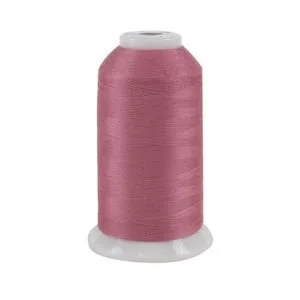
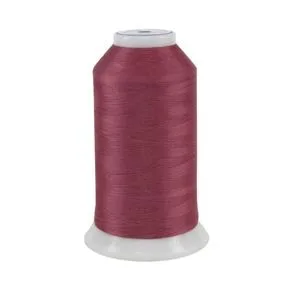
- The Bottom Line #622 Gray: The Bottom Line is a lint-free polyester quilting, embroidery, sewing, binding, and bobbin thread with 3,000 yards per cone. A 3,000-yard cone needs vertical storage on a cone rack or tree so the thread doesn't compress or tangle under its own weight.
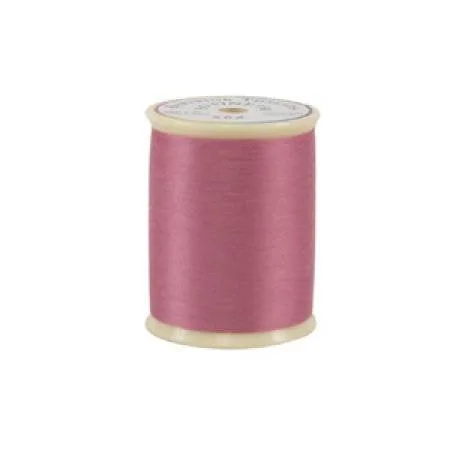
- https://piecenquiltcr.com/products/so-fine-thread-462-aster-spool-76c4fd47f9b9a734a134f21f-1385530So Fine! Thread #462 Aster - Spool: So Fine! #50 is a #50/3 lint-free and extra smooth all purpose polyester thread with 550 yards per spool, recommended for quilting and sewing. The smooth finish means less friction if spools do touch, but the 550-yard size still fits standard spool organizers for easy color grouping.
Good thread storage is less about fancy systems and more about consistency: dark, dry, separated, and secured. Set up your routine once, and your spools will stay smooth and tangle-free until the moment they hit the machine.