Quick answer
Store chocolate bark in an airtight container at a cool, stable room temperature (around 60–68°F / 15–20°C), away from heat, light, and moisture. Refrigerate only if your room runs warmer than about 70°F (21°C), and always let the bark come back to room temperature before serving.
Why bark loses its snap, and when the fridge helps or hurts
Chocolate bark stays crisp when the chocolate remains solid and dry. Two things work against that: heat, which softens the cocoa butter, and moisture, which can dull the surface and make toppings like nuts or cookie pieces go soft. A cool, dry cupboard is usually the best home for bark.
Refrigeration is a trade-off. It protects bark in a hot kitchen, but the cold container can collect condensation when you take it out. If you do refrigerate, keep the bark sealed and let the whole container sit closed on the counter until it reaches room temperature; opening it early exposes the cold chocolate to damp air.
Match the storage spot to the bark you bought
Plain chocolate bark and nut-topped bark generally keep well at cool room temperature. Bark with fresh fruit, cream-based drizzles, or other perishable inclusions may need refrigeration; check the label or the shop's guidance rather than assuming. For a milk chocolate bark with roasted almonds and hazelnuts, the main risks are warmth and humidity rather than spoilage, so a stable cupboard is usually enough.
Step-by-step: store and serve bark for maximum crispness
- 1. Pick a cool, dry, dark spot: Choose a cupboard away from the oven, radiator, sunny windowsill, or dishwasher. Aim for a steady temperature around 60–68°F (15–20°C). Check the spot with a thermometer if your kitchen swings between hot and cold; a stable temperature matters more than a specific number.
- 2. Seal the bark airtight: Keep bark in its original sealed bag, or transfer it to a rigid airtight container. Separate pieces with parchment if you stack them, and press out excess air before closing. A common mistake is leaving the bag folded open; even a small gap lets in humid air and fridge odors.
- 3. Decide whether refrigeration is needed: If your storage spot stays below about 70°F (21°C) and dry, keep the bark at room temperature. If your kitchen regularly runs warmer or more humid, refrigerate it in an airtight container. Never refrigerate unwrapped bark; it will pick up moisture and odors.
- 4. Bring refrigerated bark back to room temperature before serving: Take the sealed container out of the fridge and leave it closed on the counter for 20–30 minutes. Open only when the container no longer feels cold. Opening early causes condensation on the chocolate, which is the fastest way to lose the snap.
- 5. Serve in small batches on a dry plate: Set out only what you plan to eat, on a dry plate or board. Keep the rest sealed and stored. Avoid placing bark next to steaming drinks, a kettle, or a sink. Return leftover served bark to an airtight container rather than leaving it out for hours.
- 6. Watch for bloom and texture changes: A whitish haze (bloom) can appear if bark was stored too warm or experienced temperature swings; it is safe to eat but signals the texture may be less crisp. If nuts smell stale or the chocolate smells off, discard it. Prevention is easier than rescue: keep the storage spot stable and the container sealed.
Product facts
-
Roasted Smooth & Rich Milk Chocolate Album: Milk chocolate bark with roasted almonds and hazelnuts, finished with a white chocolate drizzle. The nuts and drizzle add surfaces that can soften in humid air, so airtight storage matters as much as temperature.
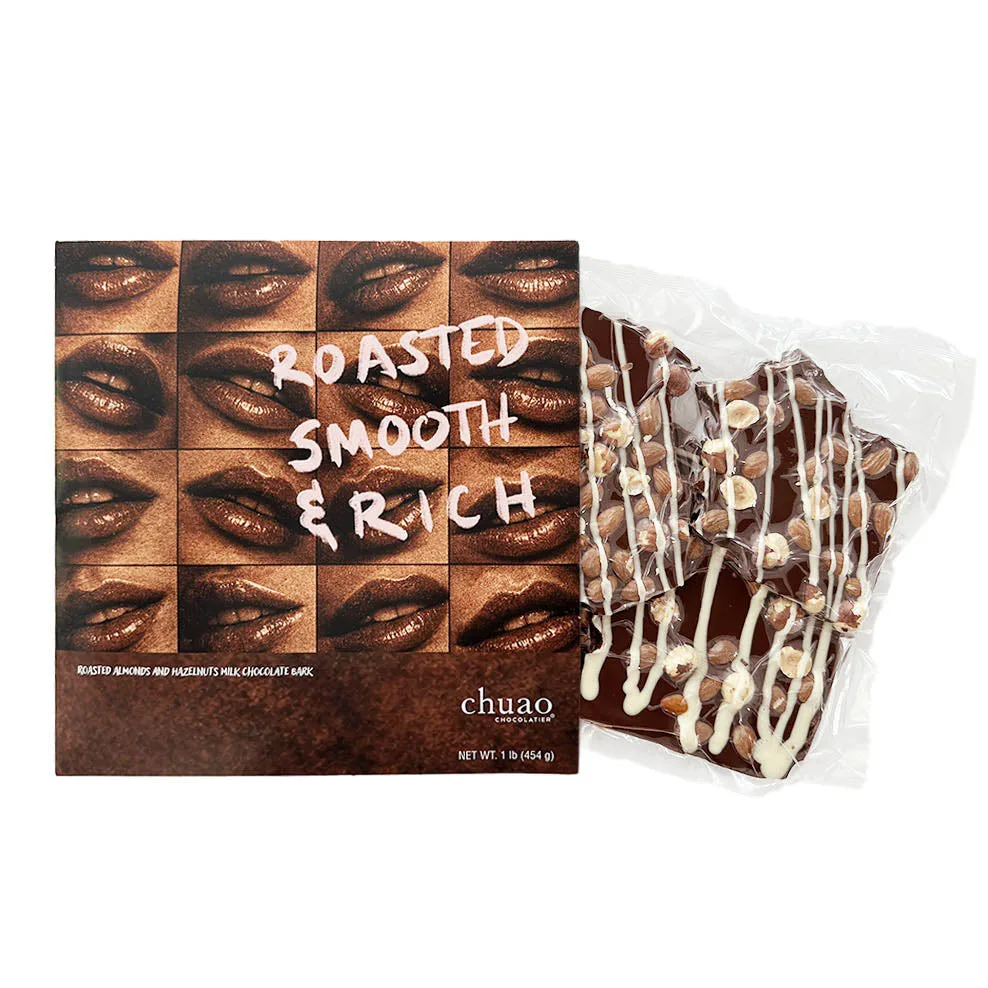
Roasted Smooth & Rich Milk Chocolate Album