Quick answer
Style a tulle bustier gown by treating the bodice as the anchor: choose smooth, seamless underpinnings, keep jewelry minimal and architectural, and add layers that echo the gown's embroidery rather than compete with it. For a modern wedding, let one element lead, then build the rest of the outfit around it.
Start With the Bodice Fit, Not the Accessories
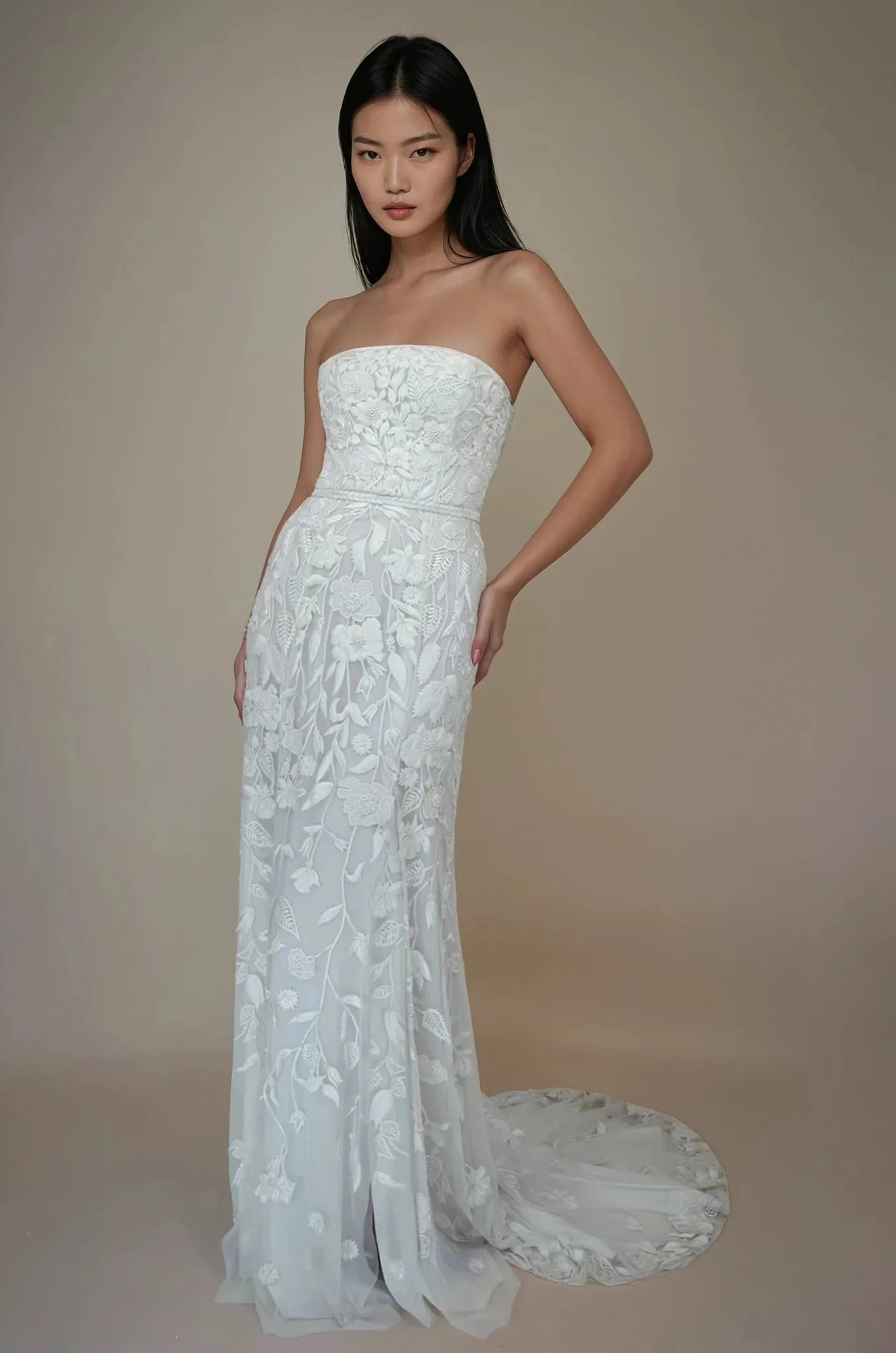
A tulle bustier gown lives or dies by how the bodice sits. Before you shop for earrings or a veil, put the gown on with the undergarments you plan to wear and check three points: the straight neckline should sit level across the bust, the top edge should not gap when you lift your arms, and the waist should stay put when you twist. If the bodice shifts, no accessory will fix it.
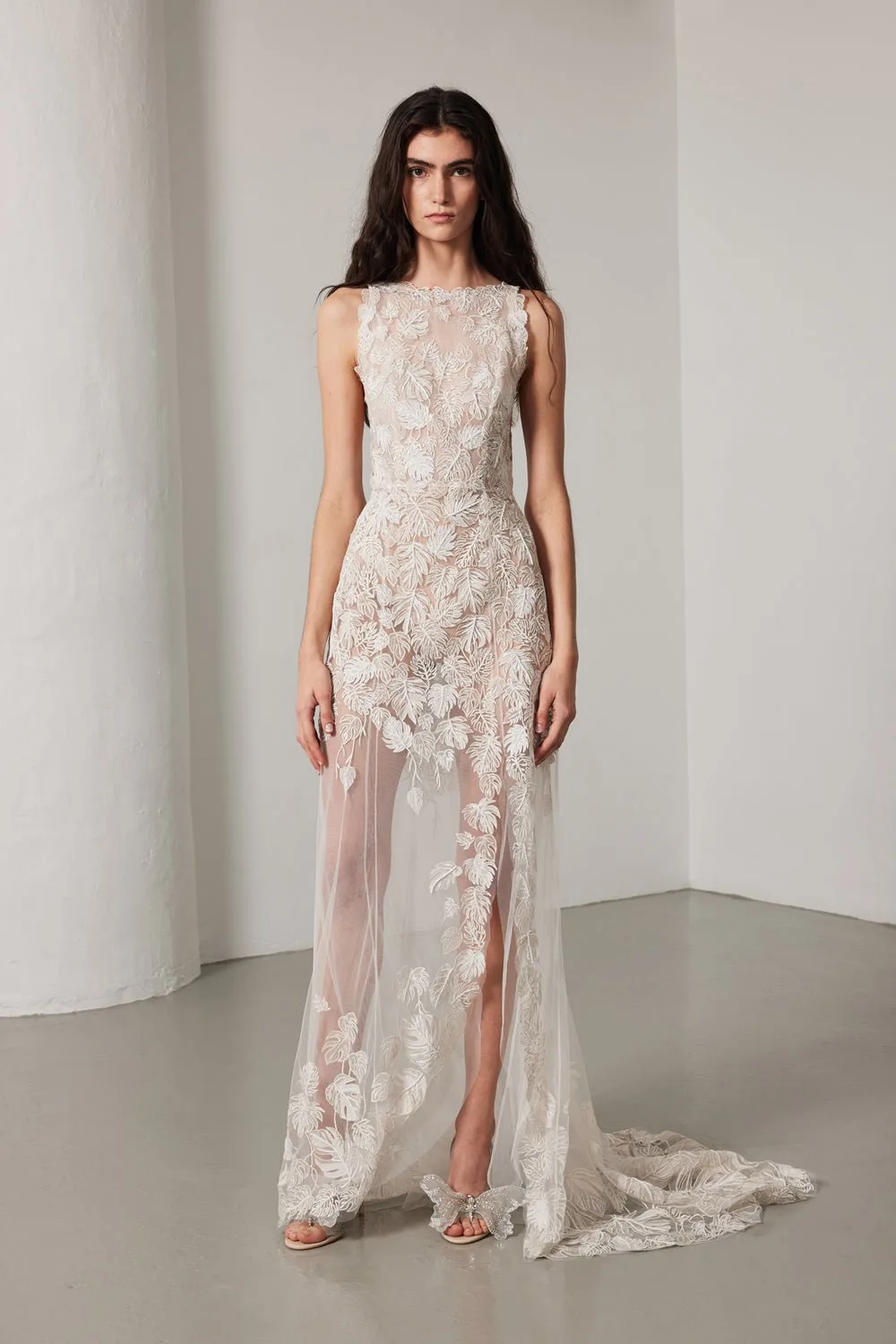
For gowns with a structured racer-neck bodice, the fit check changes slightly. The neckline does more sculpting work, so confirm the shoulder line stays flat and the back opening sits where you want it before you add a veil or hairpiece that draws the eye elsewhere.
Choose Undergarments That Disappear Under Tulle
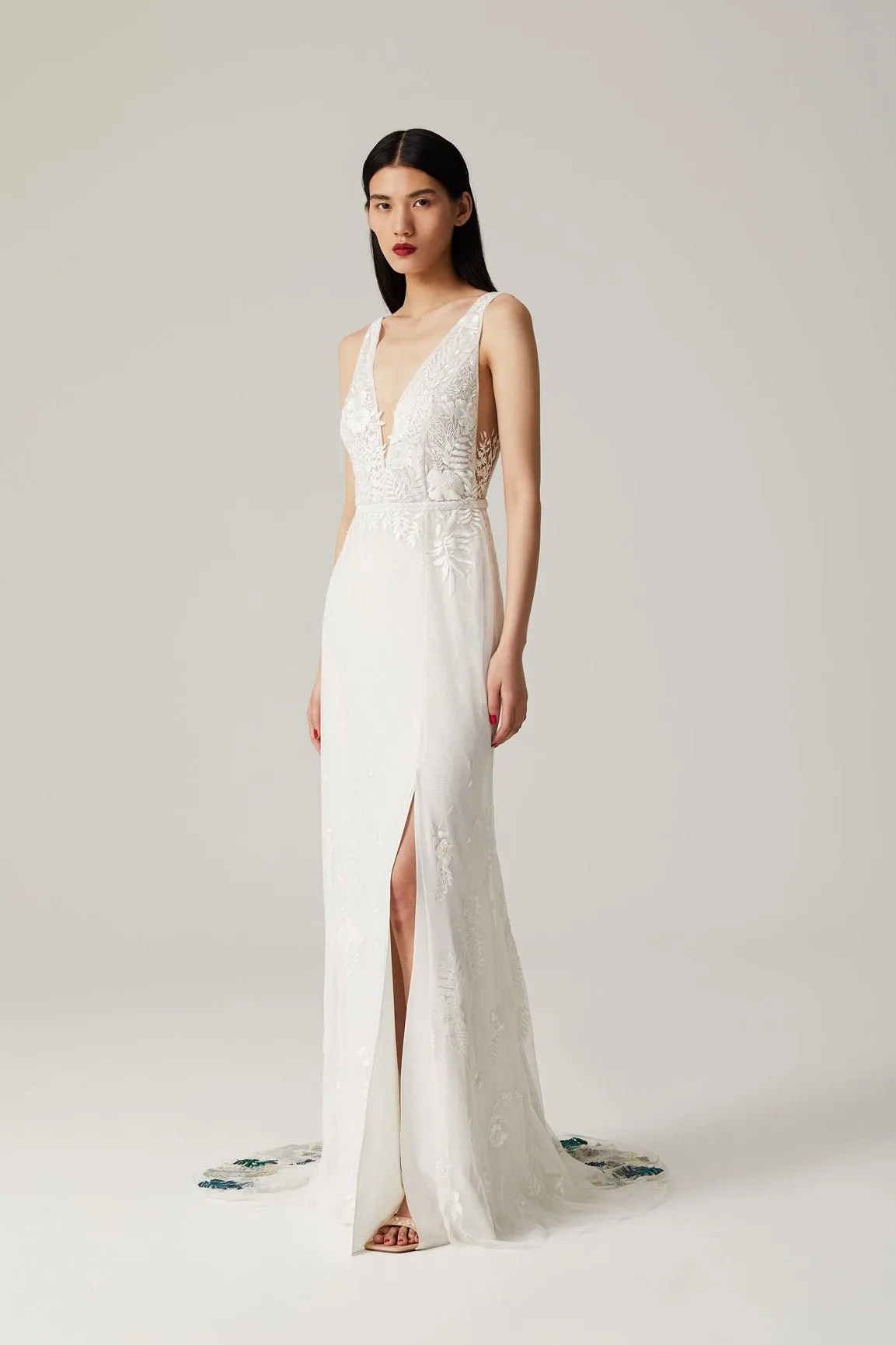
Tulle is translucent, so seams and lace edges show. Choose seamless, low-back or backless options that match your skin tone rather than the gown, and avoid anything with a visible band under the bustier line. If the gown has an illusion V-neckline, test the neckline edge with your bra or adhesive cups in place, since a deep V exposes any mismatch.
Bring your undergarments to the fitting. A gown that fits perfectly over one bra can sit differently over another, and alterations should be done with the final underpinnings in place.
Build the Look Around One Statement Element
Modern wedding styling works best when one element leads. If your gown has bold floral embroidery, let the embroidery be the statement and keep jewelry quiet: small studs, a fine chain, or nothing at all. If the gown is clean and structural, you can go bigger with earrings or a sculptural hairpiece.
This is also where you decide on a belt. A belt can define the waist on a slim gown, but on a gown with a strong bustier line it can cut the silhouette in half. Try it both ways in the mirror before committing.
Layer With Veils, Capes, and Outerwear
Layering is where a tulle gown becomes versatile. A veil with ombré or floral detailing can echo the gown's embroidery, while a plain tulle veil keeps the focus on the dress. For cooler months or a city ceremony, a cropped jacket, cape, or faux-fur stole adds coverage without hiding the bodice.
The checkpoint here is proportion. A long veil plus a long train plus a busy embroidered gown can read as heavy. If two of those three are already dramatic, keep the third simple.
Test the Gown in Motion Before the Wedding Day
Walk, sit, turn, and dance in the full outfit, including shoes and any layers. A leg split or curve split hem needs a movement test: check that the split opens where you expect and that you can sit without pulling the bodice out of place. If snaps at the waist are an option for your gown, ask about them during alterations so the skirt stays aligned when you move.
Do this test at least twice: once in the fitting room and once at home with your actual shoes and accessories. Small changes in heel height alter how the hem falls and how the bodice sits.
Styling Steps
- Step 1: Fit the bodice first: Put the gown on with your final undergarments and check that the neckline sits level, the top edge does not gap, and the waist stays put when you twist. Checkpoint: if the bodice shifts, book alterations before you shop for accessories.
- Step 2: Match undergarments to the neckline: Choose seamless, skin-tone options that disappear under tulle, and test them against any illusion V-neckline or backless design. Common mistake: wearing a bra you did not bring to the fitting, which changes how the gown sits.
- Step 3: Pick one statement element: Decide whether the embroidery, a belt, earrings, or a hairpiece leads the look, then keep the rest quiet. Checkpoint: if two elements compete, remove one.
- Step 4: Add layers with proportion in mind: Choose a veil, cape, or stole that echoes the gown's embroidery or stays plain, and avoid stacking a long veil, a long train, and busy embroidery all at once. Common mistake: letting the veil cover a backless or open-back design you chose on purpose.
- Step 5: Test the gown in motion: Walk, sit, turn, and dance in the full outfit, including shoes, and check any leg split, curve split hem, or waist snaps. Repeat the test at home with your actual shoes before the wedding day.
Product facts
- Wild Rose Tulle Bustier Gown | Floral White: The Wild Rose Tulle Bustier Gown in Floral White blends classical embroidery with a contemporary straight-neck bustier and leg split. The straight neckline and leg split give you two focal points, so keep jewelry and layers restrained to let the silhouette read clearly.
- Fern and Rose Slim Fit Illusion V Open Square Back Forest Hem Gown | Floral White: The Fern and Rose Slim Fit Illusion V Open Square Back Forest Hem Gown features embroidered ferns and roses across the bodice, a deep illusion V-neckline, and a soft layer of lace woven throughout. The deep illusion V-neckline makes undergarment choice critical; test the neckline edge with your final bra or cups before alterations.
- Monstera Racer Neck Gown With Train | Floral White: The Monstera Racer Neck Gown With Train has a racer-neck bodice, a curve split hem, and a backless design, with snaps at the waist available to add in alterations. The backless design and racer neck mean the back is part of the look, so plan hair and veil placement to frame rather than cover it.