Quick answer
Hang art so the center of the piece sits at roughly eye level, about 57 to 60 inches from the floor, unless a sideboard or table changes the sightline. Size the art to about two-thirds the width of the furniture below it, and keep at least 8 to 10 inches of clearance above a dining table or counter so nothing feels crowded.
Wall art in a dining room or kitchen has a harder job than art in a hallway. It sits above surfaces people actually use, so it has to survive splashes, steam, and the visual weight of a table or counter. Get the height and scale right and the room feels finished; get them wrong and even good art looks like an afterthought.
The process below works whether you are hanging one print over a sideboard or building a gallery wall in a dining room. You will need a tape measure, painter's tape, a pencil, and a level. If you are starting from scratch, decide on the art before you commit to hardware, since frame and print size drive every other decision.
Start with the wall, not the art
Walk into the room and note what the wall has to compete with: a window, a pendant light, a doorway, or a tall cabinet. Art hung too close to any of these reads as clutter rather than composition. In a kitchen, avoid the zone directly behind a cooktop or sink, where grease and steam are hardest on paper and frames.
Measure the usable wall width and the height from the floor to any obstruction. This gives you a real canvas to work with. If the wall is broken up by a doorway or open shelving, plan around those breaks instead of trying to bridge them with one oversized piece.
- Common mistake: buying art first and then hunting for a wall that fits it.
Anchor the art to the furniture below
In a dining room, the table or sideboard is the anchor. A single piece should span roughly two-thirds the width of the furniture beneath it; a gallery wall can stretch slightly wider, but should not extend past the furniture's edges on both sides. This is the single biggest factor in wall art sizing.
For a kitchen, the anchor might be a counter run, a banquette, or a row of stools. Treat the counter's visible width the same way you would a sideboard. If you are hanging above a table, leave 8 to 10 inches between the bottom of the frame and the tabletop so seated guests do not feel boxed in.
- Checkpoint: stand at the table and look at the wall. If the art feels like it is pressing down, raise it or go smaller.
Set the height before you drill
The standard rule is to center the art at 57 to 60 inches from the floor, which matches average eye level. In a dining room, that rule often needs adjusting because the table blocks the lower wall. Center the art on the visual space between the tabletop and the ceiling, or between the sideboard top and the ceiling, rather than on the floor-to-ceiling measurement.
Use painter's tape to mark the outer edges of every frame on the wall. Live with the tape for a day. This is the cheapest way to catch a layout that is too high, too low, or too tight before you commit to holes.
- Common mistake: hanging art so the bottom edge aligns with a window or door frame, which pulls the whole composition off-center.
Choose a layout that fits the room's use
A single large print suits a wall with one clear focal point, like the space above a sideboard. A gallery wall dining room layout works better on a long, uninterrupted wall or a staircase-adjacent wall, where a single piece would look lost. Grid layouts feel calm and architectural; salon-style clusters feel collected and casual.
For a kitchen, keep it simple. Two or three smaller pieces in a row above a counter read cleanly and are easier to wipe around than a dense cluster. If the wall is narrow, stack two prints vertically instead of spreading them horizontally.
- Tip: keep 2 to 3 inches between frames in a gallery wall so the group reads as one composition.
Match the frame to the room, not just the print
A frame is part of the room's finish palette. In a dining room with warm wood and linen, a thin metal frame keeps things modern without competing. In a kitchen with painted cabinets, a frame that echoes the cabinet or hardware color ties the wall to the joinery. Rounded corners soften a hard-edged space; sharp corners feel more formal.
If you are framing a print yourself, check that the frame's listed size matches the print's size before ordering. A print listed at 11 x 14 inches needs an 11 x 14 frame, and the frame's mat or mount will affect how much of the image is visible.
- Common mistake: choosing a frame color that matches nothing else in the room, which makes the art feel temporary.
Protect the art in a working kitchen
Kitchens are hard on paper. Steam, grease, and direct sun will dull a print faster than almost anything else in the home. Keep unframed or lightly framed paper away from the cooktop and sink, and avoid hanging directly above a dishwasher or kettle where steam rises.
If the wall gets strong afternoon sun, rotate prints periodically or move them to a less exposed wall. This is a simple wall art styling tip that costs nothing and extends the life of the piece.
- Checkpoint: if you can feel warmth or moisture on the wall with your hand, do not hang paper art there.
Step-by-step: hanging art in a dining room or kitchen
- 1. Map the wall: Measure usable width and note windows, doors, pendants, and appliances. Mark the zone where art can live without competing with fixtures. Checkpoint: if the zone is narrower than 24 inches, plan a single small piece rather than a group.
- 2. Measure the anchor furniture: Record the width of the table, sideboard, or counter run. Multiply by roughly two-thirds to get your target art width. Checkpoint: a group can run slightly wider than the furniture, but not past its edges on both sides.
- 3. Set the center height: Mark 57 to 60 inches from the floor for a clear wall, or center the art in the space between the tabletop or counter and the ceiling. Checkpoint: leave 8 to 10 inches between the bottom of the frame and a dining tabletop.
- 4. Tape the layout: Use painter's tape to outline every frame, including gaps of 2 to 3 inches between pieces in a group. Leave it up for a day. Checkpoint: view the tape from a seated position at the table, not just standing in the doorway.
- 5. Choose frames that fit the room: Match frame finish to the room's existing metals, wood tones, or cabinet color. Confirm the frame size matches the print size before ordering. Checkpoint: if you cannot name what the frame color relates to in the room, pick a neutral instead.
- 6. Hang, level, and adjust: Install hardware using the frame's guide, check level, then step back to the room's main entry point and confirm the composition reads as one piece. Next step: if the art feels low, raise the whole group rather than adjusting one frame.
Products that work well in these spaces
- A Night In Print - 16 x 20": Part of a Fable-exclusive limited edition wall art series, this signed and numbered print features original artwork by Vancouver-based artist Joy Kinna, printed on premium archival paper with a textured matte finish. The 16 x 20 size is large enough to anchor a sideboard or a dining room wall on its own, and the archival paper and matte finish handle indirect light better than glossy stock.
- Yellow Room Print - 11 x 14": Part of a Fable-exclusive limited edition wall art series, this signed and numbered print features original artwork by Venice-based artist Marco Marella, printed on premium archival paper with a textured matte finish. At 11 x 14, this is a good size for pairing in a two- or three-piece kitchen row, or for stacking vertically on a narrow wall.
- Small Rounded Frame: Crafted from powder coated aluminum and durable plexiglass, with rounded corners and an easy-to-hang step-by-step guide. Plexiglass is lighter and less likely to shatter than glass in a busy kitchen, and the rounded corners soften a hard-edged dining space.
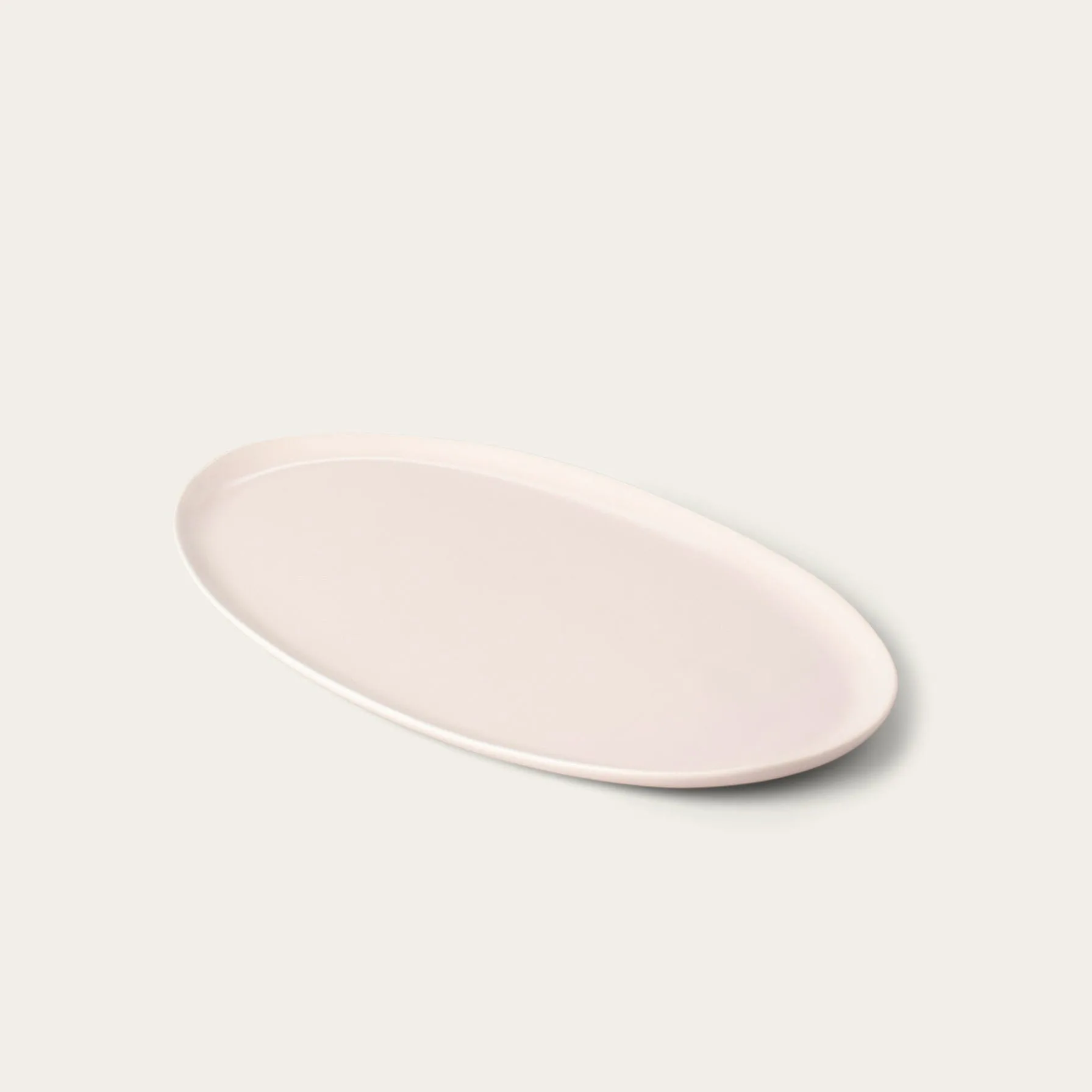
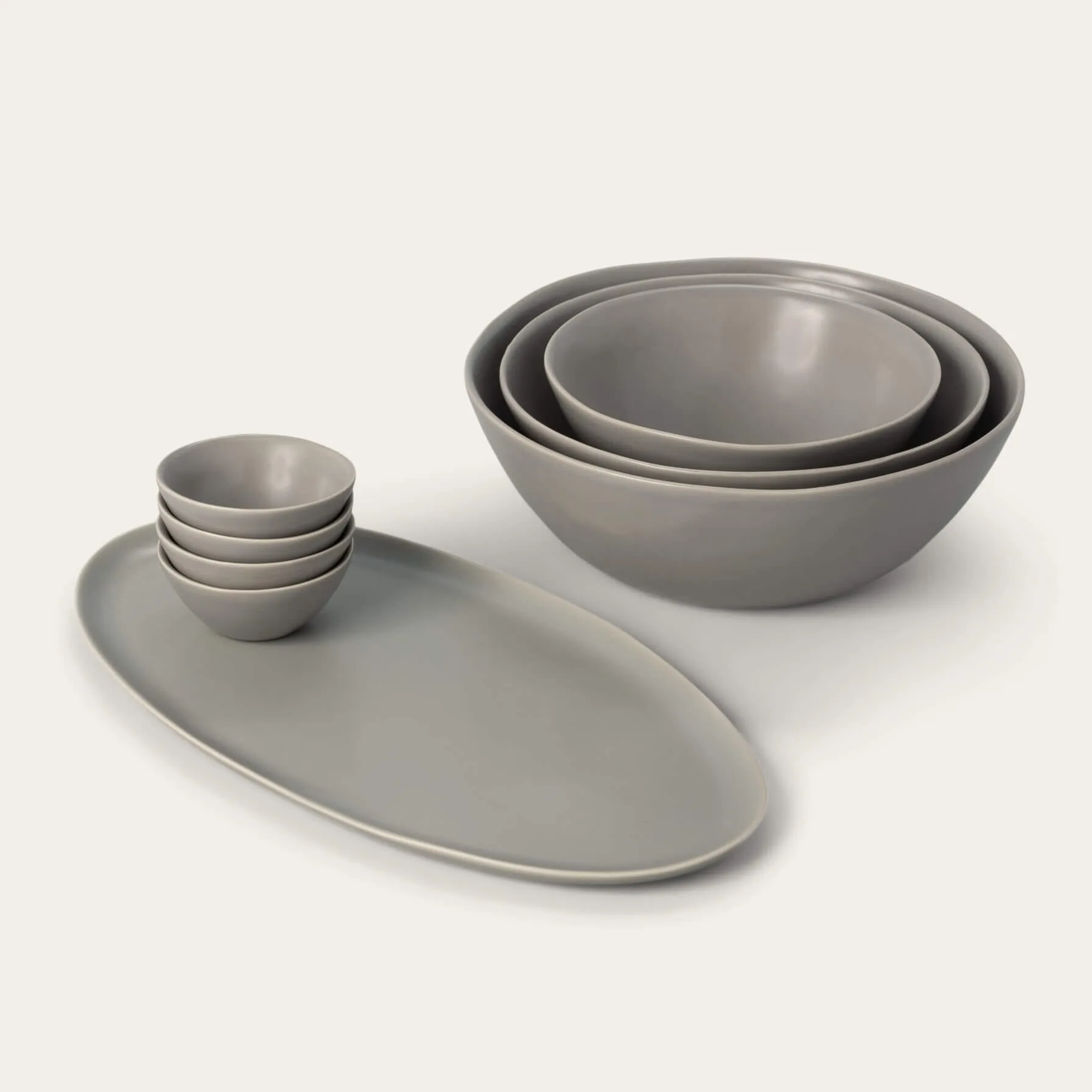
- Serving Ceramics Set: Hand-finished in Portugal, this set includes The Oval Serving Platter, a set of 3 Nested Serving Bowls, and a set of 4 Little Bowls. If you are styling a sideboard, the ceramics on top set the visual width the art above should echo, so measure the platter and bowls before choosing print size.
Good wall art in a dining room or kitchen comes down to three decisions: height, scale relative to the furniture below, and protection from heat and steam. Tape the layout first, pick frames that belong to the room, and the art will look intentional rather than added on.