Quick answer
To transition from string floss to Cocofloss, start by cutting a longer piece (18-20 inches) to account for the woven texture, then follow a gentle C-shape motion around each tooth.
Why woven floss feels different
Unlike thin string floss that can shred or slip, woven floss like Cocofloss has a textured surface that grips plaque more effectively. This means you may need slightly more floss length and a gentler touch at first.
Steps to transition from string floss to Cocofloss
- Cut a longer piece of floss: Cut about 18-20 inches of Cocofloss. The woven texture needs more length to wrap comfortably around your fingers. Common mistake: cutting too short, leading to slipping.
- Wrap and secure the floss: Wrap the ends around your middle fingers, leaving a 2-3 inch working section. Use your thumbs and index fingers to guide it. Checkpoint: ensure the floss is taut but not digging into your fingers.
- Glide gently between teeth: Slide the floss between teeth using a gentle back-and-forth motion. Do not snap it into the gums. Common mistake: snapping the floss, which can hurt gums and cause bleeding.
- Form a C-shape around each tooth: Curve the floss into a C-shape against the side of the tooth. Move it up and down, reaching below the gumline. Checkpoint: you should feel gentle resistance, not pain.
- Use a fresh section for each gap: Unwind a clean section of floss for each tooth to avoid spreading bacteria. Common mistake: reusing the same section, which reduces effectiveness.
Product fact
-
21 Day Smile Care Challenge: This free, downloadable tracker helps you build a new habit over 21 days. Using the 21 Day Smile Care Challenge can reinforce your flossing routine as you adjust to the new woven texture.
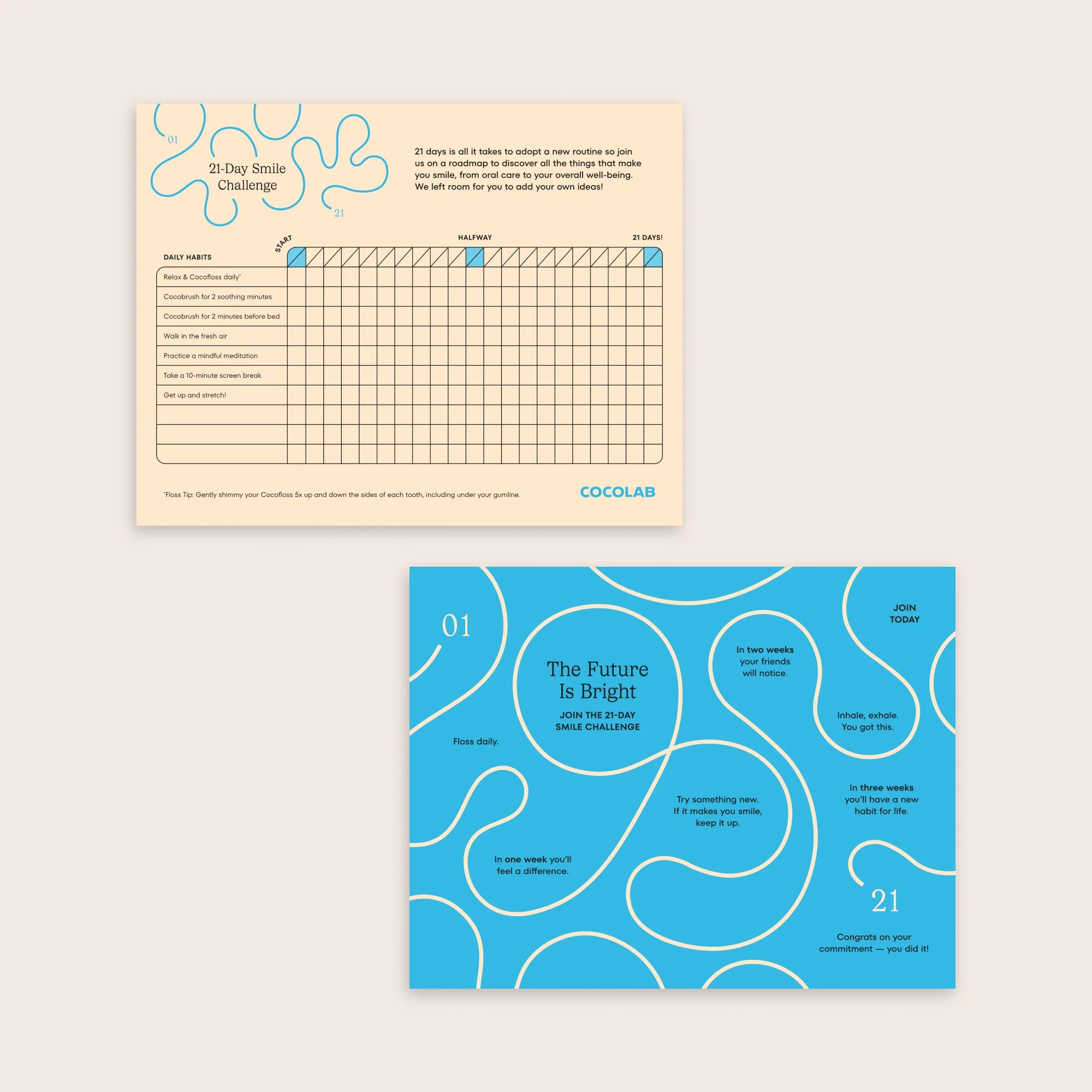
21 Day Smile Care Challenge