Quick Answer
Start the transition when your dog reliably uses the crate without accidents or anxiety. Gradually increase open-bed time, starting with short naps while you're home, and use positive reinforcement to build a positive association. Keep the crate available as a safe retreat until your dog is fully comfortable.
Transitioning your dog from a crate to an open bed is a significant milestone. It signals trust and maturity, but rushing it can cause setbacks. This guide walks you through a gradual, stress-free process that respects your dog's pace.
Whether you're moving from a crate to a dedicated dog bed or simply giving your pup more freedom, the key is patience and consistency. Here's how to make the switch smoothly.
Signs Your Dog Is Ready for an Open Bed
Before you start, look for signs that your dog is ready to leave the crate. These include: no accidents in the crate for several weeks, no destructive chewing when left alone, and the ability to settle down calmly outside the crate. If your dog still seeks the crate for comfort, that's a good sign—it means they see it as a safe space.
Age and health matter too. Puppies under six months often lack the bladder control for full freedom. Senior dogs or those with medical conditions may need the security of a crate longer. Always consult your vet if you're unsure.
- Your dog can hold their bladder for the expected duration for their age.
- Your dog doesn't panic or whine when you leave the room.
- Your dog has a calm temperament and isn't prone to destructive chewing.
Gradual Transition Steps
Start by moving the crate into the room where you want the bed to be. Let your dog nap in the crate with the door open, then place a comfortable bed nearby. Over a week, shift the bed closer to the crate until it's in the desired spot.
Next, encourage your dog to lie on the bed using treats and praise. Use a command like 'bed' and reward them for settling. Once they're comfortable, close the crate door but leave them on the bed for short periods while you're home. Gradually increase the time and distance.
- Use high-value treats to make the bed a positive place.
- Keep the crate accessible as a backup if your dog seems stressed.
Handling Setbacks and Common Mistakes
Setbacks are normal. If your dog has an accident or chews something, don't punish them—just go back a step. Increase supervision and shorten the time they're left alone. Consistency is more important than speed.
A common mistake is removing the crate too soon. Even after your dog sleeps on the bed, keep the crate set up for a while. It provides a safe retreat and can be useful during travel or illness.
- Never force your dog out of the crate; let them choose.
- If your dog regresses, return to the previous step for a few days.
Step-by-Step Transition Plan
- Step 1: Assess readiness: Ensure your dog is accident-free and calm outside the crate for at least two weeks before starting. If not, continue crate training a bit longer.
- Step 2: Introduce the bed: Place a comfortable bed near the crate and let your dog explore it with the crate door open. Reward any interaction. Positive association is key.
- Step 3: Move the bed gradually: Over several days, move the bed a few feet away from the crate each day until it's in the desired location. Slow movement prevents anxiety.
- Step 4: Practice short periods: Encourage your dog to lie on the bed for short naps while you're home. Gradually increase the duration. Never leave them alone unsupervised initially.
- Step 5: Extend alone time: Start leaving your dog on the bed for brief periods while you're in another room, then increase the time and distance. If accidents occur, shorten the time.
- Step 6: Keep the crate available: Even after your dog sleeps on the bed, keep the crate accessible as a safe retreat. Remove it only when your dog consistently chooses the bed. The crate remains a useful tool for travel and stress.
Products That Support the Transition
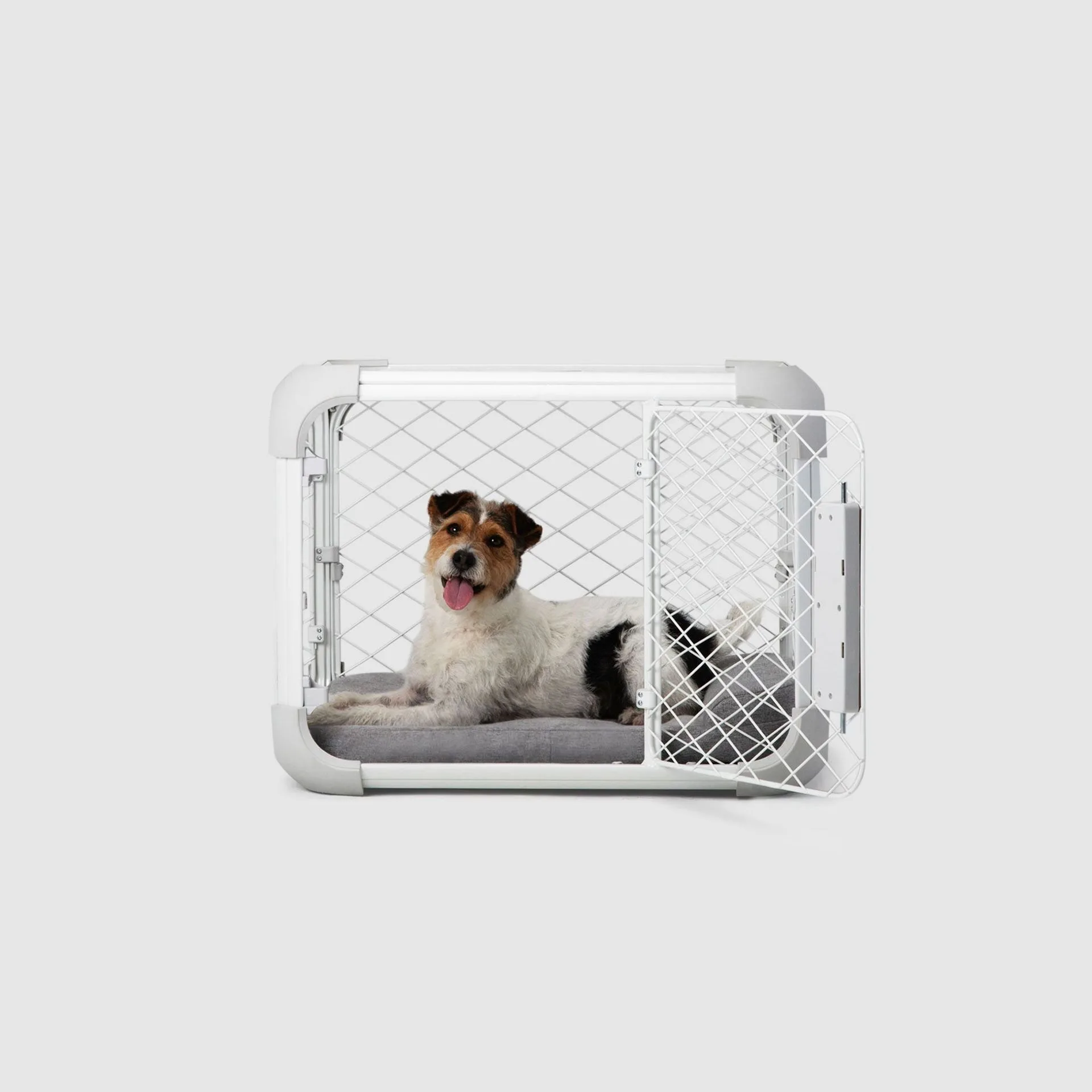
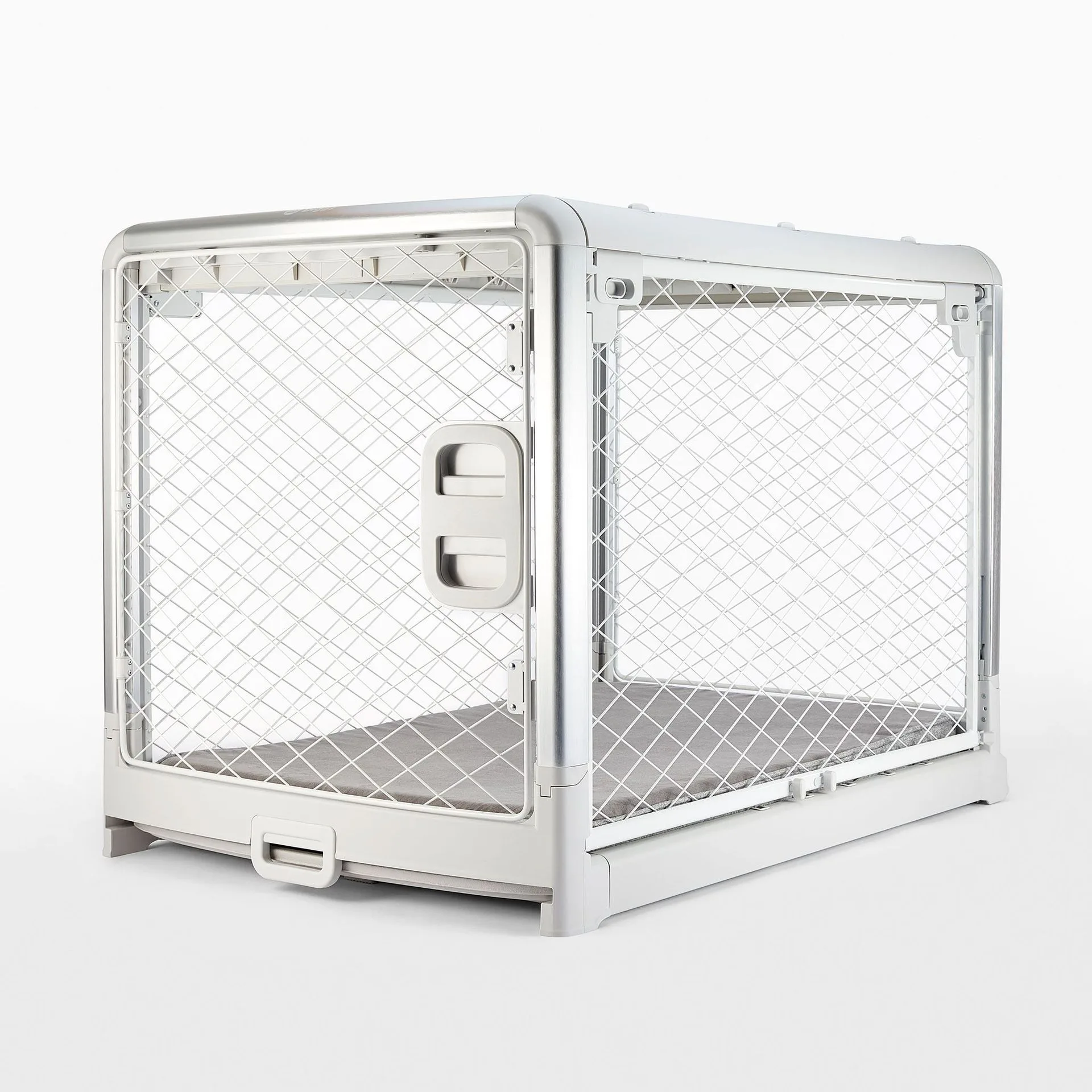
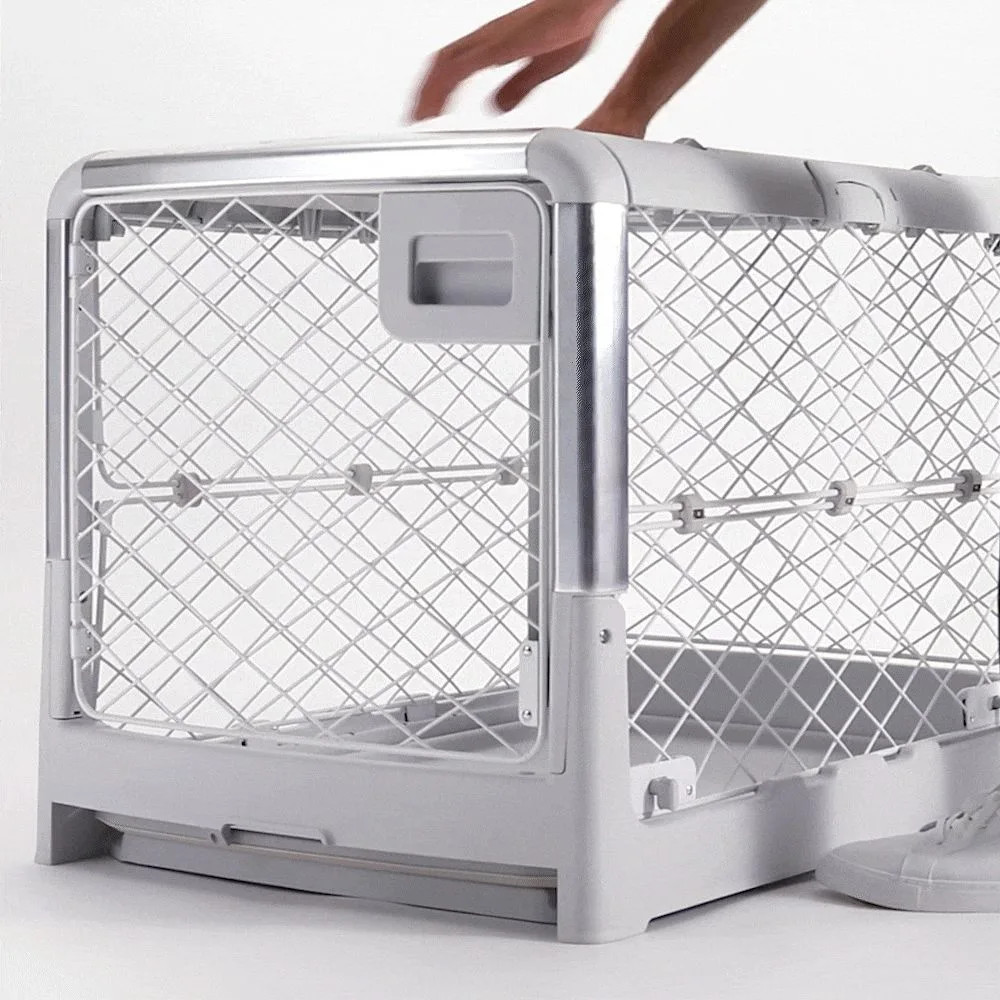
- https://diggsshop.com/products/revol-dog-crate-70240Revol Dog Crate: The Revol Dog Crate is a collapsible crate available in Ash, Charcoal, and Smoke, with sizes from Small to Large. During the transition, you can keep the Revol Crate set up as a safe haven. Its collapsible design makes it easy to move or store when your dog is ready for full freedom.
- https://diggsshop.com/products/crate-bowl-70254Crate Bowl: The Crate Bowl is a food-grade, dishwasher-safe stainless steel bowl with a crate clip that attaches to Revol and Evolv crates. You can use the Crate Bowl to offer water or treats near the bed, helping your dog associate the new sleeping area with positive experiences.
- Groov Training Aid: Groov is a patented crate training aid that encourages licking, which has a calming effect on dogs. It works with Revol, Evolv, and most wire crates. Use Groov to soothe your dog during the transition, whether they're in the crate or on the bed, to reduce anxiety and promote relaxation.
Transitioning your dog from crate to open bed is a gradual process that rewards patience and consistency. By following these steps and using positive reinforcement, you'll help your dog feel secure and confident in their new sleeping arrangement. Remember, every dog is different—go at their pace, and you'll both enjoy the freedom.