Have you ever wondered how professional coffee tasters pick out notes of blueberry, chocolate, or jasmine from a simple cup of black coffee? The secret is a structured tasting method called coffee cupping. Cupping is the standardized way specialty coffee roasters and buyers evaluate beans, but you don't need a lab coat or a certification to do it at home.
In this beginner's guide, you'll learn the essential steps of coffee cupping, how to identify coffee flavor notes, and how to train your palate like a pro. By the end, you'll be able to taste your morning brew with new appreciation and precision.
What is Coffee Cupping?
Coffee cupping is a systematic tasting technique used to evaluate the aroma, flavor, acidity, body, and aftertaste of coffee. It's similar to wine tasting but tailored for coffee. During a cupping session, you'll grind fresh beans, smell the dry grounds, add hot water, break the crust, and slurp the coffee to aerate it across your palate.
The goal is to isolate and identify specific flavor characteristics. Professional cuppers use a standardized form to score each attribute. For beginners, the focus is on observation and vocabulary building. You don't need to be an expert to start cupping — just curiosity and a willingness to taste.
- Use freshly roasted coffee within 2–14 days of roasting for best results.
- Grind the beans to a medium-coarse consistency, similar to sea salt.
- Use clean, neutral-tasting water (filtered or bottled) heated to about 200°F (93°C).
How to Set Up Your Home Cupping Session
To cup at home, you'll need a few basic tools: a scale, a grinder, a kettle, cupping bowls or small cups, spoons, and a timer. If you don't have cupping bowls, any identical small cups will work. The key is consistency — use the same coffee-to-water ratio for each sample. A standard ratio is 8.25 grams of coffee per 150 ml of water.
You can cup multiple coffees side by side to compare. For example, try cupping a single origin like Yirgacheffe, Organic Ethiopia alongside a blend like Bright Note, Blend. This contrast helps you notice the differences in origin, processing, and roast profile. Take notes on aroma, flavor, acidity, body, and aftertaste for each.
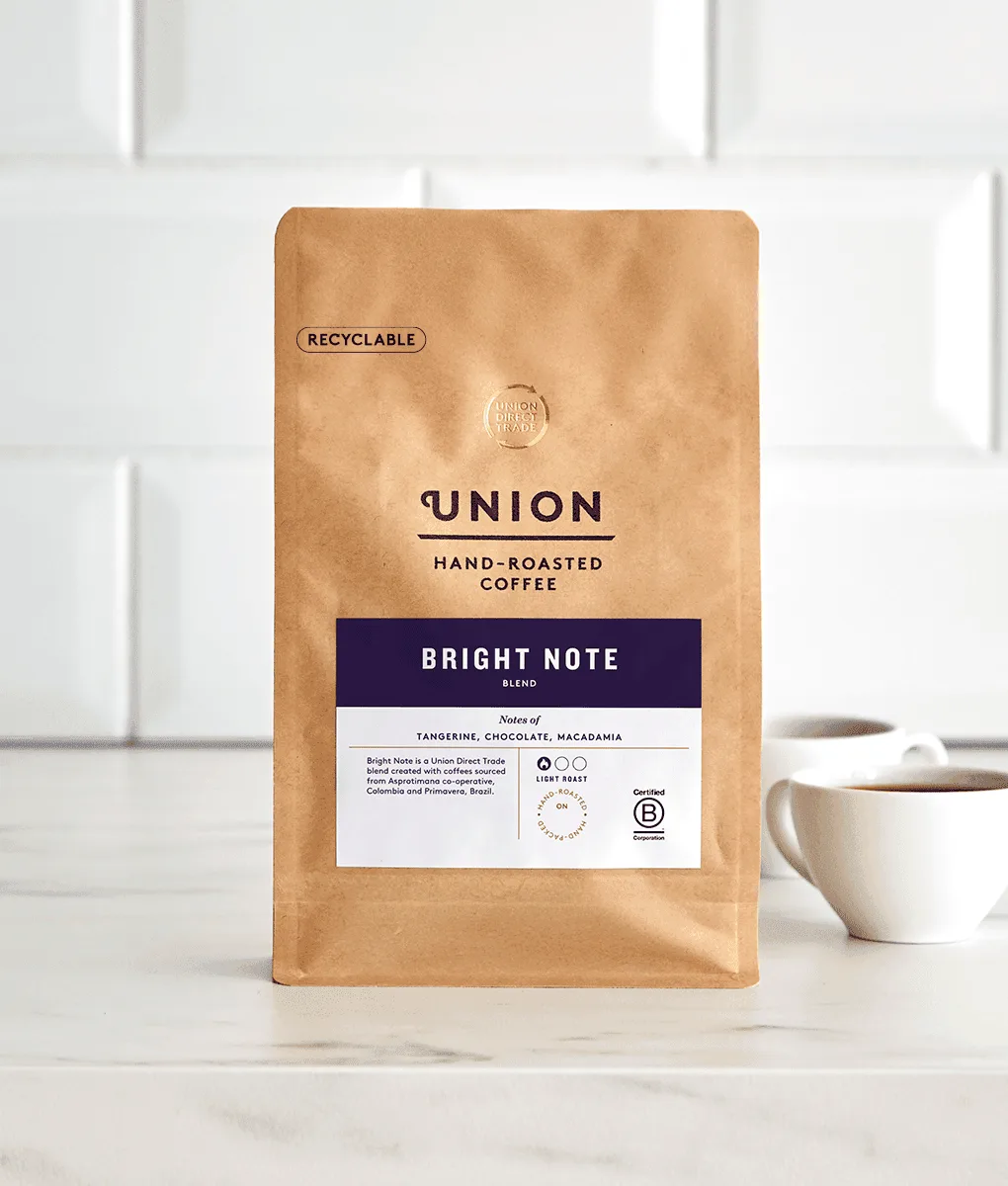
Bright Note, Blend
- Prepare a cupping form or notebook to record your observations.
- Smell the dry grounds before adding water — this is the 'fragrance' phase.
- After adding water, wait 4 minutes before breaking the crust to allow full extraction.
Step-by-Step Cupping Process
1. Grind and smell: Grind the coffee just before cupping. Inhale the dry aroma — this is called the fragrance. Write down what you smell: is it floral, fruity, nutty, or spicy? 2. Add water and steep: Pour hot water over the grounds and start your timer. After 4 minutes, use a spoon to gently break the crust that forms on top. Lean in and smell the released aroma — this is the wet aroma, often more complex than the dry fragrance.
3. Skim the grounds: Use two spoons to skim off the floating grounds and foam from the surface. 4. Slurp and taste: Take a spoonful of coffee and slurp it loudly. The slurping aerates the coffee and spreads it across your tongue. Focus on the initial flavor, acidity, body, and sweetness. 5. Evaluate aftertaste: Swallow or spit, and note how long the flavor lingers. A long, pleasant aftertaste is a sign of high-quality coffee.
- Slurp loudly — it's not rude, it's science! Aerating the coffee releases volatile aromas.
- Use a clean spoon for each sample to avoid cross-contamination.
- Take small sips and let the coffee cool as you taste — flavors change as it cools.
Understanding Coffee Flavor Notes and Aroma
Coffee flavor notes are descriptors that help communicate what you taste and smell. Common categories include fruity (berry, citrus, stone fruit), floral (jasmine, rose), nutty (almond, hazelnut), chocolatey (milk chocolate, dark chocolate), and spicy (cinnamon, clove). The coffee's origin, processing method, and roast level all influence these notes.
For example, Ethiopian coffees like Yirgacheffe often display bright acidity and floral or berry notes, while a blend like Foundation, Blend might offer a balanced, chocolatey profile with medium body. Training your palate takes time — start by tasting one coffee per day and describing it in simple terms. Use a flavor wheel as a reference to expand your vocabulary.
- The Specialty Coffee Association (SCA) flavor wheel is a great tool for identifying notes.
- Try tasting the same coffee at different temperatures to notice how flavors evolve.
- Practice with common reference foods: lemon for acidity, dark chocolate for bitterness, honey for sweetness.
Common Mistakes Beginners Make (and How to Avoid Them)
One common mistake is not grinding fresh — pre-ground coffee loses aromatics quickly. Always grind just before cupping. Another is using water that's too hot or too cold; aim for 200°F (93°C). Also, avoid using flavored or scented candles nearby, as they can interfere with your sense of smell.
Don't worry if you can't identify specific notes at first. Cupping is a skill that improves with practice. Start by distinguishing broad categories like 'fruity' vs 'nutty', then get more specific. Finally, remember to clean your palate between samples with plain water or a neutral cracker.
- Use a timer to ensure consistent steep times across samples.
- Take breaks between samples to reset your palate.
- Cupping with a friend can help you compare notes and learn faster.
Ready to put your new cupping skills to the test? Grab a bag of Yirgacheffe, Organic Ethiopia or a Bright Note, Blend from Union Coffee and start your home cupping journey today. With practice, you'll soon be tasting flavor notes like a pro — and enjoying your coffee more than ever.