Quick answer
Start with a few wooden letters that are meaningful to your child, introduce them through play, and gradually build up to full alphabet recognition using multi-sensory activities.
Why wooden letters work well for early literacy
Wooden alphabet toys are a natural fit for young learners because they engage multiple senses at once. The tactile feel of wood, the visual distinction of colors, and the physical act of picking up and placing letters all reinforce letter shapes and sounds in a way that flashcards alone cannot.
Unlike plastic or paper letters, wooden letters are durable and can be used for years. They also fit nicely into Montessori-style learning, which emphasizes hands-on, self-directed activity. When children can touch and manipulate letters, they build a stronger mental map of each letter's form.
Choosing the right wooden letters for your child
Not all wooden alphabet toys are the same. Some sets use a single color for all letters, while others, like Grimm's anthroposophical letters, use a color system that corresponds to the sound each letter makes. This feature can be a helpful clue for children as they begin to associate letters with sounds.
Consider the size and finish of the letters. Larger letters are easier for little hands to grasp and less of a choking hazard for toddlers. Ensure the paint or stain is non-toxic and safe for mouthing, especially for younger children.
Step-by-step guide to teaching letters with wooden alphabet toys
- Start with a few meaningful letters: Choose 3-5 letters that are significant to your child, such as the first letter of their name or family members' names. Introduce these letters one at a time during play. Avoid overwhelming them with the entire alphabet at once. Check that your child can recognize at least one letter before adding more.
- Incorporate multi-sensory play: Encourage your child to trace the shape of each letter with their fingers while saying the letter's name and sound. Use the wooden letters for sorting, matching, and building simple words. For example, you can ask them to find all the letters that make a 'buh' sound. If your child loses interest, switch to a different activity like building a tower with the letters to keep it fun.
- Use the color coding as a learning aid: If you have color-coded letters like Grimm's anthroposophical set, point out the color pattern and explain what it means. For instance, 'This letter is red because it makes a hard sound like 'puh'.' This visual association can help children remember letter sounds. Make sure to reinforce the color-sound connection consistently across multiple sessions.
- Practice with letter recognition activities: Play games like 'I Spy' with the letters, or hide them around the room and have your child find a specific letter. You can also create a letter matching game where they pair uppercase and lowercase versions if you have them. Observe which letters your child confuses and focus extra practice on those.
- Build words gradually: Once your child knows several letters, start building simple three-letter words like 'cat' or 'dog' using the wooden letters. Say each sound as you place the letter, then blend them together. This introduces phonemic awareness in a concrete way. If your child struggles, go back to individual letter sounds and try again later.
Wooden alphabet toys we recommend
-
Grimm's Anthroposophical Letter Z: The Grimm's Anthroposophical Letter Z is color-coded: soft consonants are orange, hard consonants are red, and 'breathy' consonants are dark green, with S and Z falling into this category. This color coding provides a visual cue that helps children remember that Z makes a breathy sound, aiding in phonetic learning.
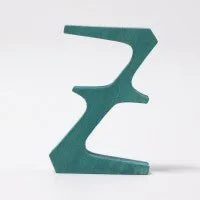
Grimm's Anthroposophical Letter Z
-
Grimm's Anthroposophical Letter P: The Grimm's Anthroposophical Letter P is colored red as a hard consonant, matching the sound it represents. Seeing the letter P in red reinforces that it is a hard consonant, making the sound-letter connection more intuitive.
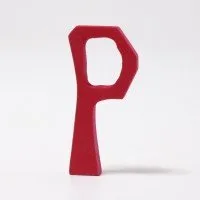
Grimm's Anthroposophical Letter P