Quick answer
Use a pretend play kitchen to teach sharing by turning one toy into a two-person job: assign roles, script simple phrases like 'my turn, then yours,' and practice short, timed swaps before free play. Keep sessions to 10–15 minutes, stay nearby to narrate, and treat every successful handoff as the win. Sharing is a skill built through repetition, not a behavior children master in one sitting.
Why a kitchen works better than a toy box for sharing practice
A pretend play kitchen naturally creates cooperation because the play has roles: one child cooks, one child serves, one child orders. That structure gives you something to hand back and forth, which is easier for a toddler than sharing a single favorite toy with no job attached. Kitchen pretend play ideas also invite language: 'Can I have the tong?' or 'Your turn to stir.' Those phrases give children a script they can reuse when you are not standing there.
The physical setup matters. A kitchen with a few clear tools and play foods creates more handoff moments than a bin of loose pieces. If you are choosing what to add, favor items with distinct jobs, like a cooking tool, a serving tool, and a food piece, because each one becomes a natural turn-taking opportunity. If a product listing does not state an age range, treat that as a limitation: watch how your child handles the pieces and decide from their behavior rather than guessing.
Set up the play space before you invite a second child
Decide in advance how many children will play and what each will do. Two children is the practical maximum for early sharing practice; three or more usually needs an adult running the game. Place the kitchen so children stand side by side rather than across from each other, which makes handing items over physically easier. Put duplicates where you can: two plates, two cups, two food pieces. Duplicates reduce conflict while children are still learning to wait.
Keep the first sessions short. Ten minutes of structured play with a clear ending beats thirty minutes that dissolves into a tug-of-war. Announce the ending before it happens: 'Two more orders, then we clean up.' Transitions are where sharing lessons are often lost, so plan the cleanup as part of the game rather than a punishment after it.
Six steps to teach sharing at the play kitchen
- 1. Name the roles before play starts: Tell each child their job: 'You are the cook, and you are the customer.' Write or say the roles out loud so both children hear the same plan. Common mistake: letting children choose roles at the same time, which usually ends with both wanting the same one. Checkpoint: both children can repeat their role back to you before you begin.
- 2. Model the phrase you want to hear: Use one short script every time: 'My turn, then your turn.' Say it as you hand over a tool, and prompt the waiting child to say it back. Keep the phrase identical across sessions so it becomes automatic. Checkpoint: the waiting child says the phrase without a full prompt by the end of the session.
- 3. Start with timed swaps of one item: Pick a single high-demand item and set a visible timer for 30–60 seconds. When it rings, the item changes hands, no negotiation. Use a song or a countdown if a timer feels too mechanical for your child. Common mistake: extending a turn because the child is playing happily. The predictable swap is the lesson, not the length of the turn.
- 4. Build a two-person task that cannot be done alone: Assign a job that requires both children: one holds the pan while the other stirs, or one orders while the other cooks. Cooperative play kitchen tasks make sharing the only way to keep the game going. Checkpoint: the task stalls if one child walks away, which shows the cooperation is real rather than instructed.
- 5. Narrate successful handoffs instead of correcting grabs: When a child hands something over, describe it plainly: 'You gave the tong to your brother.' When a grab happens, restate the script and repeat the swap rather than lecturing. Toddlers respond to what they see praised more than what they are told to stop. Common mistake: giving a long explanation mid-conflict. One sentence and a repeat of the action works better.
- 6. End on a completed turn, then review briefly: Stop while the game is still going well, not after a meltdown. Ask one question: 'What did you share today?' Accept any answer, even a one-word one, and connect it to the next session. Next step: repeat the same roles and script next time, then add one new item to swap.
Play pieces that make sharing practice concrete
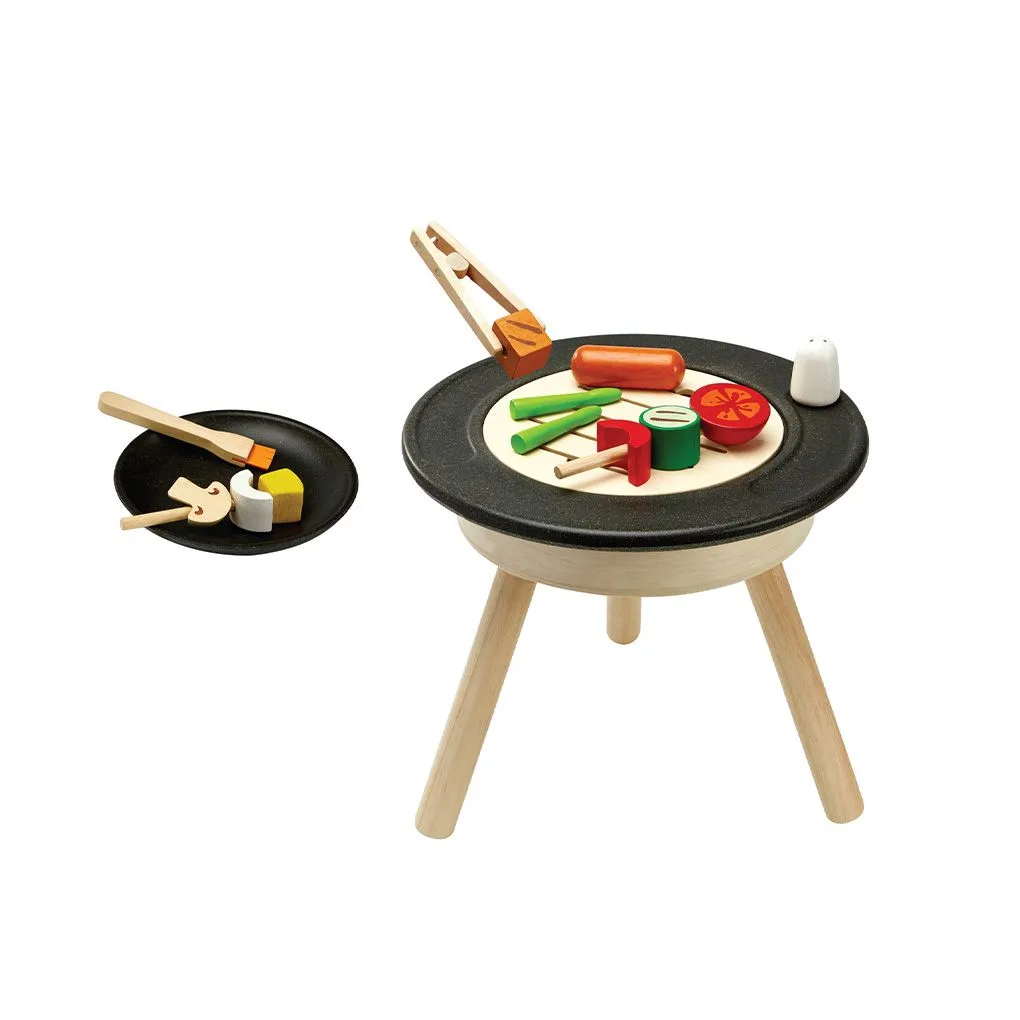
- BBQ Playset: The BBQ Playset includes one tong, one sauce brush, one pepper bottle, two skewers, one sausage, two stalks of asparagus, one halved tomato, one grilled beef wedge, one pineapple wedge, and one onion. Two skewers and multiple food pieces mean two children can each hold a tool and a food at the same time, which lowers the pressure to grab and creates natural swap moments.
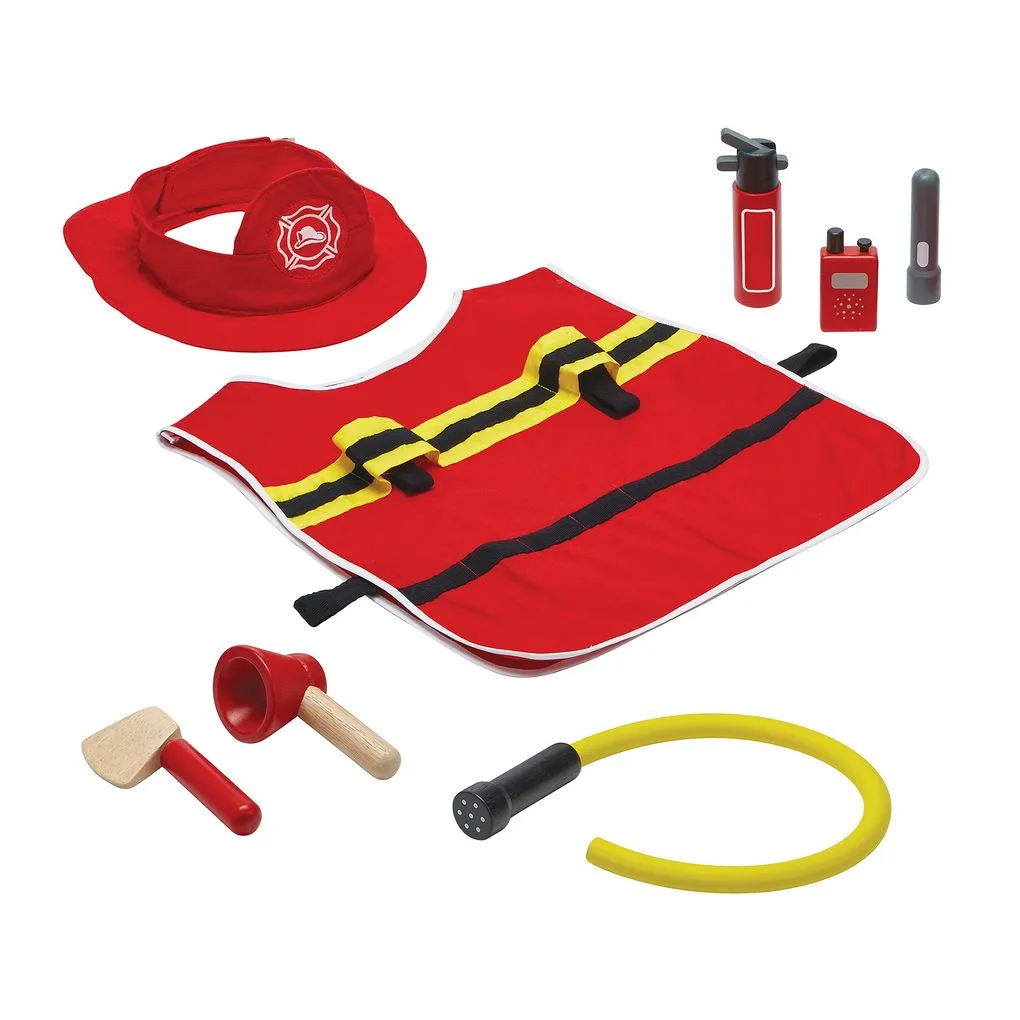
- Fire Fighter Play Set: The Fire Fighter Play Set includes an adjustable helmet and jacket, a megaphone, fire extinguisher, water hose, flashlight, hatchet, and walkie talkie. Role-based dress-up gives each child a defined job, so you can practice taking turns with a single high-demand item like the megaphone instead of negotiating over everything at once.