Why Stacking and Nesting Matter for Toddlers
Stacking and nesting are among the first ways toddlers explore how objects relate to each other. When a child places a smaller cup inside a larger one or balances a piece on top of another, they are learning size relationships, sequencing, and cause and effect. These simple actions also build hand-eye coordination, grasping skills, and finger dexterity.
The Giraffe Nest and Stack - 17 Pieces is designed for children 12 months and up, making it a good entry point for this kind of play. The colorful pieces and friendly giraffe design capture attention while encouraging curiosity and independent learning.
What the Giraffe Nest and Stack Offers
-
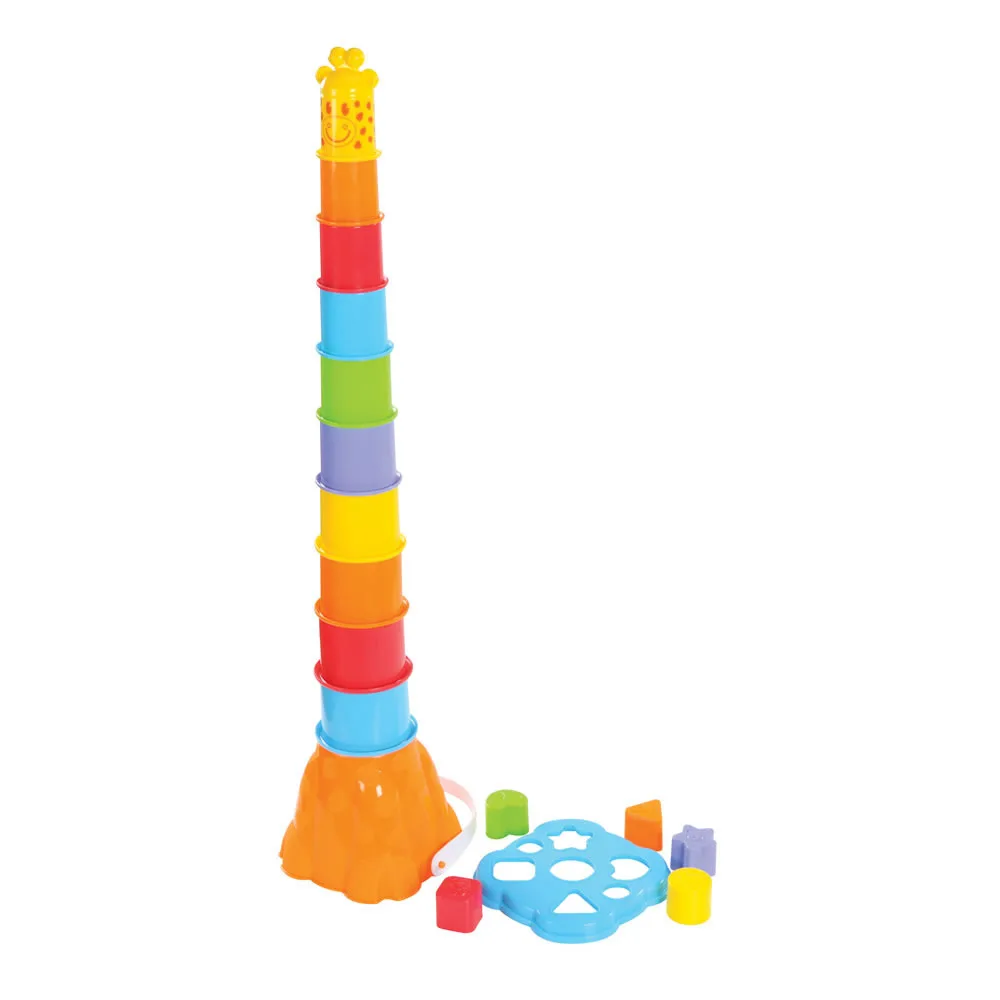
Giraffe Nest and Stack - 17 Pieces: 12 months & up. This engaging stacking and nesting toy introduces children to foundational concepts such as size relationships, sequencing, and balance. The age recommendation tells you this toy is suited for toddlers just beginning to explore stacking and nesting, not for older children who may need more complex challenges.
Giraffe Nest and Stack - 17 Pieces
-
Giraffe Nest and Stack - 17 Pieces: Featuring colorful pieces, children can sort, stack, nest, and arrange the components in multiple ways. Multiple play styles mean the toy adapts as your child's skills grow, from simple stacking to more advanced sequencing activities.
-
Giraffe Nest and Stack - 17 Pieces: As children manipulate the pieces, they strengthen hand-eye coordination, grasping skills, and finger dexterity. These are the fine motor skills toddlers need for later tasks like holding a crayon or buttoning a shirt.
Getting Started with Simple Stacking
Stacking is often the first skill toddlers try. The goal is to balance one piece on top of another, then knock it down and try again. Here is a simple progression to follow.
- Introduce the pieces one at a time: Show your toddler two pieces and stack them yourself. Let them watch, then encourage them to place one piece on top of the other. Celebrate the attempt, not just the success.
- Add more pieces gradually: Once your child can stack two pieces, add a third. The Giraffe Nest and Stack pieces are designed to be easy for small hands to grasp, so they can focus on balance rather than grip.
- Let them knock it down: Knocking over a tower is part of the learning. It teaches cause and effect and gives toddlers a sense of control. Simply rebuild and invite them to try again.
Exploring Nesting and Sorting
Nesting involves placing pieces inside one another by size. This activity builds an early understanding of sequencing and spatial relationships.
- Model nesting first: Take two pieces and show your toddler how the smaller one fits inside the larger one. Use simple words like 'big' and 'small' to describe what you are doing.
- Let them discover the order: Hand your child two pieces and let them try to nest them. If they struggle, offer gentle guidance by comparing the sizes side by side.
- Sort by color or size: The colorful pieces can also be sorted. Ask your child to group pieces by color or to line them up from smallest to largest. This adds a layer of cognitive challenge to the play.
Combining Stacking and Nesting for Extended Play
As your toddler becomes comfortable with stacking and nesting separately, encourage them to combine both actions. They might stack a few pieces and then nest the rest, or build a tower and then nest the pieces inside the largest cup. The versatile design of the Giraffe Nest and Stack supports this kind of open-ended exploration, helping children develop problem-solving skills and creativity alongside fine motor control.
Because the pieces are lightweight and easy to handle, toddlers can play independently for short periods. This builds confidence and a sense of accomplishment. Always supervise play to ensure safe use, especially with younger toddlers who may still mouth objects.