Quick answer
Test oud samples on skin, not paper, and judge each one through its full dry-down before deciding. Oud often opens earthy and animalic, then settles into a woody, slightly sweet scent, so the first ten minutes are not the final verdict.
Why oud samples deserve a slower test than fresh citrus
Oud is a resin that develops on Aquilaria trees in Southeast Asia, and its scent profile shifts noticeably from the opening to the dry-down. A quick sniff at the counter can catch only the animalic first impression and miss the softer woody phase that many people actually wear for hours.
That shift is also why a sample vial is more useful than a single spray in a store. You need time, skin contact, and a second wearing to know whether the opening is tolerable and the dry-down is something you want to repeat.
What a small oud sample set can and cannot tell you
A multi-vial set lets you compare several oud-inspired interpretations side by side, which is hard to do with full bottles. It does not tell you how a fragrance performs in extreme heat or how it layers with your entire wardrobe, so treat the sample phase as a first filter rather than a final answer.
Your step-by-step oud sample test
- 1. Plan a low-distraction test day: Choose a day when you are not wearing another fragrance and will be in familiar surroundings for at least four hours. Apply one oud sample to your inner forearm and note the time. Common mistake: spraying on top of lotion or another scent, which muddies the opening and makes the dry-down harder to judge. Wear one sample at a time on skin; keep a written start time.
- 2. Judge the opening without deciding: Smell the application point at ten minutes and again at thirty minutes. Expect an earthy, animalic first impression from many oud notes. Do not reject the scent yet. Common mistake: treating the first sniff as the final smell, when oud is still changing. Write one word for the opening, then wait before judging.
- 3. Track the dry-down on skin: At two hours and again at four hours, smell the same spot and note whether the scent has become woodier, sweeter, or softer. This is the phase you will actually wear. Common mistake: sniffing paper strips instead of skin, which skips the body chemistry that shapes the dry-down. The two-hour and four-hour notes matter more than the first ten minutes.
- 4. Compare two oud samples on separate days: Repeat the process with a second vial from the set on another day, using the same application point and the same time checkpoints. Common mistake: testing two ouds on the same arm at once, which makes it hard to tell which scent is which after the dry-down. One oud per test day keeps your notes honest.
- 5. Decide with a repeat wearing: Before buying a full bottle, wear your favorite sample a second time in a normal daily setting, such as work or a commute. If you still enjoy the dry-down and the opening no longer bothers you, the scent is a reasonable candidate. Common mistake: deciding after one wearing in a perfume shop, where you cannot judge how the scent sits on your skin over a full day. A second full-day wearing is the checkpoint before any full-bottle purchase.
Product facts to keep in mind
-
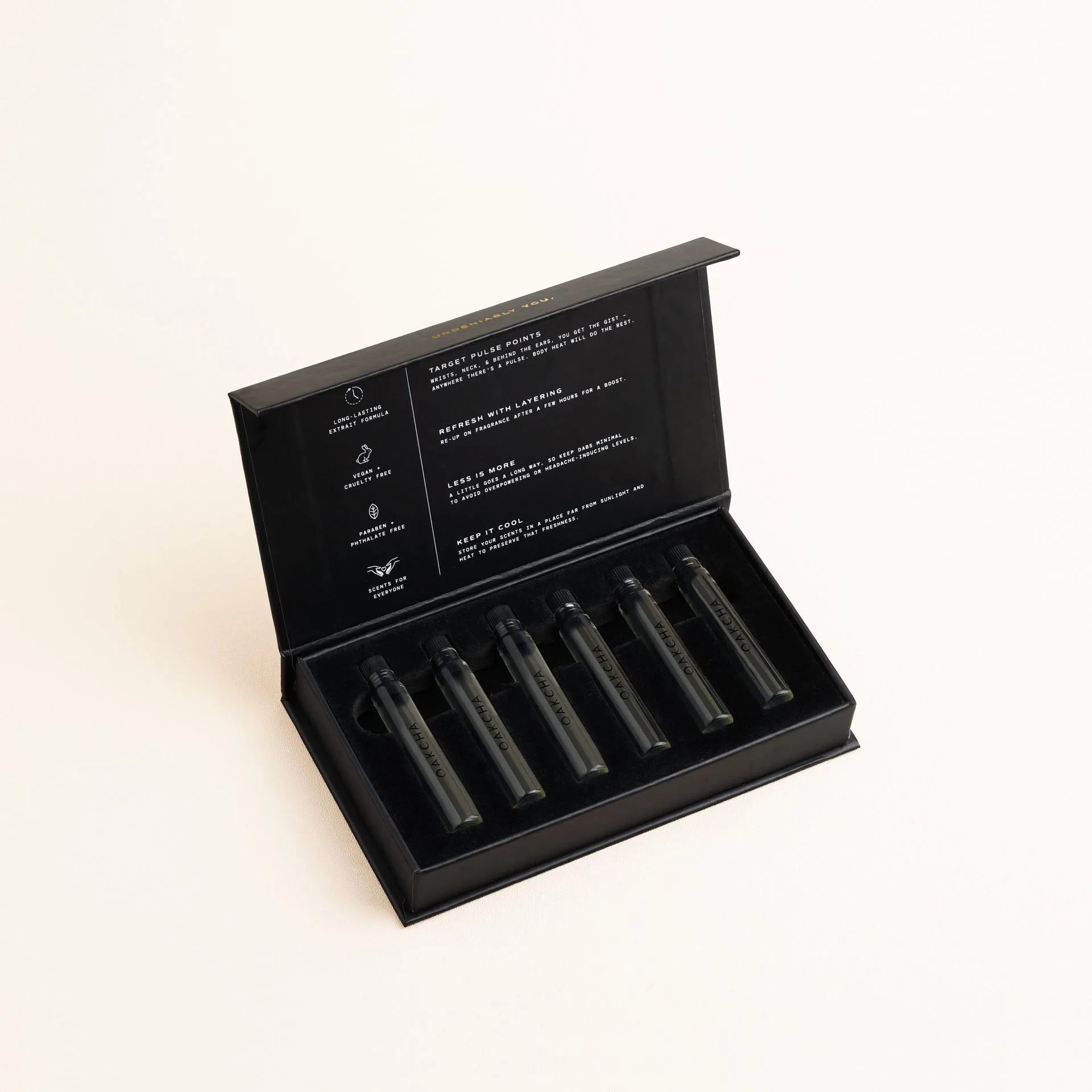
Oud Sample Set: The Oud Sample Set contains 6 trial-size vials of 2 ml each in extrait de parfum concentration. Six small vials give you enough wearings to compare oud interpretations without committing to a full bottle of any single one.
Oud Sample Set