Quick answer
Start with a silk base that works in both settings, such as a silk dress or silk trousers. Then add or remove one layer, swap one accessory, and move your silk scarf from neck to bag. The goal is one small change, not a full outfit swap. This keeps you comfortable and polished from morning meetings to evening plans.
You do not need two outfits to go from a workday to an evening event. Silk is one of the few fabrics that can shift from professional to evening-ready with a single adjustment. The trick is planning your base layer so it fits both settings, then using accessories to change the mood.
This guide walks through four steps. Each step includes a checkpoint so you can stop and check the mirror before moving on. You will also find specific product examples from our catalog that make each step easier.
Step 1: Choose a silk base that works for both settings
Pick a silk piece that is neither too casual nor too formal. A silk dress in a solid color, like the Margot Noir silk dress, works because it is cut diagonally and uses 3.5 metres of fabric, so it wraps the body without feeling like a cocktail dress. For a more relaxed day, try the Emma Silk Trousers in a delicate blue shade. They have an elastic waistband and a decorative wave detail on the legs, which reads as polished but not overdressed.

Emma Silk Trousers
Checkpoint: stand in front of a mirror and imagine adding a blazer for work and removing it for dinner. If the base piece looks good in both scenarios, you have your foundation. If it only works in one, choose a different silk piece.
- Avoid silk pieces with heavy embellishments or very short hemlines for this method.
- Solid colors and simple cuts transition more easily than busy prints.
Step 2: Add or remove one layer
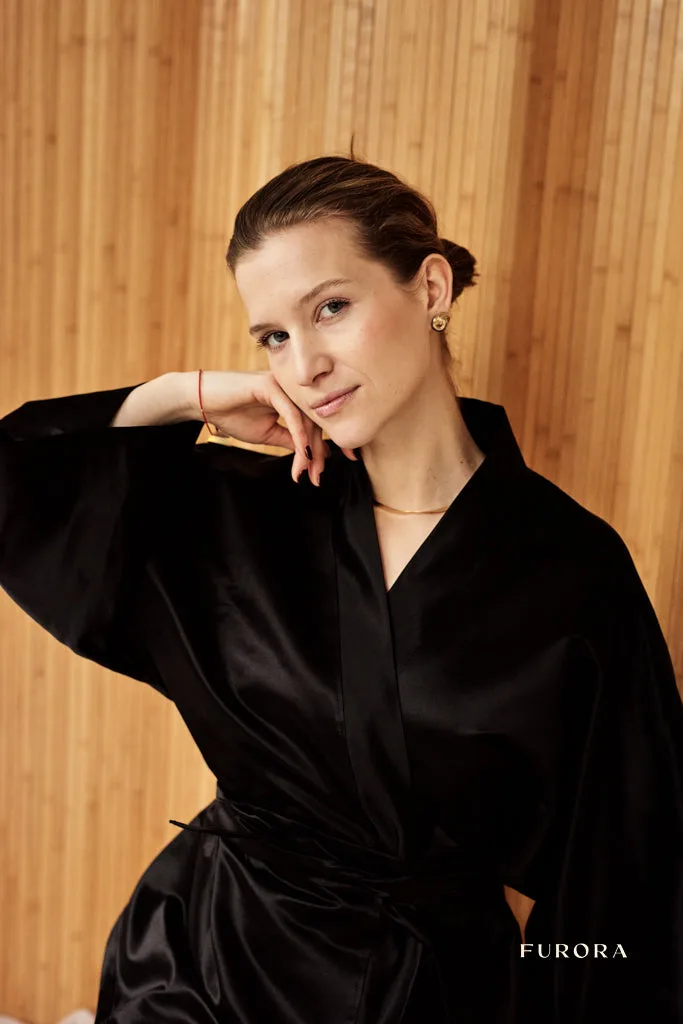
During the day, a silk kimono like the Vivienne silk kimono can act as a light jacket. It is made of 100% silk with a high weight, has an oversize cut, kimono sleeves, and a belt. Wear it open over your base for a relaxed work look. For evening, remove the kimono or tie the belt to change the silhouette. If your office is air-conditioned, keep the kimono on and simply adjust the belt.
Checkpoint: make sure the layer you remove or add does not leave you with a wrinkled or untucked base. Silk can show creases, so smooth the fabric with your hands before you step out.
- A belt can turn an open kimono into a wrap top or dress.
- If you remove a layer, check that your undergarments are not visible.
Step 3: Swap one accessory to change the mood
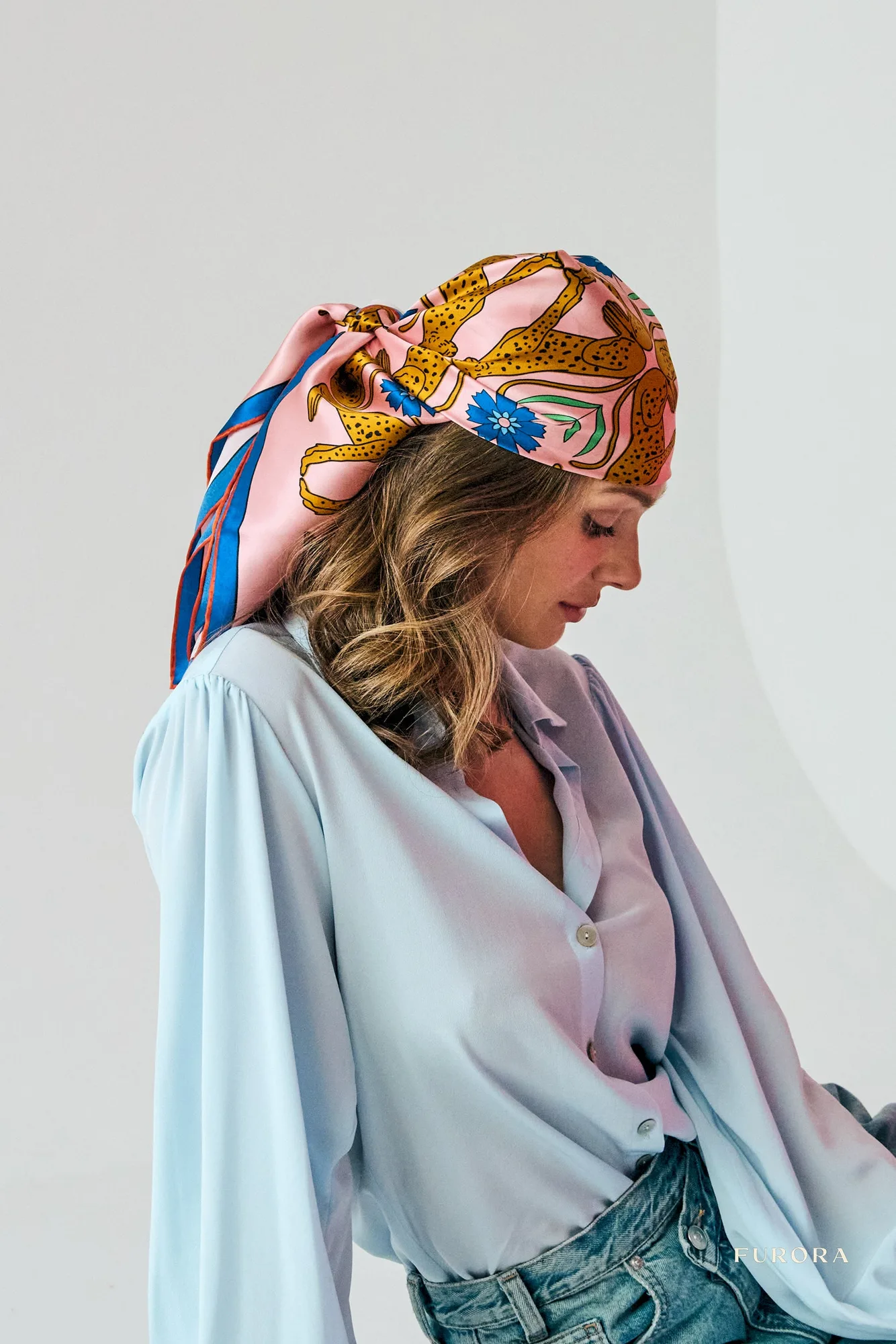
Accessories do most of the work in a day-to-night transition. For daytime, keep jewelry minimal and use a structured bag. For evening, switch to a smaller bag and add one statement piece. The Iris silk scarf is a strong choice because you can style it as a classic scarf, a headband, a top, or a bag decoration. In the evening, tie it around your wrist or let it hang from your bag for a touch of color.
Checkpoint: remove one accessory before you add another. If you add earrings, take off the daytime watch or swap your tote for a clutch. Too many accessories can make the outfit look confused.
- A silk scarf can be folded into a narrow band and worn as a choker.
- Keep a small clutch in your bag so you can swap it quickly.
Step 4: Adjust your silk scarf for evening
The transition silk scarf is the fastest way to signal a change. During the day, wear it around your neck in a simple loop or as a headband. For evening, untie it and drape it over your shoulders like a shawl, or knot it loosely around one shoulder. The Iris silk scarf is large enough to wear as a head covering or a top, so you have multiple evening options.
Checkpoint: make sure the scarf does not cover your face or drag on the floor. If you wear it as a top, test that it stays in place when you move your arms. A small safety pin hidden inside can help.
- Practice the evening knot once at home before you wear it out.
- If you wear the scarf as a top, choose a seamless bra to keep lines smooth.
Your four-step day-to-night silk routine
- Choose a dual-purpose silk base: Pick a silk dress or silk trousers in a solid color that looks good with and without a layer. Avoid pieces that only work for one setting. Checkpoint: if you can't imagine it at both work and dinner, choose another piece.
- Add or remove one layer: Use a silk kimono or light jacket during the day, then remove it or re-tie the belt for evening. Keep the change to one layer only. Checkpoint: smooth any wrinkles and check that your base is still tucked or styled.
- Swap one accessory: Change your bag or jewelry, but not both at once. A smaller bag or one statement piece is enough to shift the mood. Checkpoint: remove one daytime accessory before adding an evening one.
- Restyle your silk scarf: Move the scarf from your neck to your shoulders, wrist, or bag. Practice the new knot at home so it stays put. Checkpoint: make sure the scarf is secure and does not cover your face or drag.
Silk pieces that make day-to-night easy
- Margot Noir silk dress: A luxurious black silk dress cut diagonally, using 3.5 metres of fabric, so silk wraps the body. The generous cut and black color make it appropriate for both office and evening, so you can wear one piece all day.
- Vivienne silk kimono: Made of 100% silk with the highest weight, oversize cut, kimono sleeves, and a belt. It works as a light jacket during the day and can be removed or re-tied for evening, giving you two looks with one layer.
- Iris silk scarf: Can be styled as a classic scarf, head covering, headband, blouse, top, or handbag decoration. One accessory covers multiple day and evening styling options, so you can change your look without packing extra items.
Transitioning silk from day to night is about small, deliberate changes. Start with a versatile base, then adjust one layer and one accessory. With practice, you can go from desk to dinner in under five minutes.