Quick Answer
For sensitive skin, choose a fragrance-free, hypoallergenic body lotion with minimal ingredients and no dyes or essential oils. Apply it immediately after bathing to lock in moisture, and if irritation persists or worsens, stop using the product and consult a dermatologist.
If your skin reacts to many lotions with redness, itching, or a burning sensation, you're not alone. Sensitive skin can be triggered by fragrances, preservatives, and other common additives. The right body lotion can soothe and protect, while the wrong one can make symptoms worse.
This guide helps you identify what to look for and what to avoid when choosing a body lotion for sensitive skin, and when to stop self-treating and seek professional advice.
What to Look For in a Body Lotion for Sensitive Skin
When shopping for a body lotion for sensitive skin, prioritize products labeled 'fragrance-free' rather than 'unscented,' because unscented products may still contain masking fragrances. Hypoallergenic formulas are designed to minimize allergy risk, but they are not guaranteed to work for everyone. Look for simple ingredient lists with soothing components like glycerin, ceramides, or shea butter, which help restore the skin barrier.
A lightweight, fragrance-free formula is often best for daily use, as it hydrates without feeling heavy or greasy. The Fragrance-Free Body Lotion from EOS is a good example: it provides lightweight, fragrance-free hydration that soothes extra-sensitive skin and leaves it feeling soft, smooth, and freshly moisturized. Always patch-test a new product on a small area before applying it all over.
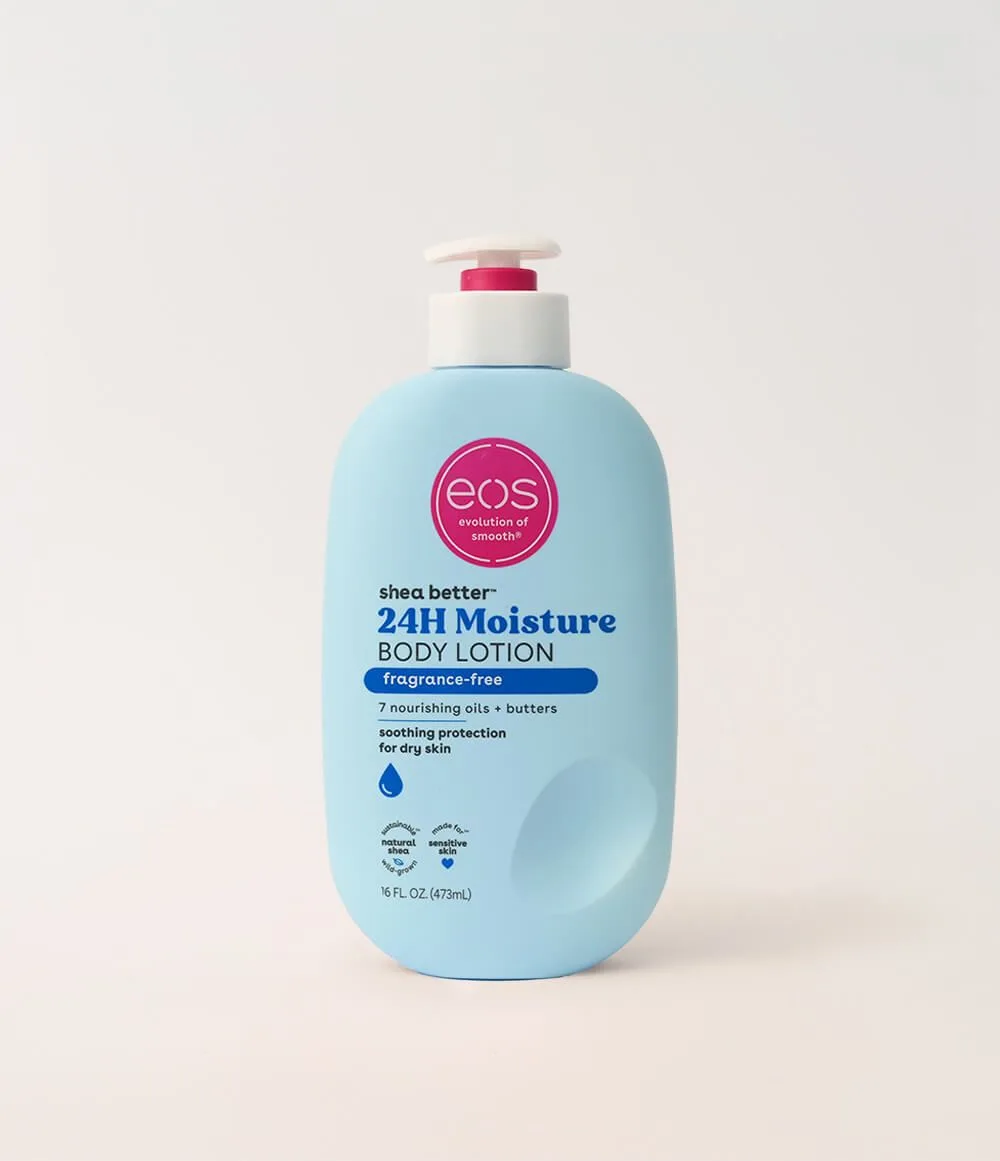
Fragrance-Free Body Lotion
- Patch-test new lotions on your inner forearm for 24 hours before full-body use.
What to Avoid in Body Lotions for Sensitive Skin
Avoid lotions that contain fragrance, essential oils, dyes, or alcohol, as these are common irritants. Fragrance is one of the most frequent causes of contact dermatitis, and even natural essential oils can trigger reactions. Alcohol can dry out the skin, exacerbating sensitivity. Also, be cautious with products containing alpha-hydroxy acids (AHAs) or retinoids, which can cause stinging or peeling.
Check the ingredient list for preservatives like methylisothiazolinone, which is a known allergen. While not all preservatives are harmful, choosing a product with a short ingredient list reduces the risk of a reaction. If you have a known allergy, always review the full ingredient list before purchasing.
How to Apply Body Lotion for Sensitive Skin
The best time to apply body lotion is immediately after a shower or bath, while your skin is still slightly damp. This helps trap moisture in the skin. Gently pat your skin dry with a towel, then apply a generous layer of lotion, massaging in upward strokes. Pay extra attention to dry areas like elbows, knees, and heels.
For extremely sensitive skin, consider applying a thicker layer of lotion at night and wearing cotton pajamas to help lock in moisture. Avoid hot showers, as hot water strips the skin of natural oils. Use lukewarm water instead, and limit shower time to 10 minutes.
When to Stop and Choose Another Option
If you experience persistent redness, itching, burning, or a rash after using a body lotion, stop using it immediately. Wash the area with mild soap and water, and apply a cool compress to soothe irritation. If symptoms do not improve within a few days, or if you develop blistering or oozing, see a dermatologist.
It's also time to see a professional if your skin condition worsens despite trying multiple products, or if you suspect an allergic reaction. A dermatologist can perform patch testing to identify specific triggers and recommend prescription treatments if needed.
Diagnosis: Is Your Body Lotion the Problem?
- Symptom: Redness, itching, burning, or a rash after applying body lotion. These are classic signs of irritation or an allergic reaction.
- Likely Cause: The lotion contains fragrance, essential oils, dyes, alcohol, or a preservative you're sensitive to. Check the ingredient list for known irritants.
- Corrective Action: Stop using the product, wash the area, and switch to a fragrance-free, hypoallergenic lotion with minimal ingredients. Patch-test the new product before applying it all over.
- When to Stop and Choose Another Option: If irritation persists for more than a few days, worsens, or spreads, or if you experience blistering or oozing. See a dermatologist for patch testing and professional advice.
Product Facts
- Fragrance-Free Body Lotion: Lightweight, fragrance-free hydration that soothes extra-sensitive skin and leaves it feeling soft, smooth, and freshly moisturized. This lotion is a safe starting point for sensitive skin because it avoids fragrance, a common irritant, while still providing essential moisture.
Treating sensitive skin with body lotion starts with choosing the right formula and applying it correctly. Look for fragrance-free, hypoallergenic options, patch-test new products, and stop using anything that causes irritation. When in doubt, a dermatologist can help you find a routine that works for your skin.